sabato 18 novembre 2023

Shadia شادية


Fatma Kamal El Din Ahmed Shaker, known by her stage name Shadia, was an Egyptian actress and singer, symbol of the golden age of Egyptian cinema and a true icon in the Middle East region. Born on 8 February 1931 in Cairo in the Al Helmia Al Jadida neighborhood to an Egyptian father and a mother of Turkish origin, Shadia dedicated herself to music at a young age during primary school, encouraged in this particular by her father who always strongly believed in his talent The first part of her career will mainly concern the world of cinema. In 1947, at the age of 16, she responded to an advert published by director Ahmed Badrakhan looking for new faces. Thus her journey into the world of the seventh art will begin with the new name she chose herself.

Her early films, melodramas, romantic films and comedies, starring under the direction of directors such as Helmy Rafla, Fatin Abdel Wahab, Hassan Helmy and Hassan El Emam, portrayed her in roles of a cute, lively and bubbly woman. In particular, her work with director Helmy Rafla opened the doors of fame to her and allowed her to act alongside the greatest actors of the time such as Mohamed Fawzi, in the film “Sahiba el malalim” in 1949, and the Nile Nightingale Abd el halim Hafez in “Ma'abuda Al Jamahir”.


At the beginning of her career she will fall madly in love with a fighter pilot who unfortunately died during the conflict between Egypt and Israel in 1948. This fact will cause her great pain, but supported by her father and her brothers, she will be able to face her difficult moment and in parallel with her activity as an actress she will continue her studies. The years between 1953 and 1961 will mark the peak of her success. Alongside her career as an actress, she will also pursue that of a singer, obtaining widespread acclaim. About her She married the legendary actor Emad Hamdy, twenty years her senior, from whom she divorced three years later. A wedding plan with the Syrian singer Farid Al Atrash will not come to fruition while her marriage to the radio engineer Fathi Aziz will end after just two years due to the latter's jealousy. Her meeting with the actor Salah Zulfikar in 1961 led Shadia to remarriage. The partnership between the two will last seven years and will bring great professional successes. They will pair up in 6 films, giving life to a famous duet that will become a classic of Egyptian cinema.

Over the course of her career Shadia starred in 150 films and recorded 500 hit songs. She sang many patriotic songs that are still remembered by Egyptians around the world. Many critics consider her the most successful Egyptian artist of all time and her song "Ya Habibti Ya Masr" (Oh Egypt, my love) is considered one of the best patriotic songs ever Nicknamed "The idol of the masses", following her participation in the film of the same name, at the beginning of the 1980s she found herself facing a particularly difficult moment that brought her closer to religion. She will go on a pilgrimage to Mecca for the haj. During this period she will come into contact with Sheikh Muhammad Metwalli al-Sha'rawi, popular Islamic preacher, former minister of Mamdouh Salem's government in 1976, with whom she would form a strong spiritual relationship.

Following this meeting she will begin to wear the hijab and she will decide to end her acting career to dedicate herself to charity. She will donate all the money she earned during her career as an actress and singer to charities for the care of orphaned children, stating that she made this decision without doubt or hesitation. In 2017 she will be hospitalized in Cairo in intensive care following a serious stroke. Although there seemed to be signs of recovery, her clinical condition worsened and Shadia died on November 28, 2017 from respiratory failure caused by pneumonia.


Those who wish to delve deeper into Shadia's work can visit the El Cinema website where they can find her filmography and can take a look at the beautiful YouTube channel SHADIA FOREVER


Fatma Kamal El Din Ahmed Shaker, conosciuta  con il nome d’arte  Shadia, è stata un attrice e cantante egiziana simbolo dell’età dell’oro del cinema egiziano e vera icona  nella regione del Medio Oriente.

Nata 8 febbraio 1931 al Cairo nel quartiere di Al Helmia Al Jadida da padre egiziano e madre di origine turca, Shadia si è dedicata alla musica già in giovane età nel corso della scuola elementare incoraggiata in questo in particolare dal padre che ha sempre  creduto fortemente nel suo talento

La prima parte della sua carriera interesserà principalmente il mondo del cinema. Nel 1947, all’età di 16 anni, risponderà ad un annuncio pubblicato dal regista Ahmed Badrakhan alla ricerca di volti nuovi . Comincerà cosi il suo viaggio all’interno del mondo della settima arte con il nuovo nome da lei stessa scelto.

I suoi primi film, melodrammi, film romantici e commedie, recitati sotto la direzione di registi quali Helmy Rafla , Fatin Abdel Wahab, Hassan Helmy e Hassan El Emam, la ritraevano in ruoli di donna carina, vivace e frizzante.
In particolare il suo lavoro con il regista Helmy Rafla le spalancherà le porte della notorietà e le permetterà di recitare accanto ai più grandi attori dell'epoca come Mohamed Fawzi , nel film “Sahiba el malalim ” nel 1949, e l’usignolo del Nilo Abd el halim Hafez in “Ma’abuda Al Jamahir”.

Agli inizi della sua carrierà si innamorerà perdutamente di un pilota di caccia che purtroppo morirà nel corso del conflitto intercorso tra Egitto ed Israele nel 1948.
Questo fatto le causerà un grande dolore, ma supportata da suo padre e dai fratelli riuscirà a affrontare il momento difficile e parallelamente alla sua attività di attrice continuerà gli studi.

Gli anni tra il 1953 e il 1961 segneranno l’apice del suo successo. Alla carriera di attrice affiancherà quella di cantante ottenendo ampio consenso . Si sposerà con il leggendario attore Emad Hamdy , di venti anni più anziano di lei, dal quale divorzierà tre anni dopo.
Un progetto di matrimonio con il cantante siriano Farid Al Atrash non andrà in porto mentre il matrimonio con l'ingegnere radiofonico Fathi Aziz finirà dopo soli due anni a causa della gelosia di quest’ultimo.

L’incontro con l’attore Salah Zulfikar nel 1961 porterà Shadia a nuove nozze. Il sodalizio tra i due durerà sette anni e frutterà grandi successi professionali. Faranno coppia in 6 film dando vita ad un famoso duetto che diverrà un classico del cinema egiziano.

Nel corso della sua carriera Shadia ha recitato in 150 film e ha registrato 500 canzoni di successo. Ha cantato molte canzoni patriottiche che sono ancora ricordate dagli egiziani di tutto il mondo. Molti critici la considerano l'artista egiziana di maggior successo di tutti i tempi e il suo Il brano "Ya Habibti Ya Masr" (Oh Egitto, amore mio) è considerata una delle migliori canzoni patriottiche di sempre.


Soprannominata “ L’idolo delle masse” , in seguito alla sua partecipazione all’omonimo film, all’inizio degli anni ‘80 si troverà ad affrontare un momento particolarmente difficile che la riavvicinerà alla religione. Si recherà in pellegrinaggio alla Mecca per l'haj.  In questo periodo  entrerà in contatto con  Sheikh Muhammad Metwalli al-Sha'rawi
, popolare predicatore islamico, già ministro del governo di Mamdouh Salem  nel 1976, con il quale stringerà un forte rapporto spirituale.
 

In seguito a questo incontro  comincerà ad indossare  l'hijab e  deciderà di porre fine alla sua carriera di attrice per dedicarsi alla beneficenza .
Donerà   tutto il denaro guadagnato durante la sua carriera di attrice e cantante a enti di beneficenza per la  cura dei bambini orfani affermando di avere preso questa decisione senza dubbi o esitazioni.

Nel 2017 sarà ricoverata al Cairo in terapia intensiva in seguito ad un grave ictus. Sebbene sembravano notarsi segnali di ripresa, la sua condizione clinica subirà un peggioramento e Shadia morirà il 28 Novembre 2017 per insufficienza respiratoria causata da una polmonite.


Quanti volessero approfondire l'opera di Shadia, possono visitare  il sito El Cinema presso il  quale  possono trovare la sua filmografia oppure possono dare un occhiata al bellissimo canale youtube SHADIA FOREVER


Chadia  - Chadia

 
A1 Asmarani Al Laon
A2 Koulou Li Ain Al Chams
A3 Zifat Al Bourtukal
B1 Gab El Kamar
B2 Al Hina

HERE


Shadia  شادية -   Agmal salam أجمل سلام  / Meserak Hateraf مسيرك حاتعرف


A Agmal salam أجمل سلام
B Meserak Hateraf مسيرك حاتعرف

HERE


Shadia  شادية -   Ahla kalam  ا حلى كلام


A1 Qala El Wada'a قالى الوداع
A2 Inta awal hub انت اول حب
A3 Al qalb yahubb marra القلب يحب مرة
B1 Ghab al qamar غاب القمر
B2 Abo Oyoun Asalea ابو عيون عسلية
B3 Maksufa مكسوفة

HERE


Shadia  شادية -  Aqwy min al zaman اقوى من الزمن


A1 Law kanat lya لو كنت ليا
A2 Aqwy min al zaman اقوى من الزمن
B1 El Zaman Lamma Salihna الزمان لما صالحنا
B2 Hamasat همسات
B3 Qalaq قلق
B4 Dala'a El Hawanem دلع الهوانم
B5 Na'amal aih نعمل ايه


Shadia  شادية -   Asalhak Biyah اصالحك بايه .. وأحلى الأغاني


A1 Asalhak Biyh أصالحك بإيه
B1 Schubakna Satayra شباكنا ستايره
B2 Ya qalbi Sybak ياقلبي سيبك
B3 Mish Kultelak Ya qalbi مش قلتلك ياقلبي


Shadia  شادية - Shadia  شادية


A1 Akher Layela آخر ليلة  
A2  'ish El Hob  عش الحب
B1   El Telephon التليفون
B2 Soona سونه
B3 Fouk Ya Alby فوق يا قلبي


Shadia  شادية - Shadia  شادية


A1 Ahla Kalam ا حلى كلام
B1 Basbousa بسبوسة
B2 inna Rah Menak Ya 'ain ان راح منك ياعين


Shadia  شادية -   Khamsah F Setah خمسة فـ ستة


01 Khamsah F Setah خمسة فـ ستة
02 Ana 'indi Mushkila  انا عندي مشكلة
03 Metshwaqa متشوقة
04 Habibi Betshaqa  حبيبي بيتشاقى
05 Ketro Khottabi كتروا الخطاب
06 El Ward Wa Shouk الورد والشوك
07 Abu Amer Ghareb ابو امر غريب


Shadia  شادية -  Maksufa minnak مكسوفة منك


01 Qala ly al wada'i قال لي الوداع
02 Al qalb yahubb marra القلب يحب مرة
03 Qalby 'ala qalbiقلبي على قلبي 
04 Inta Awal Hub انت اول حب
05 Abu Oyoun 'asaliya    ابو عيون عسليه
06 Maksufa minnak مكسوفة منك


Shadia  شادية -  The Singles


01 Qulu li'ayn al shams قولوا لعين الشمس
02 Busat al qamar بوست القمر
03 Katarawa al Khitaba كتروا الخطاب
04 Suna سونة
05 Kulluka haniya كلك حنية
06 Habiby ahu حبيبي أهـو
07 Faris al ahlamy فارس أحلامي
08 Qatar al faraq قطر الفراق
09 shy'a mish ma'aqul شيء مش معقول
10 Al hubb al haqiqy الحب الحقيقي
11 Law qulub artaht لو القلوب ارتاحت
12 Habiby wa bas حبيبي وبس
13 Al Hanna ya hanna الحنة يا حنة
14 Al qalb yahubb marra القلب يحب مرة
15 Ya bint khaly wa ashany يا بنت خالي يا واحشاني
16 Al telefon التليفون
17 Fawq ya qalby فوق يا قلبي
18 Ghab al qamar غاب القمر
19 Khalas musafir خلاص مسافر
20 Irma la dus ايرما لا دوس
21 Maksufa minnak مكسوفة منك
22 La ya si ahmad لا يا سي أحمد
23 Habiby حبيبي
24 Habiby ya hamada حبيبي يا حماده
25 Min qala taskun fy haratina مين قال لك تسكن في حارتنا
26 'aly 'aly عالي عالي
27 Ya umm sabreen أم الصابرين
28 Yabu 'ayn 'asaliya يابو عين عسليه


Shadia wa Baligh Hamdy  شادية و   بليغ حمدي  Vol.1


01 Asmarany allawn اسمراني اللون
02 Khadny ma'ak خدني معاك
03 Ya abu al'ayn al'asaliya يا ابو العين العسلية
04 Akhir layla آخر ليلة
05 Uhibbuk Qway أحبك قوي
06 Adkhuluha salimin ادخلوها سالمين
07 Al shabba hatta sukara الشابة حتة سكرة
08 Al Hanna ya hanna الحنة يا حنة
09 Ahn qalb أحن قلب
10 Abu omar gharib أبو أمر غريب
11 Ana fyn أنا فين
12 Bilhadawa بالهداوة
13 Al Maz wazawaq wa harir ألماظ وزواق وحرير
14 Hintaqabal fy kukki makan حنتقابل في كل مكان
15 Hubba bihubba حبّة بحبّة
16 Salama salama سلامة سلامة
17 Saffara ya wabur صفّر يا وابور
18 Atshani ya sabaya عطشان يا صبايا
19 Qala Iyh sharabi mudaldal قال ايه شرابي مدلدل
20 Wa allah ya busa baqaity 'arusa والله يا بوصة بقيتي عروسة
21 wa allah warah ta'ab al layaly والله وراح تعب الليالي
22 Ana 'aindy mushkila أنا عندي مشكلة
23 allahum aqbal da'aya اللهم اقبل دعايا
24 Ana 'ashriyya أنا عِشرية
25 Ah ya nary آه يا ناري
26 Ah ya salam law ta'raf آه يا سلام لو تعرف
27 Ahyn ya 'ayny wa ah yana آهين يا عيني وآه يانا
28 Iasha'a isha'a إشاعة إشاعة
29 Bashwish Bashwish بشويش بشويش
30 Habiby ya hamada حبيبي يا حمادة
31 Al Hub wa ruhuh fy dammina الحب روحه في دمّنا
32 Habiby jay حبيبي جاي
33 Ranna qabqaby رنّة قبقابي
34 zaffa al burtuqan زفة البرتقان


HERE


Shadia wa Baligh Hamdy  شادية و   بليغ حمدي  Vol.2


01 Sayd al hawyn سيد الحلوين
02 Sabreen صابرين
03 'aly 'aly عالي عالي
04 'abarna al hazima عبرنا الهزيمة
05 'addayna ya maddawy عدّينا يا معدّاوي
06 Ghaliyya ya bilady غالية يا بلادي
07 Fajar jadid فجر جديد
08 Fawqa ya qalby فوق يا قلبي
09 Qulu li'ayn al shams قولوا لعين الشمس
10 Qadmanalih al hubb قدمناله الحب
11 Qatar al faraq قطر الفراق
12 Qally kalam قالّي كلام
13 Bas qululy بس قولولي
14 La layna ahaly yaba لا لينا أهالي يابا
15 Layla sahra ليلة سهر
16 Maksufa minnak مكسوفة منك
17 Isha'at Isha'at إشاعات إشاعات
18 Al dawr al dawr الدور الدور
19 Hubbuk jinna ya ismak iyah حبك جننا يا اسمك ايه
20 Shabakna al hukuma شبكنا الحكومة
21 Mitshawwaqa شبكنا الحكومة
22 Mim alsabhiyya م الصبحية - القطار
23 wa al naby wahshtna والنبي وحشتنا
24 Wahid za'id wahid واحد زائد واحد
25 wa allah ya zaman والله يا زمن
26 wa la kullu mian qala ah ولا كل من قال آه
27 Ya rabbi tawba يا رب توبة
28 Ana ya ruhy ana أنا يا روحي أنا
29 Ya saydy يا سيدي
30 Habiby bitshaqa حبيبي بيتشاقى
31 Habiby wabas حبيبي وبس
32 Ya 'ayny 'alwalad يا عيني عالولد
33 Ahat shadia آهات شادية
34 Ya habibty ya Misr يا حبيبتي يا مصر

HERE


Shadia & Baligh Hamdi

giovedì 13 ottobre 2022

Maya Yazbek مايا يزبك


Born in 1967 Maya Yazbek is a Lebanese singer daughter of the famous musician George Yazbek and sister of the percussionist Bassem Yazbek. 

Musically active during the 1980's, she has recorded a handful of excellent albums containing songs composed largely by her father whose lyrics were written by the best poets of the time. Among them: Shafiq al-Mughrabi, Ibrahim al-Qahwaji and Abd al Jalil Wahbi. 

She has made many songs of great depth in which the classical component blended perfectly with a certain pop taste which, although present, always remained at the margins. 

Among her most successful songs certainly stands out the song "Ya Habibi Ya 'ayny" contained in the beautiful album "Ana Wal Asfour" of 1983. The song will represent a great inspiration for the singer Natacha Atlas in the composition of the song "Yalla Chant "contained in her first album" Diaspora " released in 1995

In the late 1980s she decided to retire from the music scene to take care of her family and children full time.

Partially returned to the scene at the beginning of the second millennium, in 2011 she released an album with singer and actor Amir Yazbek in which she attempted to modernize some of her old songs without getting any appreciable results. 

In 2022 she released a new album containing compositions made by her together with her son Bassem Yazbeck. In June of the same year, together with other important exponents of Arabic song, she was invited to take part in the “Al Zaman Al Jamil” Festival, held at the Casino du Liban, where she was awarded for her musical merits.


Nata nel 1967 Maya Yazbek è una cantante libanese figlia del celebre musicista George Yazbek e sorella del percussionista Bassem Yazbek .


Attiva musicalmente nel corso degli anni ‘80, ha inciso una manciata di album di ottimo livello contenenti canzoni composte in gran parte dal padre,  i cui testi sono stati realizzati da i migliori poeti dell’epoca. Tra questi: Shafiq al-Mughrabi , Ibrahim al-Qahwaji e Abd al Jalil Wahbi .


Ha realizzato molte canzoni di grande spessore nelle quali la componente classica si amalgamava perfettamente con un certo gusto pop che , seppur presente, rimaneva sempre ai margini.


Tra le sue canzoni di maggior successo spicca sicuramente il brano “ Ya Habibi Ya 'ayny ” contenuta nel bel album “ Ana Wal Asfour “ del 1983. Il brano rappresenterà  una grande ispirazione per la cantante Natacha Atlas nella composizione del brano "Yalla Chant" contenuto nel suo primo album "Diaspora" uscito nel 1995

Alla fine degli anni ‘80 decise di ritirarsi dalla scena musicale per occuparsi a tempo pieno della famiglia e dei figli.

Tornata parzialmente sulle scene all'inizio del secondo millennio, nel 2011 ha realizzato un album insieme al cantante e attore Amir Yazbek nel quale ha tentato di modernizzare alcune sue vecchie canzoni senza ottenere risultati apprezzabili .

Nel 2022 ha realizzato un nuovo album a suo nome contenente composizioni realizzate insieme suo figlio Bassem Yazbeck .

Nel giugno dello stesso anno, insieme ad altre importanti esponenti della canzone araba, è stata invitata a prendere parte al Festival “ Al Zaman Al Jamil”, tenutosi presso il Casino du Liban, dove è stata premiata per i suoi meriti musicali.


Maya Yazbek مايا يزبك - Maya مايا


A1 Qultullilu bihubbik قلتللو بحبك
A2 Janynati جنيناتي
A4 3 Hayda Huwy هيدا هوي
A4 Ba'adak Ya Watany بعدك يا وطني
A5 Ya 'uyuny يا عيوني
B1 Martayn Martayn مرتين مرتين
B2 Salatni al 'asfoura سالتني العصفورة
B3 Ya Rayt يا ريت
B4 Disco Cocktail ديسكو كوكتيل

HERE


Maya Yazbek مايا يزبك - Ana Wal Asfour انا والعصفور


A1 Ya Habibi Ya 'ayny يا حبيبي يا عيني
A2 Bissaha Al Matar بساحة المطار
A3 Sami'ua Khatwait Habibi سمعوا خطوة حبيبي
A4 Sa'a Ma Shouftak ساعة ما شفتك حبيتك
B1 Ana Wal 'asfour انا والعصفور
B2 Ya Sabakna 'almina يا سابقنا عالمينا
B3 Khabbarny Ya Bu Fayez خبّرني يا بو فايز
B4 Jabouli Al Sawra جابولي الصورة

HERE


 Maya Yazbek مايا يزبك -Boukra Rah Bitsafer بكره راح بتسافر


A1 Bokra rah bitasafir بكرا راح بتسافر
A2 Al dunya Hiya Hiya الدنيا هي هي
A3 Mu'adhibuny ya ba معذبني يا با
A4 Shu bidak minny شو بدّك منّي
A5 Iktibli jawab اكتبلي جواب
B1 Mish huka مش هكا
B2 Ya mama ya يا ماما يا
B3 Bihubbi habiby بحبو حبيبي
B4 AIhlahum احلاهم

 HERE


Maya Yazbek مايا يزبك - Kif El Saha كيف الصحة


A1 Kif El Saha كيف الصحة
A2 Waylak ويلك
A3 Lala wa ya lila لالى ويا للى
A4 Ya nour 'unihi يا نور عنيه
B1 Fyn Habiby Fyn فين حبيبي فين
B2 Ana qalbi istaltafuk انا قلبي استلطفك
B3 Al qalb al khaly القلب الخالي
B4 Ya layl ya basha ya layl يا ليل يا باشا يا ليل
 
 
 Maya Yazbek مايا يزبك  -  Allah bilkhayr


01 Allah bilkhayr
02 Dekou El Nafir
03 Habeit Zein Mnel Ghajar
04 Ya Habibi Tal Ghiyabak
05 Shiddou El Hodaj
06 Khalas Maleit Azab
07 Ya Leilet El Kadr 


Maya Yazbek مايا يزبك  


01 Kan Leh Tezlomny
02 Matkamelsh
03 Mafi Mahroub
04 Ya Emmy
05 Ma Andy Shi Ta Ellak
06 Nerjaa Ya Zaman
07 Allah Kbeer
08 Hekayet Milad
09 Sarkhet Wajaa
10 Bala Hobak La Mafeye
11 Ma Testaajel Ya Amm


lunedì 30 maggio 2022

Boutaiba Sghir بوطيبة الصغير Issue # 2


About a couple of years ago I published a post dedicated to the great Algerian musician Boutaiba Sghir, considered the father of the modern Rai. Recently I have come into possession of further recordings belonging to the repertoire of the musician in question.  

These are a couple of cassettes recorded in France during the eighties and the material made available by Alex Poe, creator of The Musical Goldilocks Zone, a blog born in April this year.

  It is very good stuff, qualitatively acceptable, which allows us to deepen our knowledge of the work of Boutaiba Sghir. 

 I sincerely thank Alex and invite you to visit his nice blog.


Circa un paio di anni or sono ho pubblicato un post dedicato al grande musicista algerino Boutaiba Sghir, considerato il padre del moderno Rai. Recentemente sono entrato in possesso ulteriori registrazioni appartenenti al repertorio del musicista in questione . Si trattadi un paio di cassette registrate in Francia nel corso degli anni ottanta e del materiale messo a disposizione da
Alex Poe, artefice del blog
The Musical Goldilocks Zone nato nell'aprile di quest'anno.

Si tratta di roba buonissima, qualitativamente accettabile, che ci permette di approfondire la conoscenza dell'opera di Boutaiba Sghir.

Ringrazio Alex di cuore e vi invito a visitare il suo bel blog.


Boutaiba Sghir MCPE 1389


Label : MCPE 1389

Format : Tape

A1 Hak Ouaadi  
A2 Chehal Hadrou 
A3 Ma Diriche Aalia
B1 Ya Chaki 
B2 Diri Laakel
B3 Khalini Mezine 

HERE


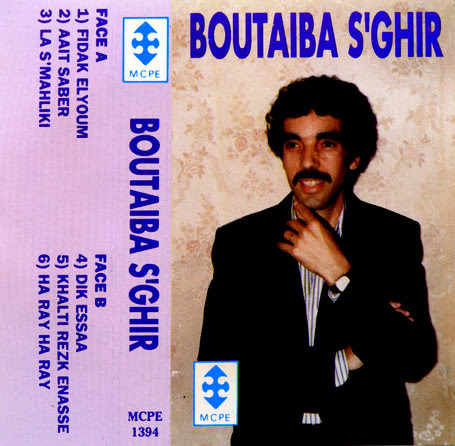
Boutaiba Sghir  MCPE 1394


Label : MCPE 1394

Format : Tape
 
 
A1 Fidak Elyoum
A2 Aait Saber
A3 La S'Mahliki
B1 Dik Essaa
B2 Khalti Rezk Enasse
B3 Ha Ray Ha Ray

HERE


 Boutaiba Sghir - Sonia Disques  -  5330


Label : Sonia Disques  -  5330

Format : Tape

Year: 1981

 
A1 Goulili Wah
A2 Diri Latay
A3 Dirou Hak Ou Hak 
B1 Maandich Ma
B2 Dayha Oulabes
B3 Malgre Tout

HERE


 Boutaiba Sghir - Sona / Fatma Fatma


Label : Zed El Youm  -  ZEY 702

Format : Vinyl 7"


 Side A  Sona

 Side B Fatma Fatma

 HERE


 Boutaiba Sghir & L'Ensemble De Saïd - Khali ya Khali / Hamam ya Hamam


Label : Lila-phone  233

Format : Vinyl 7"


 Side A  Boutaiba Sghir & Chaba Fadila - Khali ya Khali

 Side B   Hamam ya Hamam

 HERE


  Boutaiba Sghir & L'Ensemble De Saïd - Raba Raba / Bnat Miramar


Label : Lila-phone  234

Format : Vinyl 7" 


 Side A Boutaiba Sghir & Chaba Fadila - Raba Raba

 Side B   Boutaiba Sghir - Bnat Miramar

HERE 


   Boutaiba Sghir & L'Ensemble De Saïd - Manmchiche / Ghir Sghira 


Label : Lila-phone  235

Format : Vinyl 7" 


 Side A  Manmchiche

 Side B  Ghir Sghira Ou Rayha 

 HERE


 Boutaiba Sghir & Orchestre Mimi Bellemou -  Dayha Ou Labes / Lah Yal Aarem


Label : Zed El Youm  - ZEY 583

Format : Vinyl 7" 


Side A  Dayha Ou Lab

Side B  Lah Yal Aarem

HERE


 Boutaiba Sghir & Orchestre Mimi Bellemou -   Zaoudjouha Ou Ghabnouha


Label : Zed El Youm  - ZEY 600

Format : Vinyl 7" 


Side A  Zaoudjouha Ou Ghabnouha

Side B  Zaoudjouha Ou Ghabnouha (Suite)

HERE

venerdì 22 aprile 2022

AA.VV. - Maghreb Lyon 1972-1998


Since the 1950s, the cafes and clubs located around Place du Pont (now known as Place Gabriel Péri), ​​a square located in the heart of the "La Guillotière" district in Lyon, have played a fundamental social role for several generations of migrants and contributed significantly to the emergence of a unique music of exile. 

These places, spaces of solidarity, relaxation and expression, have made it possible to heal the painful experience of the Ghurba (separation or nostalgia for the exile) and have been a launching platform for many singers and musicians, creators of a multifaceted and fraternal music, with a direct contact with daily reality and with all that it brings with it.

Immigration from the countries of the Maghreb area, a direct consequence of the French colonial past (past?), meant that the indigenous population came into contact with, and incorporated, different cultural styles. Musically speaking, any young person who grew up in France between the 70s and 90s has acquired a certain familiarity with the melodies from the countries of the North African area. In the case of Raï (an Algerian musical genre widespread beyond the Alps), many songs have become real national anthems.

 If large centers such as Marseille and Paris were fundamental for the diffusion of Arabic music, both classical and popular (the birth in the capital of "L'istitute du monde arabe" in 1987 was decisive in raising awareness of the cultural heritage of the Maghreb), the city of Lyon with its “modest and brilliant” Maghrebi scene, definition given by the journalist Daniel Mermet, has given birth to a truly unique musical mutation since the 1970s.

Little known and less visible on a national level, the Maghrebian musical community of the city, made up of unpretentious individuals, with a variable level of professionalism, but driven by a great desire to play together, has given life to a new sound fruit of the unprecedented encounter between oriental melodies and the sounds produced by the new technological products that appeared on the market.

The composed songs, in which the darbouka coexisted with a drum machine, the synthesizer took the place of the Zorna (a wind musical instrument) and the raï or staifi merged with disco rhythms or funk guitar riffs, faced everyday reality by speaking of separation, uprooting and love,faced with irony the myth of the "homecoming" and denounced the living conditions and the ordinary racism of the host country. 

Every musical genre was represented: from Raï to Malouf, from Staifi to Chaoui and Chaabi. Although most of the musicians were of Algerian origin, artists from Morocco and Tunisia were also involved in the creation of this new hedonistic and uninhibited suound, definitively established itself during the 1980s, which in its experimental component can be credited as a forerunner of world music. 

Spread on the market through the cheap and popular audio cassettes produced by labels such as "l'Étoile Verte", "Sedicav", "Mérabet", "Bouarfa" and "El Bahia", all located in the surroundings of Place du Pont, this new music went beyond the city area, conquering a large audience both in the Rhône Alpes region and in the Maghreb area, but remained half-known nationally.

It is counted that hundreds of audio cassettes were produced until the end of the 1990s, the existence of which could have fallen into oblivion if the regional research center "Center Des Musiques Traditionnelles Rhône Alpes" had not intervened to create in 2014 , with the collaboration of the musician sociologist Richard Monségu and the anthropology and music researcher Péroline Barbet, a box containing 3 thematic CDs that testify to the various facets of this musical scene derived from a socio-economic context typically linked to the history of France which now forms an integral part of the national popular heritage and which represents a work of the highest artistic, sociological and cultural value.


Sin dagli anni’50 i cafè ed i locali situati attorno a Place du Pont (oggi conosciuta come Place Gabriel Péri ), piazza situata nel cuore del quartiere "La Guillotière" a Lione, hanno svolto un ruolo sociale fondamentale per diverse generazioni di migranti e hanno contribuito in modo significativo all'emergere di una musica d'esilio unica nel suo genere. Questi luoghi , spazi di solidarietà, relax ed espressione, hanno permesso di sanare l'esperienza dolorosa della Ghurba (separazione o nostalgia dell'esule) e sono stati una piattaforma di lancio per molti cantanti e musicisti artefici di una musica poliedrica e fraterna, a diretto contatto con la realtà quotidiana e con tutto ciò che essa porta con sé.

L’immigrazione dai paesi dell’area del Maghreb, diretta conseguenza dal passato ( passato ?) coloniale francese ha fatto si che la popolazione autoctona entrasse in contatto, e incorporasse, stili culturali diversi. Musicalmente parlando qualsiasi giovane cresciuto in Francia tra gli anni ‘70 e 90’s ha acquisito una certa familiarità con le melodie provenienti dai paesi dell’area nord africana. Nel caso del Raï ( genere musicale algerino diffusissimo oltr’alpe) , molti brani sono divenuti veri e propri inni nazionali.

Se grandi centri come Marsiglia e Parigi sono stati fondamentali per la diffusioni della musica araba, sia classica che popolare (la nascita nella capitale de L’istitute du monde arabe nel 1987 è stata decisiva per far conoscere il patrimonio culturale del maghreb), la città di Lione con la sua scena maghrebina “modesta e brillante”, definizione data dal giornalista Daniel Mermet, ha partorito a partire dagli anni ‘70 una mutazione musicale davvero unica.

Poco conosciuta e meno visibile a livello nazionale, la comunità musicale magrebina cittadina, formata da individui senza pretese, con un livello di professionalità variabile, ma spinti da una gran voglia di suonare insieme, ha dato vita ad un nuovo suono frutto dell’inedito incontro tra melodie orientali e le sonorità prodotte dai nuovi prodotti tecnologici che si affacciavano sul mercato.

I brani composti , nei quali la darbouka coesisteva con una drum machine, il sintetizzatore prendeva il posto della Zorna (uno strumento musicale a fiato) ed il raï o lo staifi si fondevano con ritmi disco o riff di chitarra funk, affrontavano la realtà quotidiana parlando di separazione, sradicamento e amore, celebravano con ironia il mito del “ritorno a casa”e denunciavano le condizioni di vita e il razzismo ordinario del paese ospitante.

Ogni genere musicale veniva rappresentato: dal Raï al Malouf, dallo Staifi al Chaoui e allo Chaabi. Anche se la la maggior parte dei musicisti era di origine algerina, anche artisti provenienti da Marocco e Tunisia sono stati partecipi nella creazione di questa nuovo suound edonistico e disinibito, affermatosi definitivamente nel corso degli anni'80, che nella sua componente sperimentale può essere accreditato come antisegnano della world music.

Diffusa sul mercato attraverso le economiche e popolari audiocassette prodotte da etichete quali “l'Étoile Verte”, “Sedicav”, “Mérabet”, “Bouarfa” e “El Bahia” , tutte site nei dintorni di Place du Pont, questa nuova musica travalicò l’area cittadina conquistandosi un vasto pubblico sia nella regione del Rhône Alpes che nell’area del Maghreb, ma rimase semisconosciuta a livello nazionale. 


Si conta che siano state prodotte, sino alla fine degli anni 90’, centinaia di audiocassette la cui esistenza avrebbe potuto cadere nel dimenticatoio se non fosse intervenuto il centro di ricerca regionale “Centre Des Musiques Traditionnelles Rhône Alpes” il quale , servendosi della collaborazione del musicista sociologo Richard Monségu e della antropolga e ricercatrice musicale Péroline Barbet, ha realizzato nel 2014  un cofanetto contenente 3 Cd tematici che testimonia le varie sfacettature di questa scena musicale derivata da un contesto socio-economico tipicamente legato alla storia della Francia che forma ormai parte integrante del patrimonio popolare nazionale e che rappresenta un opera di altissimo valore arstico, sociologico e culturale.


AA.VV. - Maghreb Lyon 1972-1998


Disc 1 / Exil Et Appartenances

01  Mokhtar Mezhoud - Yama Lala Essahb Elgadar 
02  Salah El Guelmia - Matsalounich 
03  Samir Staifi - Batna Ya Batna 
04  Amor Hafsouni - Gatli R'wah 
05  Amor Hafsouni - Dialogue: À quoi sert la nationalité française? 
06  Amor Hafsouni - Mabedelchi Et Djenessia 
07  Zaïdi El Batni - Dialogue: Les Expulsions 
08  Zaïdi El Batni - Malina Man Elghrba 
09  Mokhtar Mezhoud - Salamat  
10  Salah El Annabi - Hata Fi Annaba 
11  Samir Staifi - El Ghorba 
12  Omar El Maghribi - Hada Mektoubi 
13  Tazi Boukhari et Aouicha - Comment Faire? 
14  Smail Chaoui - Thaqvailith 
15  Cheba Nacera - La Ma La Khayti 
16  Amar Staifi - L'Algérie 


Disc 2 / Chroniques Politiques Et Sociales / Vie Quotidienne

01  Omar El Maghribi - J'en Ai Marre
02. Zaïdi El Batna - Noudou Yaradjala
03  Amor Hafsouni - Yadalaliya 
04  Chabati - Arouah Lil 
05  Zaïdi El Batna - Franca Y Afranca
06  Omar El Maghribi - Sid L'hakem 
07  Zaïdi El Batna - Malik Y A Malik 
08  Omar El Maghribi - Skini Belkess 
09  Tazi Boukhari - Ya Taleb? 
10  Zaïdi El Batni - Moul El Mercedes 
11  Tazi Boukhari - 404 Kahla 


Disc 3 / Amour, Amitié Et Trahisons

01  Salah El Guelmia - Ma Andiche Zhaar 
02  Rabah El Maghnaoui - Kountie Ghalia
03  Salah El Guelmia - Hayd Yedik Aaliya 
04  Cheb Houcine Chabati & Groupe El Azhar - Aïnik Kouaouni 
05  Omar El Maghribi - Choufou-Choufou 
06  Cheb Mimoun - Anabghit Hbibi
07  Amor Hafsouni - Rouf Aliya 
08  Rachid Staifi - Ya Lekbida 
09  Mokhtar Mezhoud - Ami Radjel 
10  Rabah El Maghnaoui - Amayna Alik Anti  
11  Mokhtar Mezhoud - Kharjet Mel Hamam 
12  Cheba Nacera - Ana Britah Avocat 
13 Jamal Estaifi - Ma Andi Dala  
14  Amar Staifi - Nedik Nedik 


HERE

Related Posts Plugin for WordPress, Blogger...