lunedì 10 novembre 2014

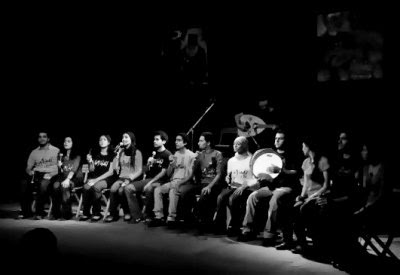
Jowan Safadi جوان صفدي


Jowan Safadi is an alternative Palestinian singer, songwriter and guitarist, from Nazareth, who creates Arabic music with various influences. Dedicated to bringing fresh sound and lyrics to the alternative arabic cultural scene, with a wide range of challenging songs from political and social to emotional and philosophical themes.

Jowan Safadi started his career as a singer, songwriter and front man of “Lenses”, a project which ended in late 2007 producing 3 studio albums of experimental rock. Jowan's solo breakthrough kicked off in 2008 when his single Ghool topped local radio charts, captivating underground audiences with its fuzzy electrorock sound. This was followed by a series of enticing singles until his debut solo album Namrud was finally released. Smoothly fusing punk-rock aesthetics with Arabic grooves and intonations, it included songs such as “Electricity” and quirky parody "Poor Infidels" which rapidly became an anthem for fans across the Arab world. Poor Infidels also subsequently led to his detention in Jordan, for which Jowan was accused of blasphemy. While Jowan’s lyrics can be controversial, subtly toned with his personal reflections on a wide range of issues related to politics, religion and philosophy, this fundamental component is what gives his work a rare and revealing authenticity.


(Souce : Facebook


Jowan Safadi l' enfant terrible del rock palestinese


Da che mondo è mondo ogni paese ed ogni stagione musicale ha avuto il suo eroe dannato , il cantante /musicista oltraggioso ed irriverente , agnello sacrificale e capro espiatorio che si fa carico di ogni degenerazione e perversione che attraversa la società in cui opera . La giovane scena rock palestinese non difetta in questo campo producendo un valido candidato al ruolo di artista rock maledetto . Il suo nome è Jowan Safadi , un arabo israeliano nato nella città di Nazareth nel 1973 , che con le sue liriche oltraggiose ed il suo atteggiamento irriverente ha alimentato il gusto censorio sia della società borghese israeliana sia di quella tradizionalista araba.

Il rapporto di Jowan Safadi con la musica non inizia in Palestina, bensì in India. Durante un viaggio attraverso le montagne della catena Himalayana decide di trasformare la sue poesia ed i suoi pensieri in canzoni. Compra una chitarra e prova ad esercitarsi da autodidatta senza molto successo. Si ritrova in una situazione complessa, uno zaino pesante ed una chitarra che non riesce a suonare. Decide cosi di sbarazzarsi dello strumento prima di far ritorno in Palestina.

Al suo ritorno in patria decide di fare un novo tentativo ed acquista un'altra chitarra: "E' stato il dono che ho fatto a me stesso per il mio 21 ° compleanno" ricorda .

Più compiutamente l' 'avventura musicale di Jowan Safadi comincia agli inizi degli anni 2000 dopo il suo trasferimento da Nazareth nella cittadina di Bir al- Sabah ( Beersheba ) . In compagnia di alcuni amici israeliani anti-sionisti e refusenik ( termine che indica i giovani israeliani che rifiutano il servizio di leva) dà vita al gruppo indie rock “Lenses “, forse il primo ( e unico ) gruppo rock arabo-ebraico in Medio Oriente . Riguardo la genesi del gruppo dice Jowan : “ Allora non ero che un chitarrista in erba , ho contattato alcuni musicisti locali che casualmente erano israeliani . Non è stata una scelta ragionata , desideravo solo fare musica. Non mi importavano ne la nazionalità ne la religione , i partecipanti al progetto dovevano solo essere abbastanza aperti mentalmente per intraprendere questa esperienza insieme a me . Comunque , non ho mai percepito i miei compagni come israeliani. Erano di sinistra e possedevano un elevato livello di consapevolezza politica . Si sono rifiutati di servire nelle forze armate e aborrivano l'occupazione ".

La musica prodotta dal gruppo rappresenta qualcosa di veramente nuovo per il panorama musicale mediorientale. Al di la della composizione etnica della band la sfida dei Lenses è (in un primo momento) di natura prevalentemente musicale . Un ibrido indie rock che unisce il punk ,la sperimentazione ed il Lo-fi con la musica araba. Guidata da Jowan Safadi , che del gruppo è stato cantante, autore e chitarrista , la band realizza nel corso di otto anni tre album in studio. Si può affermare che la maturazione e l'evoluzione musicale del progetto è andata di pari passo con la crescita in consapevolezza dei suoi componenti . Infatti dopo un primo album cantato in lingua inglese costituito da brani dal contenuto prevalentemente intimista , i successivi lavori si orientano verso temi sociali e politici e le canzoni vengono interpretate adottando l'idioma arabo.
Il lavoro dei Lenses , i quali pur ottenendo un buon riscontro in ambito underground non riescono a sfondare come gruppo mainstrem, non passa comunque inosservato . L'attenzione dei media si catalizza principalmente sul fatto che un giovane ragazzo arabo possa produrre musica indie rock e sia alla testa di un gruppo composto da ragazzi ebrei. Alcuni partiti politici israeliani cercano persino di strumentalizzare il progetto portandolo ad esempio come modello di coesistenza e di integrazione.

Nel 2007 dopo la realizzazione dell'album “ Ahlan Byebye “ Jowan Safadi decide di sciogliere il gruppo . Le ragioni della scelta sono molteplici : “ Non siamo riusciti a rendere grande il progetto Lenses” dice Jowan “ La band era troppo all'avanguardia . Il pubblico arabo nutriva una forte diffidenza per il fatto di avere in organico musicisti israeliani ed è stato impossibile affermarsi sulla scena musicale israeliana cantando in arabo . Per quanto mi riguarda , dopo la seconda Intifada , sono diventato molto più politicizzato. Volevo tornare alle mie radici e alla cultura araba. Data la situazione politica, non avevo più il privilegio di non scegliere da che parte stare. Ho sentito che stavo relegando i musicisti intorno a me al ruolo di meri esecutori delle mie canzoni. La sanguinosa invasione israeliana di Jenin ha rappresentato l'inizio di un risveglio che ha permesso di ristabilire la realtà nella mia testa . Ho intensificato le canzoni politiche e la band ha cominciato a essere considerata " estremista" tra gli israeliani “.

Finita l'esperienza con i Lenses Jowan lascia Bir al- Sabah per trasferirsi a Haifa dove collabora con varie band composte da soli musicisti palestinesi . Continua a comporre canzoni dal forte contenuto critico . Le sue armi favorite sono l'ironia ed il sarcasmo , i temi affrontanti riguardano il razzismo, la condizione dei rifugiati e dei prigionieri politici (ovvero la vita quotidiana sotto l’occupazione) , la corruzione politica , l' ipocrisia della religione e , tabù dei tabù, il sesso in tutte le sue varianti di genere.
La sfida lanciata da questo musicista palestinese non si limita al campo squisitamente politico ma investe la società mediorientale nella sua totalità , attaccando tanto il sionismo quanto le dinamiche oscurantiste della società araba. L'occupazione israeliana e la condizione della popolazione palestinese sono solo una goccia nel mare delle immense storture che soffocano l'individuo. Il progetto di Jowan Safadi mira ad infrangere ogni barriera e distruggere ogni tabù, la sua è una lotta contro le convenzioni e gli stereotipi condotta con uno spirito che si potrebbe quasi definire messianico . Non è un caso che sia nato a Nazareth e che suo padre facesse di mestiere il falegname : “ vivevamo nella stessa strada di Maria e Giuseppe “ ironizza sarcasticamente.

Il primo singolo realizzato dopo la fine del progetto Lenses si intitola “ Ghool” . Si tratta di un buon pezzo , in stile electro pop. Accattivante e orecchiabile il brano diviene una hit nelle stazioni radiofoniche locali ed assicura una certa visibilità al personaggio. Con la (relativa) notorietà cresce il numero di ammiratori e di pari passo lievitano le polemiche , gli insulti e le minacce.


Nel 2010 ,in occasione della sua partecipazione ad un festival di strada a Haifa la polizia interviene per fermare la sua esibizione, accusandolo di essere “troppo controverso” e di agitare le folle .
Nel 2011 il suo lavoro viene portato agli onori della cronaca dal parlamentare Aryeh Eldad , appartenente ad un partito di destra israeliano , il quale apre un procedimento presso la Knesset a carico di Jowan Safadi accusato di “ incitamento alla violenza e al terrorismo “. Il procedimento viene avviato e chiuso nel giro di due mesi per mancanza di prove, ma il fatto da bene il senso di quanto disturbante possa essere l'opera del musicista. Forse il parlamentare israeliano non aveva molto gradito la canzone che il musicista scrisse mentre infuriava l'operazione piombo fuso ai danni della striscia di Gaza. Nel brano in questione , intitolato “Tayran ababyl” (Uccelli di fuoco) , il musicista palestinese , prendendo in prestito immagini legate alla mitologia antica, invocava l'altissimo perché inviasse gli uccelli di fuoco a distruggere tutti gli aggressori sionisti .

Nel febbraio del 2012 vede la luce il primo disco solista di Jowan. Anticipato da una frase postata dall'autore sulla sua pagina Facebook che recita : " Penso, dunque mi ribello " , il nuovo lavoro viene intitolato “ Namrud “ , parola araba che significa “Provocatore “ . L'intestazione non lascia dubbi circa la natura del contenuto.

Salutato come controverso e creativo , autoprodotto e autofinanziato “ Numrud “ è stato ,in un primo momento, messo a disposizione in download gratuito presso la pagina Bandcamp di Jowan Safadi ed è , secondo le parole dell'autore : “ un album musicale difficile da definire o descrivere, dal momento che combina temi politici, sociali, filosofici e romantici. Fonde molteplici generi musicali che possono dare a volte un senso di distacco. Tuttavia, è un lavoro sequenziale da ascoltare secondo l'ordine suggerito per completare il viaggio” .

Effettivamente la proposta musicale di Jowan trascende ogni confine , fonde la tradizione rock di matrice occidentale , la canzone goliardica, il cabaret e la musica araba tradizionale. Ironia e sarcasmo restano gli elementi comuni a tutti i brani , gli ingredienti base che alimentano la fama del suo autore.

Accompagnato da un band chiamata “ Fish Samak “ ( Pesce , ripetuto in inglese ed arabo) , Jowan Safadi comincia un tour in varie città arabe per presentare la sua nuova fatica . I problemi non tardano a presentarsi . Il 30 Novembre del 2012 , dopo la prima delle due date previste ad Amman in Giordania , il cantante viene arrestato dalle forze di polizia giordane e trattenuto presso il commissariato di polizia di Abdali per essere poi imprigionato a Jowayda
L’accusa imputatagli è stata di “offesa alla religione” a causa dei testi di alcune sue canzoni. Una in particolare, "Ya Haram al-Kuffar " (Poveri infedeli) ha molto irritato la sensibilità dei credenti.
" Il concerto è stato davvero buono  " dice il musicista ,” Il dopo show , non tanto “ .

Appena si diffonde la notizia del suo arresto parte una campagna su internet tesa alla liberazione dell'artista. Fuori dalla prigione si affollano numerosi sia i sostenitori sia i detrattori del musicista. La pagina Facebook dedicata alla campagna si riempie immediatamente , oltre che di appelli per il rilascio , di aspre critiche degli ultra-religiosi , di minacce e citazioni dal Corano . Stessa cosa capita per l' hashtag su Twitter (#freejowan) lanciato a tempo di record. Diversi musicisti si battono per il rilascio del loro collega e amico. Tra questi la cantante tunisina Emel Mathlouthi e la cantante palestinese Rim Banna .

La combinazione tra il sostegno popolare e la pressione esercitata dagli avvocati fa si che Jowan sia rilasciato dopo due notti passate in prigione. Espulso dalla Giordania e rimpatriato il giorno stesso deve promettere alle autorità di non cantare più canzoni che possano offendere la sensibilità dei musulmani .

Passata la paura ringrazia cosi , sulla sua pagina Facebook , coloro che lo hanno sostenuto : “Grazie bella gente per lo straordinario supporto e per l’attenzione. Sono sano e salvo a casa. Vorrei avere altro da dire, ma per ora no. Sembra tutto un sogno. Uno di quelli brutti però”.

L'incidente giordano espone il lavoro di Safadi ad un pubblico più vasto, ma compromette anche la sua libertà di trarne vantaggio. Gli vengono offerti concerti in Egitto e Tunisia, ma a causa delle tensioni crescenti è costretto a posticipare l'accettazione degli inviti.

Jowan non si fa scoraggiare dagli eventi e si dedica assiduamente al lavoro , consolidando il rapporto con la band Fish Samak. La sfida più che politica diventa prevalentemente musicale . Ovviamente le tematiche dei nuovi pezzi realizzati con il gruppo interessano sempre il campo sociale e politico ma una particolare attenzione viene rivolta alla musica mai come ora contaminata con il rock occidentale. “ I Fish Samak sono una band che suona Free Rock arabo direttamente dalle profondità del Mar Morto “ dice Jowan “ Le nostre influenze musicali includono Beatles, Doors , Pixies, Nirvana, Black Sabbath e Pink Floyd , ma anche Sheikh Imam e il folklore palestinese ".
Combinando un atteggiamento punk con una dolce follia , il gruppo prende delicatamente in giro il sistema, realizzando una serie di canzoni che pagano un forte debito , in termini musicali , ad un certo tipo di indie rock americano in voga negli anni '90 . I riscontri sono ottimi e la band si crea un nome di tutto rispetto sulla scena musicale mediorientale. Non mancano ovviamente le critiche . Alcuni contestano al gruppo la mancanza di un impegno diretto a sostegno della causa palestinese . “ Io sono un essere umano prima di essere un palestinese “ afferma il musicista ,“ Essere un artista palestinese porta con se aspettative che, a volte, possono essere ingiuste. Un artista palestinese non deve necessariamente prestare la sua voce alla causa per ottenere l'accettazione del pubblico arabo”.
Il realtà le accuse risultano essere prive di un vero fondamento . Analizzando i testi di alcuni brani del gruppo non si trovano attacchi diretti allo stato di Israele ma le critiche politiche certamente non mancano . Due canzoni in particolare, molto amate e richiestissime durante i concerti , sono esemplificative della filosofia della band. Nel brano intitolato “ Meen Beddo Yerkabna” ( Chi ci fotterà ancora?) canta Jowan : “ Sono venuti i Turchi e poi se ne sono andati, Sono venuti gli Inglesi e poi se ne sono andati, Sono venuti gli Ebrei, domani vedremo. Che cosa succederà quando se ne andranno . Chi ci fotterà ancora quando se ne andranno i nostri cugini? Hanno stretto la cinghia, ci hanno vietato di parlare. Per educarci e per mantenere la pace. Hanno rubato la Palestina mentre noi dormivamo. Sognando il Mahdi e Saladino”. Mentre il brano “Fy hadni al Ihtilal “ (Fra le braccia dell'occupazione) affronta sia le rivolte arabe sia la situazione interna palestinese declamando : “ Guarda, oh guarda come la primavera si è rivelata essere un autunno , come ci hanno ingannati .Guarda quanto Salafiti sono i nostri paesi , inghiottiti dal buio nulla può essere visto.
Nessuna estate nessun divertimento. Non abbiamo visto altro che morte , la primavera si è rivelata una truffa .
Forse io sono triste , perché per un attimo mi sono sentito al sicuro tra le braccia dell' occupazione
”.

Accompagnato da un video , molto eloquente, che alterna riprese di un Jowan Safadi ammanettato intento a giocare con vari oggetti a riprese in notturna di branchi di iene intente a sbranare carcasse di animali, il brano rappresenta una delle cose migliori realizzate dal gruppo sino ad oggi, sia sotto il profilo contenutistico che musicale.

Se osservato con sguardo distratto Jowan Safadi potrebbe ricordare uno dei tanti irriverenti ribelli (senza causa ) che hanno popolato la mitologia rock, ma ciò che è vero in ambito occidentale acquista tutt'altro significato nell'area del levante. Brillante, geniale, provocatorio e, a volte , contraddittorio Jowan Safadi appartiene in realtà ad una nuova generazione di musicisti arabi il cui interesse sociale e politico trascende i localismi ed i confini regionali . Pur denunciando opprimenti realtà politiche a lui vicine , l'occupazione israeliana in primis , questo Kurt Cobain arabo porta avanti un discorso legato al risveglio delle coscienze e alla libertà di pensiero e di espressione comune a quello di altri musicisti arabi presenti nella regione. Se si prendono in esame i due testi appena citati balza agli occhi come , più che percorrere i sentieri della contestazione verso lo stato israeliano , oggetto delle provocazioni sono le menti arabe assopite ed immobili.
Tra le molte libertà rivendicate quella sessuale è forse la più invisa alle strutture sociali tradizionali . Rimanendo coerentemente fedele al proprio intento di combattere le censure e le ipocrisie della società araba il musicista ha contribuito con due brani , realizzati per l'occasione, alla realizzazione di uno dei progetti culturali più interessanti che hanno visto la luce in Palestina nel corso del 2013..
Su iniziativa di al Qaws , la principale organizzazione palestinese che si occupa delle diversità sessuali e di genere ( attiva sia nei territori occupati sia nella società araba israeliana), è stato realizzato un album intitolato “Ghanni A'an Taarif “ (Canto della sessualità) . Il progetto nasce con l'obiettivo, da parte degli attivisti di al Qaws, di raggiungere i giovani palestinesi per aprire nuove discussioni sulla sessualità e sulla diversità di genere nella società palestinese attraverso la musica , considerata una forma d'arte espressiva che ha il potenziale di far pensare e sentire. Oltre a Jowan Safadi hanno preso parte all'album altri musicisti di spicco della scena musicale palestinese contemporanea tra i quali : Rimon Haddad, Maisa Daw, Jam Tkseer, Haya Zaatri, Abu Rabus e Rola Azzar.


Quello di Jowan Safadi è quindi un assalto culturale operante su tutti i fronti. Se già , in virtù di brani considerati provocatori , veniva considerato in Israele un pessimo soggetto , dopo il suo sostegno alla causa omosessuale c'è da chiedersi cosa possa pensare di lui la società tradizionalista araba. In barba a moralisti, ultra religiosi e politici aberranti questo , non più giovane, menestrello moderno è comunque entrato nel cuore di molti . Le provocazioni , specie se intelligenti, offrono sempre spunti di riflessioni . Amato da colleghi che lo difendono a spada tratta, coetanei, che ne apprezzano lo stile , e giovani che in lui vedono un diverso modo di essere arabi Jowan Safadi può essere considerato attualmente l'unico e vero rocker del mondo arabo dal quale aspettarsi nuovi stimoli e nuove interessanti “provocazioni”

Molte volte ricorre il termine controverso in riferimento alla natura di questo musicista. Sfogliando il dizionario della lingua italiana come definizione di “controverso”  troviamo : “ Che è oggetto di contenzioso ,che si presta a contrastanti interpretazioni” . Il dizionario dei sinonimi e dei contrari
offre invece queste alternative : “ discusso, dubbio, incerto, discutibile, ambiguo, oscuro, problematico, in sospeso, dibattuto, opinabile”.

Non sembrerebbe  che i testi dei  brani di Jowan Safadi possano dare adito a diverse interpretazioni ma chissà, forse politici e religiosi ne sanno più degli altri . Comunque dalle  definizioni offerte dai sacri testi della lingua italiana si può evincere che la società israeliana considera oscure, ambigue ed opinabili le critiche all'occupazione, la difesa dei diritti civili e il desiderio di libertà del popolo palestinese mentre la società araba ritiene discutibili e problematiche le libertà sessuali e la libertà di pensiero. Le sofferenze patite da migliaia di persone ferite ed uccise, da uomini e donne segnati dal marchio dell'infamia per la sola colpa di amare, i patimenti sofferti a causa della privazione dei diritti , della negazione all' esistenza , le conseguenze delle case distrutte , degli imprigionamenti di massa e delle punizioni collettive rientrano dunque , per definizione, nella categoria dei contrari a controverso, vale a dire : “ indiscutibile, indubbio, certo, chiaro, accertato, risolto, stabilito”.

Non fa una piega.....o forse no ?


Jowan Safadi جوان صفدي - Namrud نمرود


01 I Gave you My Heart أعطيتك قلبي
02 All the Girls كل البنات
03 Electricity كهربا
04 Poor Infidels يا حرام الكفار
05 Sound of Israel صوت إسرائيل
06 Cheers Homeland كاسك يا وطن
07The Microchip Song موال الميكروتشيب
08 The end of sandman نهاية رجل الرمال
09 Touch me المسيني
10 Live My Life أعيش حياتي


HERE


Jowan Safadi singles & Fish Samak songs


01 Ghool
02 Tayran ababyl  طيرًا أبابيل ( Birds of fire )
03 Biddy kaman   بدي كمان  (I want more)
04 Ji2et  ila Ahli جئت الى أهلي    Feat.  Haya Zaatry
05 Nihayya النهاية 
06 Al Haqyqa al haqiqayya  الحقيقة الحقيقية (The real truth)    
07 'Abyd wa jawary   عبيد وجواري 
08 Basitana  بستنا
09 Sary' al duban  سريع الدوبان
10 Qina'  Jadid   قناع جديد
11 Walad zghyr ولد زغير Feat. Basem Sayej
12 Meen Bedo Yerkabna مين بدو  يركبنا
13 Fish Samak - Meen Bedo Yerkabna Live @El Genaina Theater 2014
14 Fish Samak - Fy hadni al Ihtilal في حضن الاحتلال   (In The Arms of Occupation )
15 Fish Samak - Beno Bain بين وبين
16 Fish Samak -Kalebti كلبتي (My Bitch)
17 By Ma ahbalni بي ما اهبلني  (Cover of Nirvana' song " Dumb")

HERE


Kalebti كلبتي (My Bitch) 


I used to have a clean bitch
The cleanest ever
from an authentic pedigree family
especially the mother
a purebred bitch with papers
with a muzzle and collar
I loved her and so did she
I treated her like my baby
My bitch
My love
My bitch
My love
My mama don't like dogs
She thinks they're disgusting
She said please, my son
We don't need this thing
I told her not to worry
We'll keep it all clean
She said oh my son,
you love her better than me?
My bitch
My love
My bitch
My love
She went to play with the dogs
They came to sniff her
When she lifted up her tail
They fell in love with her
I was just a little kid
And I didn't understand
I pulled her, she pulled me back
She almost bit my hand
my bitch
my love...
My bitch

My love
My bitch
My love …


Meen Bedo Yerkabna مين بده يركبنا ( Chi ci fotterà ancora?) -  Live at Taybeh Oktoberfest


Sono venuti i Turchi e poi se ne sono andati
Sono venuti gli Inglesi e poi se ne sono andati
Sono venuti gli Ebrei, domani vedremo
Che cosa succederà quando se ne andranno
Chi ci fotterà ancora quando se ne andranno i nostri cugini?
Hanno stretto la cinghia, ci hanno vietato di parlare
Per educarci e per mantenere la pace
Hanno rubato la Palestina mentre noi dormivamo
Sognando il Mahdi e Saladino
Chi ci fotterà ancora quando se ne andranno i nostri cugini?
Non non siamo venuti e non ce ne siamo andati
Siamo rimasti al nostro posto
Ogni giorno arriva un nuovo ospite
E la libertà è un sogno lontano


Traduzione dal''arabo a cura di Fernanda Fischione


 Tayran ababyl طيرًا أبابيل ( Birds of fire )


written at the time when the war was striking Gaza


O my Lord, send us the birds of fire
Aimed at the oppressors with stones of burning clay
See, what the children of Israel has done to us
And explain us the difference between them and the people of the elephant
O great Lord, show us that you do not like what is happening
O strong Lord, saved us from your chosen people

O fire, be cool and peace for us
O fire, burn the one who sent you on us

O Lord, strong lord, cool down the fire flames for us
O my Lord, save us from weapons of mass distruction


Ya Haram al kuffar يا حرام الكفار (Oh poor infidels)


Oh poor infidels ,swimming in the sea of fire
here comes judment day, as stated in the book
look how cute the believers are like good boys
holding the hand of god and walking into heaven
and heaven is very sweet it has wine and juice
it has trees and plants, it also has the prettiest girls
it has plenty of women ..very very sexy
every believers takes 70 lucky them, the believers

Oh poor infidels
swimming in the sea of fire

Oh poor infidels ,swimming in the sea of fire
here comes the judmen day, feel the doom
look how cute the believers are like good boys
holding the hand of god and walking into heaven
and heaven is very sweet it has wine and juice
it has trees and plants, it also has the prettiest girls
it has plenty of women ..very very sexy
every believers takes 70 lucky them, the believers

Oh poor infidels
swimming in the sea of fire

yeah..


Al Fatah الفتح ‎– Chants De La Résistance Palestinienne اناشيد المقاومة الفلسطينية


Old vinyl record given to the press by the French label " Le Chant Du Monde" . It collects the songs of resistance of the Palestinian political group " Al Fatah" .


A1 Assifa العاصفة
A2 Le Chemin De L’honneur طريق العزة
A3 Le Droit Des Partisans دين الثوار
A4 Un Seul Et Meme Sang وحدنا الدم
A5 Testament D’un Martyr وصية شهيد
A6 Nous Ne Fuirons Pas Notre Sol لا بنغادر و لا بنهادر
A7 Emmene-Moi خذني معاك

B1 Fedayine فدائي
B2 Arabe Palestinien عربي فلسطيني
B3 El Fatah, C’est Moi فتح أنا
B4 Je Resisterai أنا صامد
B5 En Avant المد.. المد
B6 Ainsi Va Notre Peuple مسيرة شعبنا
B7 Sur Les Collines فوق التل
B8 Debout, Palestine Meurtrie بلادي


 HERE


venerdì 7 novembre 2014

Tania Kassis تانيا قسيس


Tania Kassis started her first singing lessons at the age of 16, and gave her first solo opera concert at 17. The next year, she interpreted Cosette in the Musical « Les Misérables » at the UNESCO Palace in Beirut.

In July 2001, she is chosen to represent Lebanon in the Fourth Francophone Games (les IVème Jeux de la Francophonie) in Ottawa-Hull (Canada), where the local press said: "cette sirène du pays des cèdres qui a embrasé son public qui lui a réservé une ovation debout" (Journal Le Droit).
This participation had such a success that she was granted the Medal of the town of Ottawa-Hull, the Lebanese Achievement Medaland anExcellency Certificat by « The Canadian Lebanese Professional and Business Association of Ottawa ».

In 2003, she enters the Paris Conservatory in the class of Mr Pierre Catala, qualified by the Julliard School of New York. During this period, she discovers the Musicals and she gives a concert « Special Musicals » at the conservatory and then at the Estivals of Deir el Qamar (Lebanon).

In October 2006, she becomes a member and soloist of the Choir of the Paris Orchestra (le Chœur de l'Orchestre de Paris) and participate regulartly to it's concerts at the prestigious Salle Pleyel

In June 2007, she presents ETERNAL LEBANON (Eternel Liban) at the UNESCO Palace of Paris with a repertoire representing the Lebanese cultural diversity, mixing classical music to oriental and occidental music."Elle réussi la gageure de cet essor au niveau international" L'Orient-Le-Jour.

In August , she presents « L'Amour à l'Américaine », a jazzy concert that had a huge success at the Faqra Festival, and finishes the year 2007 with a big Christmas Concert untitled : "Christmas From The Movies" at the Palais des Congrès of Beirut, accompanied by a 12-piece orchestra and movies projections. This concert was attended by more than 1500 persons!


2008 was very rich in concerts: "From Mozart to Gershwin" and her role of Christine in "The Phantom of the Opera" in Paris, a concert in New York for the 125th anniversary of Gibran Khalil Gibran, "The Magic of Broadway" in Lebanon that received excellent comments in the press: "Une voix qui ensorcelle et séduit. Cette voix, on l'écouterait les yeux fermés juste pour le plaisir de la musique" L'Orient-Le-Jour.


She finished the year with a Latin American Concert Tour passing by Venezuela and Colombia, and a concert at the UNESCO Palace of Paris celebrating again the 125th anniversary of Gibran Khalil Gibran and sharing the stage with the famous french singer Francis Lalanne.

In 2009, Tania Kassis presented 2 Islamo-Christian Concerts in Paris & in Beirut. She composed for this occasion an "Islamo-Christian AVE" (an Ave Maria mixed with the Muezzin "Allah Akbar".

She perfomed in July at the "Christian Song Summer Festival" in Batroun, twice in August at the Faqra Festival ("Around The World" Concert and "Around The Virgin Mary" Concert), and in September at the Saida International Festival organised by Mrs Bahia Hariri "Oumsiya Loubnania".

Tania Kassis has also been invited to be part of the big Opening of the VIth Francophony Games that took place at the "Cité Sportive" in Beirut and that was attended by 30,000 persons as well as the Lebanese President Michel Sleimane, the French First Minister François Fillon, Mr Abdou Diouf, the Prince Albert II of Monaco and other lebanese and international personalities. Tania Kassis sang her "Islamo-Christian AVE " to represent the city of BEIRUT!

In November she offered a second concert in Colombia at the Teatro de Bellas Artes de Bogota that had a big success. She also sang a Maronite Mass at the famous Catedral de Sal that has been transmitted by several local television channels. She ended the year participating to the Second Festival of Sacred Music (Beirut Chant) with her “I’ll Be Home For Christmas” Concert at St Louis Capucin Church.

On February 14th 2010, Tania Kassis has been asked by the Lebanese Prime Minister Mr Saad Hariri to sing theIslamo-Christian AVE at the Martyr Square during the big commemoration of Rafic Hariri’s death in front of more than 200,000 persons. Following this performance, the Pope Benoît XVI asked the Prime Minister to send him a copy of this common prayer!


(Source : ARABOLOGY )


Tania Kassis تانيا قسيس - Oriental Colors 
ألـــوان شــرقــيـة  


01 Rajaa
02 Ounchoudat Bayrout 
03 Trabak Ya Lebnan 
04 Chou Ma Sar
05 Albi Dalili 
06 One Last Dance
07 Kel Ma Ftahtoun Aynayk
08 Jerusalem
09 Kilna Bil Hayy (Soundtrack from the Series ‎"Kulna belhay"
10 L'Amour est un Tango
11 Sawa Sawa / Juntos Juntos
12 Awedli el Madi
13 Chou Ma Sar (Techno Remix by Jad Mhanna & Chahé Cupélian) 
14 Albi Dalili (Said Mrad vs Axcess Club Remix)

HERE


Tania Kassis تانيا قسيس -  Islamo-Christian AVE صـلاة الـسـلام عـلـيـك يـا مـريـم إســلامـي-مـسـيـحـي


01 Islamo-Christian AVE

02 Ya Mariam El Bikr Fouqti
03 Ya Mariam El Bikr Fouqti - Acoustic Version


 HERE

lunedì 3 novembre 2014

Afif Bulos عفيف بولص


Afif Alvarez Bulos whose home is Beirut, Lebanon is been a teaching fellow at Harvard university where he has spent three years before getting his Ph.D in linguistics in june 1961. An associate of the Royal College of music in London, he originally intended to follow an operatic career. He has studied music in Beirut, London and Venice , and though he has given up an idea of an operatic career, he has continued to give vocal recitals in this country , in England and in the near east. He has sung at the B.B.C. and appeared on other TV and radio stations. He has a Publishied monograph on arabic music as well as piano and voice arragements of lebanese folk songs. He has also lectured in three continents on arabic musi, with the help of a tape recorder and a Harpsichord . After these experiences, he continued his studies at Harvard for a post-doctoral research.


Classical Arabic Music - A Recital of Muwashahat whit Afif Bulos & His ensemble


01 Lamma bada ( Andalusian Muwashah) 

02 Uthkurini ( Andalusian Muwashah)
03 Ya Man Yahinnu ( Modern Muwashah )
04 Biut-esh-shalahiyya ( Song without words - )
05 Ya shadiyal-alhan ( Modern Muwashah for instruments)
06 Tita ya mahla nurha ( Song of Upper Egypt)
07 Ya louru hubbiki ( Modern Muwashah for voice and instruments)
08 Wayli minal gharami ( Lebanese Air ) 

09 Al-loma ( Lebanese Air - Al-loma )


HERE


Afif Bulos عفيف بولص - Afif Bulos Sings Songs Of Lebanon, Syria & Jordan 


A1 Tafta Hindi تفتا هندي
A2 Mash’al مشعل
A3 Ala Dal`ona, `Al Yadi, Ali-`Mayyim, Ya Ghazayyel على دلعونة
A4 Bint Esh Shalibiyya بنت الشلبية
B1 'alrozana علروزنة
B2 Hayyin Darb Is Seif هين ضرب الصيف
B3 Gamil `Abaya جميل العباية 

B4 Lamma Bada Yatathanna لما بدا يتثنى
B5 Al Loma اللومة


HERE

martedì 28 ottobre 2014

Zaman Al Zaatar زمن الزعتر


Zaman al-Zaatar (Sign of Thyme) is an oriental fusion band led by Yacoub Abu Ghosh, a widely acknowledged composer and bass guitarist who plays in Jordan and throughout the region. Ghosh is the co-founder of various other performance projects too, including Music Matbakh, RUM, Tareq al-Nasser and Black Iris.

Formed in 2004, the band has three albums under its belt: “Like All People” (2005), “Zad” (2007), and their most recent, “Al-Khubz” (2012), which was released exclusively online and distributed for free.

Zaman Al Zaatar is an ongoing attempt to express - through music - the extreme diversity of influences that one is subjected to by living in this place (Amman) and time, and by that portraying the capability of spiritual and emotional growth within the society in Amman and the whole region. The beauty in Zaman Al Zaatar’s music could be a reflection of every face one may encounter on the streets of our cities.

The band has performed in many venues and festivals locally and regionally and enjoys a considerable following in most big cities in the middle east.

As a live act Zaman Al Zaatar employs a unique arrangement of western and Middle Eastern instruments to properly accentuate the fusion of styles that combined produce the sound of the band. They also rely strongly on the improvisational abilities of the band members to add color to the band’s performance and insure that the same show is never played the same way twice.. 


Yacoub Abu Ghosh, Bass Guitar


Zaman Al Zaatar's band leader and co-founder, Yacoub is a well established and respected composer and bass guitarist in Jordan and in the region, he is also one of the few who are dedicated to this field with close to 16 years of experience, he performed all over Europe, the Middle East and North Africa with many different musical outfits such as Music Matbakh, RUM Tareq Al Nasser and Black Iris. Yacoub recently released his first personal album entitled As Blue As the Rivers of Amman. He studied law at the University of Jordan & worked as a journalist for the Jordan Times daily and other publications such as JO magazine before becoming a full time musician. 


Ahmad Barakat, Oud


Another co-founder of the group, Ahmad is a true prodigy with his instrument, with excellent improvisational skills and vast theoretical and practical knowledge even at his fairly young age. Ahmed played with a number of renowned groups and musicians in Amman and Beirut such as Jafra and Shahadeen Ya Baladna. Ahmad is a civil engineer; he graduated from the University of Jordan in 2007. 


Nasser Salameh, percussion

Nasser is an excellent self-taught musician, specializing in Middle Eastern and world percussion with a noticeable talent that has led him to participate in many festivals in Europe and the Middle East. He was awarded the first prize for best musician in the pan-Jordanian Universities’ competition in 1999 and 2000. He performed with many groups and musical outfits, such as Rum Tareq Al Nasser, Nawazen and Karloma. He also worked as a percussion teacher at the National Conservatory of Music in Palestine. 


Yarub Smeirat, Violin

One of the most recognized violinists in Jordan, in addition to performing with numerous musical outfits locally and internationally and in both the traditional Arabic, pop, rock, jazz and classical styles, Yarub recently produced a unique show where he lead a considerable ensemble performing his own compositions and some classical Arabic tunes. Yarub is most well known for his unique abilities in improvisation on traditional maqams and the fluidity of his expression. 


Maan Al Sayyed, Percussion

Maan is a young percussionist who has already accumulated considerable experience performing with many bands and outfits including Sharq, Shoo Hal Ayyam and Makadi Nahhas. A true backbone of groove and rhythm who masters many percussion styles and instruments from the Spanish cajon to the traditional Arabic riq.


 WEB SITE


  Zaman Al Zaatar زمن الزعتر - Al Khubz الخبز


01 Alwisal
02 Raje3
03 Karamat
04 Al Khubz
05 Barada
06 Ya Asmarani
07 Um Aldunya
08 Sama3i Ihsan (Nawa Athar)
09 Alsa7rawi


HERE


Yacoub Abu Ghosh & Zaman El Zaatar @ Makan 14.4.2013 يعقوب أبو غوش و زمن الزعتر @ مكان from Mohamed El Gayar on Vimeo.

domenica 19 ottobre 2014

Dorsaf Hamdani درصاف حمداني


Since a young age, Dorsaf discovered her passion for music and her talent: a delighting and powerful voice.
Being a genius child, she applied herself seriously to develop her talent in order to take all chances to succeed. Thanks to her grand-mother, Dorsaf could obtain the best of the local singing and oral tradition.
Helped by her father ,a very keen music-lover and violinist, who supervised her and encouraged her to better advance, she succeeded to pick the attention of the greatest Tunisian composers while still very young.
After graduating from The Musical Academy of Tunis, she started an academic course in the renown High Institue of Musiclogy of Tunis.
There enchained series of concerts with the greatest Arabic and symphonic orchestras and a world tour (Canada, Spain, Egypt, Greece, Lebanon, Jordan, France, Morocco…), which promoted her enormous talent.
Her multiple passages to the temple of the Arabic music, Cairo Opera, endow her to be well-known and appealed by such great maestros as Salah Ghoubachi and Selim Sahab.
There she started gleaning prizes and honors: 1992 Best Prize of young Tunisian talents, 1995 second prize in the Arabic Song Festival in Jordan,and in 1996 the Golden Record of the Tunisian song.
She flied then to Paris to begin her Ph.D. in the Paris-Sorbonne University.
In Paris, Dorsaf collaborates with artists of different grounds and contributes to highly varied international shows. Therefore she enlarges her experience and enriches her musical and cultural repertoire.
Nowadays Dorsaf creates her own style, not imitating, she sings passionately melodies written and produced by significant names.
Over a year, Dorsaf represents the next growing star, able of bringing a deep change in the music universe

Tough by culture and acquaintances, as by her devotion to her job and her mastery of oriental and occidental techniques, she symbolizes the present renaissance of the Arabic renaissance.


(Source : Facebook)


“Open up your mind” – an interview with Dorsaf Hamdani


by Charlie Crooijmans


 Who is Dorsaf Hamdani?

 
“I am a classical Arabic singer from Tunisia and I have a master in musicology. I participate in this project with my two Norwegian colleagues (Berit Opheim and Unni Boksasp) and a Palestinian singer (Waed Bouhassoun), which was a nice opportunity for us!”
In 1992, Mandani receives the best prices for young talent in Tunisia, in 1995; the second prize for Arabic Music in Jordan, and in 1996 the gold disc of the Tunisian song (biography Hamdani at Yala).

Do you have your own orchestra?

“Yes, I have an orchestra in Tunisia. The two musicians at the project are in my band. The violist, Mohamed Lassoued, is my artistic director and there is the percussionist. I do concerts in Tunisia, I travel also outside the country for concerts, and I participate in national and local festivals like this year in the summer.”

What is your usual repertoire?

“It’s a classical repertoire. Like the solo I made at the concert.”


What are the lyrics about?

“My lyrics are very poetic and philosophical. Sometimes we speak about love and heartbreak. In a way it is all about love, loving people, love each other. Or love itself, even romantic, or there was one Sufi poem about Gods love.”

Who are your idols?

“Umm kalthoum, Asmahan, and Fairuz who is still alive. I love this woman she is not only a singer but also a big icon, and a modern woman.”

How did you get involved with the project in Norway?

“This connection is a collaboration of Accords Croisés, which is my label and my producers in France, and the Førde Festival. This was an initiative to put women in front. It is 100 years anniversary of women’s vote in Norway and also the Arabic revolutions and the Arabic spring. So it was a nice opportunity and a nice gathering to get to know each other and to make a mix of cultures together. I think it is a full success for me. I am really glad that we made it, that we can show that there is no frontier and that women can be really upfront.”

How do you connect musically to another culture so different from yours?

“The way to connect with another cultures is to open up. That was my way of being, open up myself, my music, my culture to this other culture that is quite different. Sometimes we have to keep it simple – in a few rehearsals we cannot put all the Arabic music, all the rhythms, all the scales, it is impossible – but it can be also interesting in the way that we change our way of thinking and we just open up our mind, accept different codes from other cultures.”

Do you also have the feeling the the music is a reflection of the culture or community?

“Oh yeah, sure. It does. I think the way of being with music. It’s not only music itself, it’s the way we act. Music is connected to nature, connected to the human way of being, the language, everything is connected together. When you recognize this in your own culture  – it took me a long time to see this, but it is obvious now – you can manage with other cultures, absorb it and make it fluid.”

During the debate I felt that Norway wants to be seen as an open and free country advocating freedom of speech, while at the border you could be treated like a suspect. What do you think of this?


“I think it is the same thing everywhere in this world. Humans are the same everywhere. It is not only Norway or another country. It’s because there is a war, a revolution, or there is poverty. So people unconsciously will think, ‘we have to interrogate this person, because maybe he or she is a terrorist’. It is not very bad that the police asks questions, it is the police and they have to do their job. So I don’t see it as a big thing. Because even in Tunisia, in my country, I can be arrested. Just interrogated by the police, because there is an event and they are looking for something, a criminal or anything. We don’t have to see this as a judgement or as an aggression.  At my point of view, we have to open our minds and see the positive things. Always!”

Is it easy to do concerts in Tunisia?


“Right now,  it’s not a problem to do concerts, but sometimes we are afraid that maybe somehow there will come a period that fundamentalists will say, ‘okay now we have power and from this day on you cut everything, no music, no dance, no sculpture, anything’. So it is a menace. Right now there is no problem for my music. Maybe for other arts, yes, like rappers, or exhibitions of arts, with sculptures or nude photos or things like that, that have been aggressed. I cannot say that it doesn’t interest me because I am not a sculptor or I am not a photographer. No, I am an artist so I have to take part of this.”

(Source : http://newsandnoise.wordpress.com/)


Dorsaf Hamdani est née le 6 juin 1975 en Tunisie. fille d'un violoniste passionné de chant arabe, Dorsaf Hamdani rentre au Conservatoire National de Musique de Tunis en 1985. Elle débute ensuite une carrière de chanteuse dans le style malouf tunisien, et se produit avec différents orchestres. Dorsaf Hamdani reprend le chemin des études en 1995 et va suivre un cursus de musicologie à la Sorbonne. Elle sort diplômée de la prestigieuse université parisienne et brûle de mettre sa voix au service de projets musicaux ambitieux.

La jeune diva est servie en 2011 lorsqu'elle enregistre avec le multi-instrumentiste iranien Alireza Ghorbani l'album Ivresses - Le Sacre de Khayyam. Ce disque somptueux est basé sur la poésie soufie iranienne du légendaire Omar Khayyam. Dorsaf Hamdani ne s'arrête pas en si bon chemin et s'attaque ensuite au répertoire de trois des plus grandes chanteuses de la tradition arabe. Princesses du Chant Arabe fait sensation en février 2012, avec des interprétations exceptionnelles de titres de l'Egyptienne Oum Kalsoum, de la Libanaise Faïrouz, et de la Libano-Syrienne Ashaman.

Le même mois sort l'album Melos, enregistré aux côtés du percussionniste iranien Keyvan Chemirani. Cet album fait se rencontrer trois traditions musicales issues de la Méditerranée. Les musiques arabo-andalouses, tunisiennes, et grecques s'y entrecroisent par la voix de Dorsaf Hamdani. Aidée par des musiciens de chacun des pays, Dorsaf Hamdani impose une nouvelle fois sa présence et une force vocale qui n'est pas prête de s'éteindre.

(Source : http://www.music-story.com)


Dorsaf Hamdani درصاف حمداني - Princesses du Chant Arabe أمــيــرات الـطــرب الــعـربــي


01 Yallah tnam Rima (Viens dormir Rima) 

02 Rajeen ya hawa (Ô Amour, nous sommes de retour)
03 Layali els ons (Nuits d'intimité) 
04 Mawwal ya dirati (Ô ma tribu) 
05 Ghanily chwaye chwaye (Chante un peu pour moi) 
06 Ahwa (J'aime) 
07 Taqsim bayati (Improvisation au violon) 
08  Li assabri houdoud (La patience a ses limites)
09 Loughat azzohour (Le langage des fleurs)

HERE 

martedì 7 ottobre 2014

Omar Kamel عمر كامل


Omar Kamel is a well-traveled contemporary musician from Egypt. His multi-cultural background can be seen in the diversity of music he's written, composed, and produced. It's been said that it would be an injustice to pin him down to one genre - he has produced world-dance instrumentals, electronic pieces, alt-pop songs in English.

Omar Kamel works as a writer, a musician, a freelance video director, graphic designer, and photographer.

Omar is now preparing to release his first album of Arabic songs, provisionally titled 'Mamnou3 El Initizar'. The tracklist so far includes the tracks 'Shafshaq', 'El Wa7sh El Motamadin', 'Be3eed', 'Ghali', 'Tadrib', and a few other tracks :)

Previous to this, Omar has released three retail albums (Shabaka, SunDance, & MoonRise) and two online collections - the freely downloadable electronic album titled "A Fish Called Valis" (under the name The Pink Beam Consortium) and "SeptiC", and album of English Rock/Pop/Alternative tracks (under the bandname GoldFish Euphoria).

He has done work in social awareness and is currently working on various musical projects as well as developing scripts for television & cinema productions


(Source : http://www.awyav.com )


Omar Kamel's official site :  UBIKMEDIA 
Omar Kamel's  blog :  KARMAMOLE


Omar Kamel عمر كامل - Shabaka


01 Shoa'a
02 El Mowatin El Salih
03 El Sitt
04 Human Rights
05 Hal Toureed An Togarib
06 Any Day Now
07 Al Computer
08 Tahrik El Gism
09 I'tibarat
10 Planet India
11 Fed Up
12 One World
13 Ma'a Al Lib 

14 Ambience
15 El Solhofa'
16 E-Ghypsy


HERE


Omar Kamel عمر كامل - SunDance


01 SunDance  
02 Egypt (Will Outlast Us All) 
03 Dancing Down the Stairs  
04 Bomb A  
05 Gamal's Country  
06 Cidade Escondida De Deus 
07 Words of Love & Light
08 Purr-Caution  
09 Flow  
10 Bondoq, Khamees Bondoq
11 Dizzy Stradlin'

HERE


Omar Kamel عمر كامل - A Fish Called VALIS


01 Bukowski
02 It's a Dick life

03 R&G Coins
04 Ubik
05 Your Brain
06 Conspiracy
07 Out there with the flag
08 Havn a good time
09 Thumb
10 Veehicle
11Trained to Giggle
12 Israelstine
13 We've Lost Ragy omar
14 But i Tried
15 Logic of war

 HERE


Omar Kamel عمر كامل -  MoonRise


01 MoonRise
02 Hawaii Psych-O 

03 G. Fandango
04 Ear to the Ground
05 Antateus
06 Up in a Tree
07 Running Up a Dune
08 17 Feet Off the Ground
09 One Night in March
10 20,000 Leagues
11 Purr-Caution X (Drums)
 

HERE

lunedì 6 ottobre 2014

El Ayadi El Khafeyya الأيادي الخفية ( The Invisible Hands)


The Invisible Hands is the English translation of the band's original Egyptian Arabic name: El Ayadi El Khafeyya] Taking almost two years to create amidst an unusual and challenging backdrop, this is the new project of Alvarius B. (Alan Bishop of Sun City Girls). Eleven highly crafted songs projected through his typically dark lens of songwriting and a band of brilliant musicians from Egypt, drenched in lovely psychedelic folk arrangements and vocal choruses with a nod to what could have potentially been an album that surfaced decades ago but instead found its way into the future superimposed over historic and tumultuous times in the center of the Arab world. The lead vocals are sung in Arabic by Cherif El Masri and Aya Hemeda.


The Invisible Hands formed in 2011 under Bishop, who writes all the tracks and sings in English on about half of the songs. In October 2012, the band recorded and released their first tracks together on a 7-inch vinyl with “Insect Dilemma/Disallowed, and a stunning cover of a Moroccan folksong from the early 1970s, Lili Twil, on the B-side.

In March, The Invisible Hands released their self-titled debut, an Arabic-English album which is an eclectic grouping of updated oud or lute-driven Arabic folk songs paired with pieces featuring acoustic and electric guitars and ambient noise, plus the occasional rock anthem. And it's good, but it could have been great had it been a bit more adventurous — perhaps more vocal effects, more intricate guitar riffs, more pedals, and more noise elements for increased viscerality.

Band members include Cherif El Masri and Aya Hemeda (both former members of popular Egyptian group Eskenderella) with drummer Magued Nagati. On a handful of songs, several other players from the Cairo scene are featured including Sam Shalabi (Shalabi Effect/Land of Kush) on oud and Mohamed Medhat on violin and viola.


(Source :  http://www.awyav.com )


The Invisible Hands - Insect Dilemma/Disallowed


01 Insect Dilemma-Disallowed

02 Lili Twil


 The Invisible Hands - The Invisible Hands 


01 Kolo Zay Ba'do كله زى بعضه (The Same )
02 Makanet el Ahlam مكنة الأحلام ( Dream Machine )
03 Sabi el Saffah صبى السفاح ( Hitman Boy ) 

04 Nafa' el Dalma نفق ضلمة (Dark Hall)
05 Black Shoes بلاك شوز
06 El Axeer الإكسير (soma) 

07 Demaghi دماغى ( My Skull)
08 Nas w Nas ناس و ناس ( Nice On Ice )
09 Dam aswad دم أسود ( Black Blood) 

10 El Khamaseen الخماسين ( Summer rain )
11 Mazbalet el Mawt مزبلة الموت ( Death Zoo )


HERE


Al Tamye Theater Group فرقة الطمي المسرحية


Al Tamye Theatre Company is an Egyptian theatre group that seeks alternative means of expressing the Arab human mind and heart, in terms of anxiety, rage, pain, anger, stress, boredom, joy, and all what can be transmitted in a live performance through scenography, poetry, music, light, visuals, video-art, paint, in a rich mix of tools & emotions.

Managed and directed by Salam Yousry, the group was established in 2002, and is composed of more than 15 devoting young artists.

El Tamye Wa7ed Wel Shagar Alwan (Translated: Different trees, same soil), was the group’s career jump in which they performed Sheikh Emam’s music in an engaging theatre performance. The performance has been on demand since 2003, and is still on show!


Most group members are graduates of / students at the Collage of Fine Arts (25 members).

The head-quarters of the Fine Arts Graduates Society is where the theatre group carries out its rehearsals and meetings… Al-Gala’ St. Ramses.

The group aims to create a comprehensive social and cultural atmosphere through the continuous exchange of readings, interests, experiences, and thoughts. 


(Source : Facebook ) 


فرقة الطمي المسرحية هي فرقة مستقلة،تأسست بمدينة القاهرة في عام 2002.كان جميع أعضاء الفرقة من طلبة و خريجي كلية الفنون الجميلة،إلى أن توسع الكيان ليشمل ممثلين ومؤدين من خارج مجتمع الفنون الجميلة
.
و تعتبر "جمعية خريجي الفنون الجميلة" برمسيس هي المقر الرئيسي للفرقة حيث تمارس فيها جميع تمريناتها المسرحية،بالإضافة لعلاقتها بكيانات مسرحية مستقلة مختلفة،كمسرح روابط بوسط البلد حيث تعرض الفرقة معظم عروضها.

تتنوع عروض الفرقة مابين عروض مسرحية و عروض حكي و عروض من المسرح الغنائي،كما تستخدم فن الفيديو في عروضها بشكل أساسي.

كان للفرقة إسهام في مجال الفيديو و الأفلام الروائية القصيرة بشكل منفصل عن إنتاجها المسرحي.

كما تعمل الفرقة على إحياء مجموعة من الأشعار و الأغاني لجيل سابق من الفنانين الملتزمين،وذلك من خلال عرض "الطمي واحد و الشجر ألوان" الذي استمر عرضه لأكثر من خمسة أعوام و حتى الآن.

وتعمل الفرقة على خلق مناخ اجتماعي و ثقافي متكامل بين أعضاء الفرقة بعضهم البعض ، من خلال تبادل الأفكار و القراءات و الاهتمامات و الخبرات،هذا إضافةً لتمريناتها الأساسية و الدورية على تقنيات المسرح المختلفة.

كما تهتم الفرقة بتبادل الخبرات مع مسرحيين و موسيقيين من جميع دول العالم من خلال ورش عمل تقوم بها من وقت لآخر بالتعاون مع مراكز و مؤسسات ثقافية دولية.

مشروعات قامت بها الفرقة

- عرض الضيوف:
عرض عام 2002 – 2003 .
افتتح العروض المسرحية بقاعة "المساحة الجديدة new space" بجاليري تاون هاوس .
افتتح العروض المسرحية بساقية عبد المنعم الصاوي ،مارس 2003.

- عرض الأمسية الغنائية "الطمي واحد و الشجر ألوان":
العمل عبارة عن سينوغرافيا غنائية من فصلين مدتها ساعتين لأغاني الشيخ إمام و أشعار أحمد فؤاد نجم و نجيب سرور , و أغاني عدلي فخري و أشعار سمير عبد الباقي و بيرم التونسي.
تم تسجيل اسطوانة لمجموعة مختارة من أغاني الأمسية.


- فيلم " حكاية الحكاية" :
فيلم روائي قصير
إنتاج مشترك ما بين الفرقة و مؤسسة سمات للإنتاج و التوزيع.
عرض الفيلم لأول مرة بساقية الصاوي لليلتين في مارس 2005.


- عرض مسابقة:
تأليف و إخراج : سلام يسري.
نوفمبر2005.

- عرض ثورة قلق:
تأليف و إخراج سلام يسرى
موسيقي و ألحان تامر أبو غزالة.
اكتملت فكرة العرض عن طريق ورشة غنائية ، شارك فيها جميع أعضاء الفرقة.
افتتح العرض مسرح روابط بوسط البلد.

- كلام مزيكا:
عرض قدم من خلاله مجموعة أشعار و أغاني ،
سلام يسري و تامر أبو غزالة ،
 2007


Al Tamye Theater Group - Thawret 'Ala'


01 7ekmet el She3r 
02 So2alat Egabat 
03 El Mogarrad Wel Wake3i
04 Min Enta?
05 Law Kont 7dert 
06 Han3eesh... 
07 Khetab Lel Tabi3a
08 El 7elm 
09 El Insan Wel Insana 
010 Kol Yom 
011 2ala2... 

 
HERE 

domenica 5 ottobre 2014

Mustafa El Kurd & Gruppe Der Demokratischen Volksfront Zur Befreiung Palästinas ( Singegruppen Der PLO) - " Palästina, Meine Liebe "


Registration of 1977 published by the German label Platen which collects traditional compositions  and songs performed by the vocal group of the PLO and by Mustafa al Kurd, historic Palestinian singer and musician.


Nell'ormai lontano 1977 la casa discografica tedesca  Platen diede alle stampe questa interessante raccolta di canzoni appartenenti alla tradizione musicale palestinese.

La prima facciata del disco è interamente occupata da canzoni tradizionali  interpretate dal  gruppo del Fronte Democratico Popolare per la Liberazione della Palestina, il gruppo vocale dell'OLP, mentre la seconda facciata presenta brani originali di Mustafa a Kurd , storico cantore della resitenza palestinese.
  
Presente nella raccolta  è il brano " Biladi" scritto dall'importantissimo compositore Sayyed Darwish. questa canzone, un atto d'amore verso la propria terra,  sarà adottata dallo stato egiziano come inno nazionale .


Mustafa El Kurd & Gruppe Der Demokratischen Volksfront Zur Befreiung Palästinas ( Singegruppen Der PLO) - " Palästina, Meine Liebe " 


A1 Unsere Revolution ( Our revolution)
A2 Mein Name Ist... ( My name is ...)
A3 Biladi
A4 Grüße Den Fedajeen ( Greetings The Fedajeen )
A5 Kinderlied ( Children's song)
A6 Nationale Front
B1 Registriere, Ich Bin Araber ( Sign, I Am Arab )
B2 Meine Heimat ( My home )
B3 Das Land ( the country )
B4 Der Pflug ( the plow )
B5 Die Hoffnung ( the hope )


Tracks: A2, A4 & all the B side written By Mustafa El Kurd

Track A3 written by Sayyed Darwish

Tracks  A5 & A6 performed by Group of Democratic Popular Front for the Liberation of Palestine (Vocal group of OLP)


HERE

Related Posts Plugin for WordPress, Blogger...