sabato 24 agosto 2013

Omar Khorshid عمر خورشيد ( reloaded)


Omar Khorshid ,born in 1945 in Cairo, Egypt , died 29  May 1981,  was a  movie star and famed guitarist of the Middle east, he composed the music for thirteen films. In 1971 won the Premier Prix at the Film Festival of Tachkand for his music for the film Ebnati El Aziza. Khorshid is renowned as one of the greatest guitarist of the Arab world and has accompanied all its leading singers including Umm Kulthum, Abdel Wahab, and Abdul Halim Hafez.

The Freak of Araby is an album by Sir Richard Bishop, released on May 26, 2009, on the Drag City record label. It includes covers of several songs written by Omar Khorshid.

The late Omar Khorshid remains an iconic legend of the Arab world, though he’s received criminally little international acclaim. Born in Cairo in 1945, the glittering age of Egypt's cultural reinvention, Khorshid was soon to become one of its luminaries and most well-known, if short-lived, voices. He is regarded as the greatest guitarist the Arab world has ever known. By the mid 60s Khorshid was established with his group Le Petit Chats, an Egyptian beat group modeled after the prevailing influence of Elvis and the Beatles. It was at this time that one of the reigning figures of contemporary Arabic music, Abdel Halim Hafez, asked Omar Khorshid to join his orchestra. With Baligh Hamdi composing, Hafez with Khorshid in place would create some of the most innovative modern sounds in the Arabic musical canon.

Time with the Hafez orchestra offered Khorshid instant fame, and it wasn’t long before he was asked to play with the queen of Arab music, the voice of Egypt herself -Oum Kalthoum. Over the next few years Khorshid became a well-established and integral part of the Arab musical landscape. He was featured heavily in live concerts, national TV and radio and studio recordings, playing for the leading artists of the day. The guitar had now become an essential ingredient in the Oriental orchestra. Khorshid began recording albums under his own name for the prestigious Lebanese record labels Voice Of The Orient and Voice Of Lebanon. Working with visionary engineer Nabil Moumtaz at Polysound studios in Beirut, Khorshid would take his music into some of the most progressive musical terrain of its time. The tracks included here in this retrospective are from the prolific span of Khorshid’s career in Beirut from 1973 to 1977. The venerable Palestinian poet Mahmoud Darwish best encapsulated this time in Lebanon: “unfortunately, it was paradise”. Khorshid’s prolific instrumental music enjoyed recognition that transcended class and status during the brief period he shone. It’s a testament to his immense talent and some of the finest guitar music the world has ever heard


(Source : Wikipedia)

  Omar Khorshid عمر خورشيد site


عمر خورشيد (9 إبريل 1945 - 29 مايو l 1981) عازف جيتار مصري مشهور


حصل على ليسانس الآداب قسم فلسفة, درس الموسيقي بالمعهد اليوناني للفيلهارموني .
بدأ عمله السينمائي بدور في فيلم "ابنتي العزيزة" إخراج حلمي رفلة 1971.
اشترك في بطولة أكثر من عمل تليفزيوني منها "الخماسين". "الحائرة" ، "الحمامة" ، "الثأر" ، "آنسة". كما انتج فيلمي "العاشقة والعرافة"
وفي عام 1981 توفى عمر خورشيد شقيق الفنانة شريهان عن عمر يناهز 36 عاما فى حادث سيارة مروع في نهاية شارع الهرم بجانب ميناهاوس وأمام مطعم خريستو بعد انتهائه من عمله في أحد الفنادق الكبرى، حيث كانت بصحبته زوجته اللبنانية دينا، والنجمة مديحة كامل حيث ترددت الأقاويل عن هذا الحادث .. لا سيما ان زوجته ومديحة كامل شهدتا امام النيابة بأنهما وهم في طريقهم للمنزل تعرضوا لمطاردة سيارة غامضة لم تتركهم الا بعد ان تأكد صاحبها ان عمر خورشيد دخل في عمود الانارة، وأقاويل أخرى أنه كان مدبرا من قبل مسؤول سياسي كبير جدا في هذا الوقت لوقوع ابنته الصغرى في حب عازف الجيتار الشهير.
وبالرغم مما قيل الا ان عازف الجيتار انتهى في فترة كان فيها حديث الناس لفترة ليست بالقصيرة بداية من عمله مع كوكب الشرق أم كلثوم في منتصف الستينات وكذلك أعمال سينمائية حققت نجاحا كبيرا منها "حتى


Omar Khorshid عمر خورشيد -  Belly Dance Volume 1


01. Solenzara
02. Casa Tshock
03. Kiss Of Fire
04. Arabian Melody
05. La Playa
06. Never On Sunday
07. La Cumparsita
08. Apache
09. Johnny Guitar
10. Kan Zaman
11. Fi Daou El Amar
12. Warkat Ya Nassib


HERE


Omar Khorshid عمر خورشيد - Belly Dance Volume 2


01. Love Story
02. Hernados Hide Away
03. Guitar Tango
04. Pop Concert
05. Godfather
06. Pop Corn
07. MALAGUENA
08. Midnight Love
09. La Paloma
10. Sawt El-Hub
11. Shams Ala Al-Jaleed
12. Ijaza Min Al Hobb
 

HERE


Omar Khorshid عمر خورشيد - Rhythms From The Orient


01. Raqsed El Fada

02. Guitar El Chark
03. Takkasim Sanat Alfeyn
04. Laylet Hob
05. Lama Bada Yatasama
06. Teleya Mahla Mourah
07. Ah Ya Zen
 

HERE
or
 
HERE


Omar Khorshid عمر خورشيد - Rhythms From The Orient Vol. 3


A1 Toba
A2 El Helwa Di
A3 Habytik Bel Sayf
A4 Sidi Mansour
B1 El Fan
B2 Ya Dala Dalaa
B3 Kareyit El Fengam
B4 Linda Linda

HERE


Omar Khorshid عمر خورشيد - Belly Dance From Lebanon


01 Aziza

02 Arrissassa
03 Hassan
04 Al Hob El Awal
05 Wadil Muluk
06 Ya Salat Ezzein
07 Sabrine
08 Karoun Karoun
09 Ommil Habiba
10 Raksat El Kheyl
11 Raksat El Jedane

HERE


Omar Khorshid عمر خورشيد -  Bilhob  (With Love)


01 Ahwak
02 Ana Lak Ala Toul
03 Banady Aleik
04 Beny We Beinak 
05 El Fan 
06 El Helwa Di
07 Habibaty
08 Habytak Besayf
09 Kareat El Fengan 
10 Rahbaneyat
11 TobaToba
12 Ya Dala
13 Ya Nasiny


HERE


Omar Khorshid عمر خورشيد -  Tribute to Oum Kalthoum


01 alf Layla
02.Hazihi Laylati
03.Fakarouni
04.Ou Marat Al Ayam
05.Amal Hayati
06.Men Ajel Ayneyk
07.Enta Oumri


HERE


Omar Khorshid عمر خورشيد -  Tribute To Farid El Atrache 


01 Arrabia'h

02 Ya Gamil
03 Dikkkoul Mazaher
04 Yalla Sawa
05 Albi Ou Meftaho
06 Ya Zahratn Fi Khayali
07 Awal Hamsa
08 Noura - Ally Ou Eltillo - Ya Helewa
09 Nougoum El Lely

HERE


Omar Khorshid عمر خورشيد -  The Very Best Of Omar  Khorshid (Belly Dance Delights)
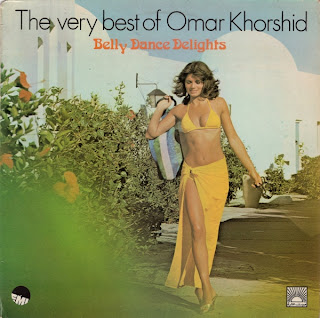


A1. Aziza 

A2. Karoun Karoun
A3. Ya Salat Ezzein 
A4. Hassan
A5. Warakat Ya Nassib
B1. Alf Layla

B2. Nougoum El Leyl
B3. Arrabi'h 
B4. Ka'an Azzaman
B5. Arabian Melody


HERE


Omar Khorshid عمر خورشيد - Guitar El Chark


A1 Guitar El Chark (Guitar of the Orient)
A2 Wadil Muluk (Valley of the Kings)
A3 Sabirine
A4 Ommil Habiba (Mother, My Dearest)

B1 Hebbina Hebbina (Love Us Like We Love You)
B2 Rahbaniyat (Rahbani Variations)
B3 Ah Ya Zaman (For Old Time's Sake)
B4 Kariaat el Fengan (Fortune Teller)
B5 Arrabia'h (The Spring)

C1 Sidi Mansour (Master Monsour)
C2 Raksat El Kheyl (Dance of the Horses)
C3 Solenzara
C4 Enta Omri (You Are My Life)
C5 Habibaty (My Beloved)

D1 Raqset El Fada (Dance of Space)
D2 Warakat Ya Nassib (Lottery Ticket)
D3 Taksim Sanat Alfeyn (Music of the Year 2000)
D4 Record Company Promo Spot


HERE


venerdì 23 agosto 2013

El GITS ( The Jets) الجيتس (Reloaded)


El Gits (The Jets) was founded by Samir Habib , who was a music prodigy with a taste that harked back to old Arabic classicals; a musician who wanted to make old music new so, he re-wrote music for most popular 'baladi' (local folk), 'tarabyat' (old classical tunes), 'Fairuzyat/Rahbaniyat' (music of the Brothers Rahbani who also composed songs for Fairuz), 'Wahabyat' (music of Mohammed Abdel-Wahab), The Bandali Family... etc in a new format, making it sound amazingly cool.
Then, and after gaining a meager foothold at the Cairo club scene (they started playing at the famous Good Shot club in 1975 which was a-buzz with tourists who at that time, wanted to get a taste of that 70's 'eastasy' that was going all around the Arab world), the Jets started to write their own music soon and issued one album after the other (mostly on Compact-Cassettes), besides getting invited to sing and play at private parties, weddings, open-air small festivals, and even make music for commercials and quiz shows on Egypt T.V..

El Gits  , were a rock band collective which had a huge popularity in a competitive music-sphere, set there at the topmost spot among many Egyptian 70s' bands like Ferqat Al-Masrieen ('The Egyptians Band' with Hani Chinoudah), Ferqat Al-Houb Wa Al-Salam ('The Love And Peace Band'), Ferqat Al-Asdeka'a ('The Friends Band'), The Black Coats, Les Petite Chats, Sahara Band, Ferqat Al-Nahar ('Morning'), Ferqat Al-Insan ('Human'), Ferqat Ashorouk ('The Rising Sun'), Tiebah (Hussein & Moudi El-Imam), Dr. Izzat Ouf & The 4-M Band ... etc. The original lineup was made of six members but it grew to seven when pop female singer Iman Younis joined them from Al-Masrieen Band to sing in an album (Abu Shanabat: a children's songs album), in the mid-80's. She has now a music school ('Emylise School for Music'), and leads a happy content life teaching kids how to play various instruments and how to practice singing.

The Jets disbanded and some of its members spent the rest of their lives singing at hotels and bars to a gaggle of gawp-happy tourons (tourist morons). Samir Habib quit the band in the late 80's and the remaining members regrouped with Iman for one last album (Ya Police), adding a saxophone (read: lame), and keyboards (read again: lamer), with Jalal Saleh as co-singer to Iman's sing-a-longa voice. Few months on, and then the band went poof forever. The Jets sounded like almost any 70's Arabeat rockers in their first years: fuck-you garage-y raw guitar strings, heavy 'chunk' drumming with a hollow echo-effect to it (studio engineering was mediocre, mind), and head-swirling rock lyrics. But, the over-all groovtacular proto-prog, psych-band sound was drowned as the early-80s' Melodelica tunes rolled in and their songs started to erm, suck. All 'nd all, many styles are there to pick and choose from. So, let's enjoy this rare music sung in Arabic, French, Italian, Spanish, and English.(Whews! Must 'ave been the tourons. So 'worldelica!').


فريق الجيتس

فرقة الجيتس التى أنشأها الملحن والموزع سمير حبيب ولحن معظم أغانيها
فقد بدأت مشوارها القصير من خلال أعادةتوزيع بعض الأغنيات القديمة ذات الشهرة الواسعة قبل أن يكون لها أعمالها الخاصة
وبعد أصدار عدة ألبومات توقفت الفرقة وتفرغ منشؤها لتلحين الفوازير وعدد من الأعلانات


Fondé en 1975 par le compositeur et producteur Samir Habib, le groupe El Gits commence son parcours par la reprise de chansons anciennes et populaires.
C’est en animant des spectacles dans les restaurants et les hôtels qu’El Gits se fait connaître par le public, ce qui les motive à produire leurs propres chansons dont la plupart sont composées par Samir Habib.
Malgré le succès rencontré par le groupe, ce dernier ne fait pas une longue carrière musicale puisque les membres d’El Gits se séparent en 1978 en laissant de très nombreux albums. En effet, malgré une période courte de production, El Gits lance plusieurs disques comme « Ya Police » avec les titres « Balash Enad », « Albak We Maly », « Layalina », « Khodna Ya Hob », « Katakito Bony », « Hamaty »...
« Sidi Ya Sidi » est un album qui rencontre aussi beaucoup de succès avec les chansons « Da Habeby », « Lama Tekbary », « Ihna Ya Fandy », « Nasit Eleshra », « Ya Ward »...
D’autres opus ont suivi comme « El Meya Yafandy », « Alo Alo », « Abo Chanabat », « Abd El Roten » et enfin « Shed Elhizam » sorti en 1978.
Depuis la dissolution d’El Gits, Samir Habib se consacre à la composition musicale .


(Souerce : http://www.yala.fm)


El Gits  الجيتس   - Shed el hezzam شد الحزام 


A1 Shed Elhizam شد الحزام
A2 Dalony Ala El Eyoun دلوني على العيون السود
A3 Salma Ya Salama سالمة يا سلامة
A4 Yama Sawa ياما سوى
A5 Ahwak Music اهواك - موسيقى
A6 Mazika Ya Mazika مزيكا يا مزيكا
A7 El Helwa Di الحلوة دي
B1 Ok Ok اوكي اوكي
B2 Ena Gar عنا جار
B3 Qesm Charki قسم شرقي
B4 Linda Linda ليندا ليندا
B5 Zay El Laila زي الليلة
B6 Yama Bakina
ياما بكينا


El Gits الجيتس - Sidi Ya Sidi سيدي يا سيدي


A1 Sidi Ya Sidi سيدي يا سيدي
A2 Da Habiby ده حبيبي

A3 Fi Elbousta في البوسته
A4 Aboha Rady ابوها راضي
A5 Ya Ward Rala Foul We Yassamin يا ورد على فل و ياسمين
B1 Ihna Ya Fandy احنا يا فندي
B2 Nasit Eleshra نسيت العشرة
B3 Haram Haram حرام حرام
B4 Khalasna El Emtihanat خلصنا الامتحانات 

B5 Lama Tikbry لما تكبري


HERE


El Gits  الجيتس  -   Alo Alo آلو آلو


A1 Alo Alo الو الو
A2 Wahed Afandy واحد أفندي
A3 Adaree Lieh اداري ليه
A4 Einna Jarr عنا جار
B1 Atshan Ya Sabaya عطشان يا صبايا
B2 Telat Ya Mahal طلعت يا محل نورها
B3 Bint Ya Senora بنت يا سنيورة
B4 Ala Shanik Ya Sitt El Housn علشانك يا ست الحسن


HERE


 El Gits  الجيتس  -  Ya Police  يا بوليس


01 Yama Shal El Enaby
02 Ya Police
03 Hamaty
04 Katakito Bony
05 Balash Enad
06 Layalina
07 Khodna Ya Hob
08 Albak We Maly
09 Balash Enad Music


HERE


 El Gits  الجيتس  -  Abo Chanabat   ابو الشنبات


A1 Sabah El Khir صباح الخير
A2 Samy Taht El Shagara سامي تحت الشجرة
A3 Shetrang شطرنج

A4 Ana Batot أنا بطوط
A5 Abo El Fasad ابو الفصاد
B1 Abo Shanbat أبو شنبات
B2 Trek Trak تريك تراك
B3 Mama Ya Helwa ماما يا حلوة
B4 Ana Ghawya El Mazika انا غاويه المزيكا
B5 Gedo Ya Gedo جدو يا جدو


HERE


 El Gits  الجيتس  -  El Meya Ya Fandy الميه يافندي


01 Talab El Qahwa
02 El Meya Ya Fandy
03 Mishina Mishina
04 Sahby El Wahid
05 Ya Alby Ya Katakit
06 Edrabha Tabanga
07 Safer Alby Meak
08 Ya Khoga El Banat
09 Gadaa We Aayek
10 Ely Ghabo Aanna


HERE


 El Gits  الجيتس  -  Abd El Roten


01 Aho Da Lesar اهو ده اللي صار
02 Edkoreny إذكريني
03 El Qamh القمح

04 Banat El Eshreen بنات العشرين
05 Haly Teaban Ya Layla حالي تعبان يا ليالى
06 Abd El Roten عبد الروتين

07 Ala Ad Elil Ma Ytoul على قد الليل ما يطول
08 Nemrat Telephoni نمرة تلفوني
09 Ya balady Ya Ghalya يا بلدي يا غالية
10 Ya Sgher Ala El hawa يا صغير على الهوى


HERE

martedì 20 agosto 2013

AL HOB WA AS SALAM الحب والسلام


In 1975, the Alexandrian composer Nabil El Bakla decided to form El Hob we salam band (the band of love and peace) with the help of two poets Hassan Ahmed and Yousri Abdessalam.

The first album "Iskandaria, ouemier dkourini" (Alexandria, quote me) was released in 1978. In 1980 the band won the second prize in the Mediterranean festival of music. In 1984, the second album called "el Hob taht al ichrin" (Love before the score) came out. However, just after the release of this album, the band suspended their activities for several years due to the unavailability of Nabil EL Bakla which focused entirely on his own affairs.

In 1998 he decided to revive the experience of El Hob we salam band once again and appealed to young artists. During the same year, the band participates in a festival in France in response to the invitation of the French Cultural Institute. In 1999, the band participates for the first time at the Cairo International Festival by performing the song "Al Akssar" which was chosen due to its theme as the official closing song of the festival.

In the year 2000 the band did their second appearance at the international festival in Cairo. The death of Nabil El Bakla didn't stop "El Hob wa salam Band", continuing and participating in several festivals and events in Alexandria and Cairo. Currently, the band has gained enough maturity and keeps permanent contact with the expectations and aspirations of the fans in Egypt and the Arab world. 


Al hob Wa as salam الحب والسلام - eskandirya odhkureny اسكندرية اذكريني


01 ozkreny  اذكريني
02 elzel  الظل

03 3aeza aeh  انتي عايزة مني ايه 
04 5ayal sh3r خيال شاعر
05 3ady عادي 

06 moushkila  مشكلة صعبة 
07 el6are2  يطول الطريق
08 eskindrya  اسكندرية 

09 elkilma الكلمة 
10 aw3idk  أوعدك يا حبيبة  
11 samra  سمرا 
12 soudfa  مجرد صدفة


HERE


Al hob Wa as salam الحب والسلام - Al hub taht el eshreen  الحب تحت العشرين


01 Elhob Taht Eleshryn
02 El hob We Lekhtiyar
03 Ana Aalant Aliki Elhob
04 Bahebek
05 Jonoun Elghira
06 Khodaa
07 Maadarch Akon
08 Matisaalnish


HERE


Al hob Wa as salam الحب والسلام - ba3d seneen   بعد سنين


01 Odkorini
02 Ana Salamt Lak Albi
03 Ibtadina Neiish Hayatna
04 Biraghm Tashaboh
05 Baad Snyn
06 Tebeii Madik
07 Sodfa
08 Sawt Elhawa
09 Lama Toyour
10 Min Beiid
11 Mahma Kan
12 Nafasi Haiii 

lunedì 19 agosto 2013

Gultrah Sound System


Gultrah Sound System est un groupe de reggae tunisien fondé en 2006 par Halim Yousfi (guitare, chant) Wissem Ziadi (violon, choeur) et Malek Ben Halim (percussions,choeur). Ils commencent alors une série de concerts à Tunis mais aussi à Bruxelles en 2009 avec les musiciens de l'époque durant trois ans.

Parallèlement, le groupe enregistre en 2008 une démo intitulée "Jazz fi zzenga", référence à l'origine de la fondation du groupe.

Le groupe est en perpétuelle recherche de nouveaux sons et explore de multiples genres comme le rap, le funk l'afroBeat, roots, raggae, ska... Ainsi, Gultrah Sound System dépasse les frontières du reggae en s'ouvrant à d'autres influences en intégrant notamment la formation Old School composée de Paza Man et Black Na, deux rappeurs à l'empreinte musicale raggae-rap. Le retour sur scène est annoncé en 2012 avec l'arrivée de nouveaux membres permanents : Amine Nouri (batterie, percussions,chant), Chiheb Ben Lakhel (guitare), Mourad Majoul (guitare), Tareq Maaroufi (batterie,
percussions et chant), et Kais Fenni (Basse).


  Gultrah Sound System - some songs


01 lamb 
02 Elli Tchelou
03 3iche tchouf
04 Goulouli
05 Lambs
06 Bled a5ér zman
07 Dada aicha
08 Meyla
09 Chkoun kan ygoul
10 One Day
11 Downpressor 

12 A7kili 3lech
13 systeme felet


sabato 17 agosto 2013

Marc Codsi


Marc Codsi is a main actor in the development of the Lebanese musical scene. He started as a guitar player for 6 years and 5 albums with post rock band Scrambled eggs, then played with different ensembles within the Lebanese Free Improvisation scene before creating and developing successful pop duo Lumi which released the album "Two tears in Water "(virgin records) . In 2010 "Faded Postcards " his first recorded solo work was released . The album is an exploration of time, an immersion into forgotten moments and places. It opens up with an 11 minute (almost) intrumental track. The outcome is a dark post-rock album driven by drone guitars.
Many collaborations followed mainly with Zeid Hamdan, Yasmine Hamdan and with different cinematographers.
In 2013 the second solo Album  "Works and Coincidences" is being released.


Interview with Marc Codsi

 It seems you’ve done a lot of stuff. You started with Scrambled Eggs, mixed for Mashrou’ Leila, Lumi, played in Zeid and the Wings and Lumi, did a few soundtracks, and you also have a solo album, Faded Postcards. What is your musical background, and who are/were your influences?
 
My musical career started with the punk band Scrambled Eggs – a great school and ‘laboratory’ for me. I remember that at some point, we used to play whole concerts improvised, and I didn’t have my guitar tuned for six months. It was my experimental phase, and I was also doing a lot of things with people in our small but talented experimental scene in Lebanon, with whom I united for a festival called Irtijal.
 Later, I sought to develop more of a ‘song’ approach to music, and that’s when I created the band Lumi with the singer Mayaline Hage. Back then, it was more pop and electro-oriented, and we had some mainstream success. After two albums and a lot of touring, I decided to work on a more personal and intimate project, which then became Faded Postcards, released under my own name, for the first time.
As well, I was having fun here and there playing guitar with my friend and fellow musician Zeid Hamdan, and remixing Arabic songs. Lately, though, I’ve been more involved with cinema and soundtracks. I co-composed the soundtrack of Danielle Arbid’s film Beirut Hotel with Zeid Hamdan – which was later banned in Lebanon – and just recently, I co-worked on a song with Yasmine Hamdan (of Soap Kills) for a film by Jim Jarmusch. I hope to release my second solo album soon – it’s almost finished.


You worked on the soundtracks to two Lebanese films by Joana Hadjithomas and Khalil Joreige – A Perfect Day (2005) and Je Veux Voir (2008) – that attempt to tackle the absence of the memory of war in Lebanon, which is quite a thorny issue. What can you tell us about your participation in these projects?

Indeed, memory plays a very important role in contemporary Lebanese art in general. This is obvious, because of our recent history, as well as the fact that we all come from the war generation. Also, the collective re-working of the history of the Civil War – something which usually takes place after such dramatic events – had not yet taken place before those films.
For those two movies, the directors asked Scrambled Eggs to write some music based on the images they had, and the music was mostly composed based on a series of improvisations. Hadjithomas and Joreige recognised in our music something of the essence of Beirut they were after, and I think it worked out pretty well.

Your solo album, Faded Postcards was released in 2010 under your own label. The album is a truly experimental work suggesting a complicated relationship with memory, and seems to build upon fragments – or rather, postcards. What led you to produce this album, and what was the creative process like?

Faded Postcards was like a collection of tunes, which were composed at different moments, yet all had in common the expression – or the attempt – to express one thing, albeit seen from different perspectives. I wanted to explore the essence of a certain inner feeling that I couldn’t quite put my finger on. I tried to venture as deep as I could inside myself, with the belief that the more you ‘touch’ your own specific individuality, the more you can reach a certain universality. I was very happy afterwards, when people told me that they were touched by the music, because it meant to them the same things I felt. It was something that everybody could relate to, on different levels.

In 2008, you formed Lumi with Mayaline Hage, and released the album, Two Tears in Water. This was during perhaps one of the most difficult times in Beirut’s recent history, with the airport closing during May, as gun battles took to the streets, preventing you from travelling to Dubai for a gig. I particularly enjoyed the number, Not Our War – what was this album all about?

Two Tears in Water was meant to be the expression of a sparkling, dynamic, chaotic, and yet falsely naïve Lebanese lifestyle. At the same time, it’s a cult and criticism of our social life. Somehow it’s an ‘anti-memory’ album, as we were sick of the old patterns of history, with its wars and everything else. What we wanted to express was something more positive and more in touch with us – the young generation – and our lifestyle, as well as what was happening with respect to nightlife in Beirut. Accordingly, the album was very upbeat and ‘glamorous’, except for the number you mentioned – Not Our War – which was actually written in 2006 during the Israeli invasion of Lebanon. The song was recorded while planes were flying overhead, shooting and pulverising a neighbourhood two kilometres away from where I live. It was a spontaneous call.

You’re working on a new solo album, due to be released this October. What can you tell us about this new project?
It’s the continuation of Faded Postcards. Somehow, it still has the same spirit, although it’s conveyed in a different way. There is more composition involved, and more instruments – especially the piano that imposed itself naturally in the album. I think composing for cinema has perhaps influenced me, because I feel that the music has a strong visual impact. I also moved to Montreal a year ago, as I needed some calm and concentration – which is really hard to find in Beirut – and in that sense, it’s the album of an émigré.

There is a lot of talk in the international art scene about the Lebanese ‘Underground’, which came into being after the end of the Civil War (if there was such an end), although few actually know what it is. I myself write about Lebanese art, so I’m fully aware about this non-descript place. You have played a role in this underground scene – what on earth is it all about?
I don’t know – a certain label that is good for export? The funny thing is that Beirut is a small city, and small scene where everybody knows everybody else, as well as what everyone is doing. It’s pretty easy for any piece of art to reach a certain degree of attention, especially because the usual filters of art – critics, managers, and labels – don’t really exist, or work properly. Therefore, it’s not an underground scene, but more like a local scene that thinks of itself as the centre of the world.

Lebanon has to be one of the world’s most improbable places – devoid of a national ‘project’, split between cultures and conflicts, resilient in one way, driven to despair in others, humorously sparkling, yet melancholy and sardonic. How does contemporary music in Lebanon reflect on this?

Contemporary music from Lebanon reflects pretty well on this, I think, by being the mirror image of the society embodying all you’ve described – all those conflicts between the past and the future, East and West, ecstasy and despair, hope and resilience, etc. We’re a pretty extreme society, so whatever we do or express is done to the extreme.

This weekend, for example, in the neighbourhood where I live – Achrafieh – they implemented for the first time a no car zone. For twelve hours, no cars can drive in this big, crowded neighbourhood, so that people can enjoy walking their dogs, discovering the architecture of old houses, biking in clean, empty streets, and so on, while only an hour’s drive away, people are shooting each other because they’ve decided they don’t like each other, or are from different sects! That in itself is contemporary art to me. We are a big piece of contemporary art, whether that be good or bad art.

As Romain Rolland famously remarked, ‘Art is a great consolation to the individual, but it is useless against history’. It is perhaps true that music, like all art, can bring about no revolutions and cannot stop any wars – although I refuse to think of art merely as a consolation. What are your views on this? What is your music intended to ‘achieve’?

I’m not sure I agree. Music, likes sport, can create bridges between people who think they have nothing in common. I often receive messages of praise from young people in Israel, for example, who have fallen in love with Lebanese music, and identify with it – how could they not? Those people might think twice before shooting into a Lebanese village when it will be their turn to shoot. That in itself is a victory.

In speaking with Marc Codsi, a steeper edge to the music scene in Beirut is revealed that finds itself not in sweet melancholy sounds from other ages or in bitter lamentations, but rather somewhere in between. It is architecturally impure, and more interesting than beautiful, causing it to become beautiful in the end – not by parallels, but by extravaganza.
Perhaps the terms ‘abstract’ or ‘experimental music’ are a bit exaggerated for the sounds coming out of the noise of an improbable history, and the possibilities afforded by this music do more than please or entertain; they’re fabulations. Sarah Kofman, the late French philosopher, expresses this feeling much better than I do, though, when she says that ‘There is no art, strictly speaking, without intoxication, without an overflow of life that becomes creative by spilling its excess of life into the universe’.


Interview published by web magazine Reorient edited by Arie Amaya-Akkermans 


Marc Codsi, interview + live performance (30 August 10)

Lebanese musician Marc Codsi (Zeid & The Wings, The Incompetents, Lumi, ex-Scrambled Eggs) caught on Ruptures, for an interview and improvised live performance.

Listen: Track 01 + Track 02

Track listing: Scrambled Eggs / Marc Codsi / Lumi / RGB / Zeid & The Wings / My Bloody Valentine / Jacques Brel


(source :   http://rupturedonline.com)


Marc Codsi – Faded Postcard


01  Faded Postcard 1 [ Features Scrambled Eggs ]
02  The Wolf That Got Me
03  What If We Were The One
04  Winter
05  Offensez Mimsez
06   1979
07  Take Me Where I Want To Be Final
08   A White Rabbit In A Hole
09   Piano Part 2
10  When I Was Young


HERE


Marc Codsi - Works and Coincidences


1.Ouverture 
2 Piano Work 1 
3.Fugue 1 
4.Piano Work 29 
5.Sonate for Guitar 
6.Sarabande 
7.Piano Work 31 
8.Piano Work 19 
9.Siren Song 
10.Fugue 2 
11.Villa Mona
12.Fermeture

HERE

giovedì 15 agosto 2013

MWR


In 1999, after years of friendship, four young Palestinians, living in Akka, Palestine, joined
together and formed one of the first Arab hip hop groups: MWR. Mahmoud, Waseem, Richi
and Charlie (dj Chuck) do not mince words. Their lyrics speak to their unique experience as
Palestinians living within the borders of Israel. Essentially they live as third class citizens in
their own homeland. Typical to young people all over the world, American hip-hop has been a
great influence on the group's music, as has its Algerian counterparts. MWR uses music both
as an effective method of self-expression as well as a tool to draw attention to the plight of
the Palestinians. Rapping almost entirely in Arabic, they sing about racism, poverty, drugs,
the Israeli occupation, and the lack of support from the Arab governments. Their political
focus and sharp, often biting lyrics, combined with strong hip-hop beats and an unforgettable
stage presence, have earned them fans around the world.
"Because I'm an Arab" topped the charts for two weeks on a Haifa radio station, and MWR
was named band of the year. The group has appeared on CNN, MTV EUROPE, and other
television networks worldwide. Most recently, they performed in France. This was, in fact,
their first trip outside of the country. Additionally they have appeared throughout Palestine -
their performance at a rap festival in Nazareth last year drew thousands of people. For more
info on the band, as well as links to some of their press, and songs you can download, go to
FB.Com/Mwr.Palestine .
A broad coalition of U.S. community, social activism and artist groups have collaborated to
bring MWR to the country. We see this as an opportunity to build bridges between
communities of resistance, and to bring energy and inspiration to these movements. As far as
we know, this is the first time a Palestinian hip hop group has toured the US.


MWR Greatest Hits - Because I'm an Arab


01 - Eftho Al Bwab (Open Doors). 
02 - Horeya Ma'meye (Blind Liberty) By Mahmood Shalabi.
03 - Abiad (Drugs).
04 - Sa7Se7 (Wake Up) By Waseem Akar.
05 - Ya Shabi (My People).
06 - Aref Nafsak (Identify Yourself) Featuring DAM 'Da Arabian MCs' .
07 - Ya Yoma (Mom).
08 - Ashanena Arab (Because We are Arabs). 
09 - Efham (Understand) By Mahmood Shalabi.
10 - Besam Al Rap (Name Of Rap) Featuring SAZ, WE7, DAM, Abeer, Arapeyat, khalifa E, North life.
11 - Masari (Money).
12 - Malaki (My Angel) By Waseem Akar Featuring Suhiel Fodi.
13 - Karakeeb (Untidy).
14 - YaMashAllah (God wills).
15 - Akka #1 (Acre Number One) By Waseem Akar.
 16 - Al Nasheed (The Anthem) Mahmood Shalabi Featuring DAM, Arapeyat, Abeer, WE7 & PR.
17 - Orobetna Bkhatar (Arabs in danger).
18 - Gazwa Harfeya (Lyrical Invasion) By Mahmood Shalabi Featuring Tamer Nafar & SAZ.
19 - Moshkeletna (Our problem) By Waseem Akar.
20 - Shou El Far2 (The difference) By Richard Savo.
21 - Law Kan Beade (If I Had) By Waseem Akar Featuring WE7.
22 - Ashanak Arabi (Because I'm an Arab).


 HERE

 
                          Because I'm an Arab  (translated lyrics)


"Why are we living in a time without happiness and hope?
when you're looking for a job they gonna fire you
they turn you down and say you're not qualified
and why? 'cause you're an Arab!
wherever you go they want you to show your ID -
without cause
why can't we be equal
why are we not treated as humans?
instead of setting free the most beautiful doves of peace
they invent effective devices to kill
instead of looking for a way to peace
they ask why the youth is wasted
why are we living in a time without happiness and hope?
A policeman sees me, immediately arrests me, asks me
some racist questions, and why? Because I'm an Arab."
Let me live. I'm just trying to live."


Many thanks to Mik Eraif, group manager MWR, for the kindness and courtesy.

mercoledì 14 agosto 2013

Shik Shak Shok - lebanon 1972-85 Psychedelic Music For Belly Dance


A1. Elias Rabhani - Hey Dabke!
A2. Hassan Abou Seoud - Shik Shak Shok
A3. Ishan Al-Munzer - Shish Kebab
A4. Matar Mohamed - Lamma Yee Gheeb El Gamar
A5. Omar Khorshid - Laylet Hob
B1. Daniel Der Sahakian - Raksat Baladi
B2. Farid Elatrache - Hebina Hebina
B3. Nicolas Dick - Aziza

HERE

or
HERE 


martedì 16 luglio 2013

Arab tunes mixtape # 13 - Here and Now: The state of hip hop in the Middle East


Explicit Thoughts from the Middle East. Rulers beware !!!
Ideas, words, hopes, frustrations and struggles of a new generation of Arabs who think. Art?? of course!

Dedicated to Giulio, who has just turned 18 years old.


01 El Far3i - Mukawamah Madaniyyah  ( Jordan)

02 MC Amin - Morsi Fel Kolub (Egypt)
03 Asifeh - Ramadi (Palestine)

04 Hamorabi 13th Imam (feat. boikutt) - Bou7ayrat Tabarraya (Lebanon/Palestine)
05 Krist Nir feat. Pinar -the Zionist entity  ( Jordan)
06 El Rass- Dar el Falak  (Lebanon)
07 Abyusif - Hard Luck (Egypt)

 08 Maqdsi - Wake up !! (Palestine)
09 Deeb - tuyur muhagira (Egypt)
10 Katibe 5 - Fy waja3 al layla (Lebanon- Palestinian refugees)

11 Satti & DJ Stickfiggr - Talakat ( Jordan)  
12 Beatoven Feat. Boikutt  - Falstaf  (Palestine)
13 Arabian Knightz - Ehna AL Hokooma (Egypt)
14 McKaied - Daye3 (Palestine)
15 SeVeN-R feat. Mc Mode -Technocracy (Lebanon)
16 Amer AL-Taher - Ghayru Qabilan liltaqyym ( Jordan)


HERE


lunedì 15 luglio 2013

Arabian Knightz الفرسان العرب


Egypt, modern land of revolution for peace and empowerment.

In the midst of a murderous political regime, the youth of Egypt adopted hip hop as their voice of resistance. Arabian Knightz, the premier hip hop group from the land of the Nile River and the Pyramids of Giza, have not only established themselves as the lyricists with the sharpest swords in their land, but they also created the most consistently original sound of any Egyptian crew to pick up the mic, a voice for rebellion, strength and hope for the youth of the Middle East.

Arabian Knightz banded together in 2006 through the emcee cipher, hip hop’s natural way of choosing like mindsets on the mic. Rush, Sphinx and E-Money were ahead of their peers, adapting an authentic Arab perspective to the art dominated by Western voices, mixing English and Arabic raps to exemplify their versatility and universality.

After hitting the studio for a few underground tracks and gaining a viral following, AK enlisted super-producer Fredwreck (Snoop Dogg, Xzibit, Tha Dogg Pound), an early believer in not only the group but also the entire movement of hip hop in the Middle East. “Fokkak”, the single from this studio session, was an instant hit and projected them to the top ten of the singles charts.

Arab League Records was formed amidst a growing fanbase and numerous collaborations with other Arab hip hop artists, the first international Arab hip hop record label. Desert Saga Volume 1 mixtape was the debut release, led by the “The One”, featuring an amazing Arabic verse from Egypt’s MC Amin, a song and video that has become an international underground favorite.

Arabian Knightz have recorded their debut album, Uknighted State of Arabia, a masterpiece for Arab hip hop years in the making, featuring instrumentals dominated by traditional percussions and players, the first album of its kind. AK have recently released the singles “New Day”, “Knightmarez” and “Desert Queen” featuring Khaled Seleem, as well as collaborations with Snoop Dogg and Steele of Smif n Wesson.

In 2012, Arabian Knightz will break through to the world with the highly anticipated release of Uknighted State of Arabia, touring the globe with their message of peace, empowerment and unity. The revolutionary movement has swept through the Middle East and North Africa and the time for their message is right, a youth movement through hip hop creating a new future against terror and oppression. 


(Source : www.facebook.com/ARABIANKNIGHTZ.AK/info) 


Desert Saga Mixtape Vol. 1 

 Desert Saga Mixtape Vol. 1 cover art


1 Desert Saga Show Intro
2 Da Knightz
3 The One (Sphinx, MC Amin, Rush, E Money)
4 Electric Chair (Rush, E Money, Sphinx, MC Amin)
5 La ILAHA ILLA ALLAH (MC Amin, Rush, Yasser, Miss Raw)
6 Rakkez Efham Esma3 (MC Amin, E Money, Yasser, Gad)
7 Gladiatorz (Rush, Yasser, 4Fifth, E Money, MC Amin, Deeb)
8 Velocity (MC Amin, E Money, Rush, Niz-R, Yasser, Gad, Deeb, Sphinx)
9 Betrayal (Rush, MC Amin, 4Fifth)
10 3edeeny (Promise) (Rush, MC Amin)
11 Da Beast (MC Amin, Rush)
12 Follow Me (E Money, MC Amin)
13 Wa7ed (MC Amin, E Money)
14 Zai El Matar (Like Rain) (Rush, Yasser)
15 Batal Kesset 7ayato (Deeb, Rush, Yasser)
16 Gazzeh (Rami, Rush, Tamer)
17 AAKKAAAAYYYYY (Arabian Knightz)


HERE


Arabian Knightz -Uknighted State of Arabia


1 The Beginning (feat. Saif Essam)
2 Arab
3 Ya Nas (feat. Mahmoud El Lethy)
4 Al Donia Mooled (feat. Mahmoud El Lethy)

5 Min Tani (feat. Latifa)
6 Domoaa Al Madina (feat. MC Amin, Lana)
7 Sisters (feat. Isam Bachiri, Shadia Mansour)
8 Fokkak (feat. Lana, Hossam L Hossainy)
9 My Time (feat. Cilvaringz, Lana S.)
10 Ya Hala Tara (feat. Walaa Sbeit)
11 Es'ha (feat. MC Amin)
12 Donia (feat. Magdy el Hossainy, Amir, Hossam L Hossainy, Nihal Ambar)
13 Ya Allah (feat. Hossam L Hossainy)
14 Behlam Beek (feat. Amir)
15 Prisoner(feat. Shadia Mansour)
16 Wounds of Sorrow (feat. Sofia Baig) 

17 Uknighted

 HERE


Arabian Knightz - Singles & other songs


01 New day
02 Rebel (Prod. Iron Curtain) feat. Lauryn Hill
03 Cairo
04 Ehna AL Hokooma 
05 Wake Up
06Ayykaay
07 El Hayah Law
08 Knightz Rain
09 Mind Right
10 Nosi El Mafkoud
11 Onshodet El Soyof
12 Twice As Strong
13 Noo

HERE
 

Related Posts Plugin for WordPress, Blogger...