mercoledì 26 settembre 2012

Warda Al-Jazairia وردة الجزائرية - Selected discography (reloaded)


Warda was born on July 22, 1939 in Puteaux, France, to a Lebanese mother and an Algerian father. She started singing at the age of eleven in 1951. She quickly became well known for her singing of patriotic Algerian songs. When she married in 1962, however, her husband forbade her to sing. In 1972, Algerian president Houari Boumédienne asked her to sing to commemorate Algeria's independence, and she performed with an Egyptian orchestra. As a result her marriage broke up, and she dedicated her life to music.

She then moved to Egypt, where she married the composer Baligh Hamdi. She performed many of his songs and those of other Arabic composers, quickly rising to fame and releasing several albums per year. Additionally, she has starred in a few films.

At the height of Panarabism, Gamal Abdel Nasser requested that Warda be given a part in a production by Mohammad Abd el wahhab entitled My Great Homeland (Watani Al-Akbar). The song was performed by the biggest stars at the time including Abdel Halim Hafez, Shadia, Sabah, Nagat Al-Saghira and Faida Kamel. The song denounced Colonialism and urged for a united Arab People to defeat foreign occupation (see Partitioning of the Ottoman Empire). Warda died on 17 May 2012, in Cairo, Egypt, after suffering a cardiac arrest. She was 72 years old. On 19 May, her body was flown back to Algeria where she was given a state funeral, and was buried in Algiers' El Alia cemetery, which is reserved for national heroes.


(Source : Wikipedia)


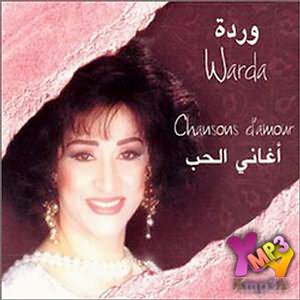
Warda Al-Jazairia وردة الجزائرية   -  Loubnan El Hob


01 Loubnan El Hob

HERE


Warda Al-Jazairia وردة الجزائرية   - El Oyoun El Soud


01 el Oyoun el soud
02 wallah Zaman
03 bokra ya habibi


Warda Al-Jazairia وردة الجزائرية   -  Bahebak Sad2ny


01 Bahebak Sad2ny


Warda Al-Jazairia وردة الجزائرية   - An El Awan


                                  أضخم مكتبة ألبومات الفنانة ورده

01.An El Awan
02.Wahdi
03.Matolshi Ana Asef
04.Benti
05.A3az El Weld
06.Kaannak Maaya
07.Min Gher Etab


Warda Al-Jazairia وردة الجزائرية   - Awrak El Ward


01.Awrak El Ward
02.Aid Milad (Kol Sana Wenty Tayiba Ya Mamti)
03.Bossa
04.Ana Andi Baghbaghan
05.Ah Yani Men El Hana
06.Yana Ya Hayrana
07.Agayib
08.Salamtak Ya Hoby
09.Ah Law Abeltak Men Zaman
10.Te'eesh We Teftekrni
11.Ma'oula Aheb Tani
12.Ala Shat Bahrna


Warda Al-Jazairia وردة الجزائرية   - Rouhi We Rouhak


01 Rouhi We Rouhak
02 Ha'oulak Haga
03 Leabet El Ayam
04 Ya Nakhltin


Warda Al-Jazairia وردة الجزائرية   - Ah Yalail Ya Zaman


01 Mesa3 Al Nour Welhana
02 Leil Ya Layaly
03 Layalina
04 7anin
05 El Shemou3
06 Paris


Warda Al-Jazairia وردة الجزائرية   - Ergah Lehayatak


01 Ergah Lehayatak
02 Matestahelsh
03 Hobk Wesl Madah
04 Batwanees Beek (live)


Warda Al-Jazairia وردة الجزائرية   -  Fen Ayamk Hobak kadar


01 Hobak Kadar
02 Sotak Nadany
03 Matstahelsh
04 Fen Ayamk


Warda Al-Jazairia وردة الجزائرية   - Khaleek Hina


01 Khaleek Hina


Warda Al-Jazairia وردة الجزائرية   - Layali Alghorba


01 Layali Alghorba


Warda Al-Jazairia وردة الجزائرية   - Madritouch


01 Madritouch A
02 Madritouch B


Warda Al-Jazairia وردة الجزائرية   -  Qalbi Saeid


01 Qalbi Saeid


Warda Al-Jazairia وردة الجزائرية   - Tab3an A7bab


01 Tab3an A7bab


Warda Al-Jazairia وردة الجزائرية   - Aslak Tetehab


01 Aslak Tetehab


Warda Al-Jazairia وردة الجزائرية   - Akdeb Alik


01 Akdeb Alik


Warda Al-Jazairia وردة الجزائرية   - Aghani El Hob


01 Wahashtouni
02 Lola El Malama
03  Hikaiti Maa Al Zaman
04 Tab Wana Maly
05  Eshterouni
06 Bokra Ya Habibi


Warda Al-Jazairia وردة الجزائرية   -  Ala Eih Beyessalouni  


01 Ya Habib La Takol Li
02 Ala Eih Beyessalouni


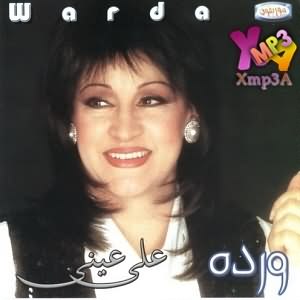
Warda Al-Jazairia وردة الجزائرية   - Ala Aini


01 Ala Aini


Warda Al-Jazairia وردة الجزائرية   - Batwanness Beek


01 Batwanness Beek
02 Bankhaf Mil3n
03 Ya Khasara
04 Mallit Men El ghorba


Warda Al-Jazairia وردة الجزائرية   - DanDana


01 DanDana
02 Welad El 7alal


Warda Al-Jazairia وردة الجزائرية   - Fi Youm We Leilah


01 Fi Youm We Leilah 


Warda Al-Jazairia وردة الجزائرية   - La2 Mosh Keda


01  La2 Mosh Keda
02 Hob El Habib


Warda Al-Jazairia وردة الجزائرية   - Ma Endaksh Fekra


01 Ma Endaksh Fekra 


Warda Al-Jazairia وردة الجزائرية   - Makhtarnash


01 Makhtarnash
02 Wala Fy El Amsal


Warda Al-Jazairia وردة الجزائرية   - Safar


01. Safar
02. Qalo Fe Al Amthal
03. Ahla El Lyali


Le Trio Joubran الثلاثي جبرا - Discography


Le Trio Joubran is a Palestinian oud trio, consisting of the brothers Samir, Wissam, and Adnan Joubran from the city of Nazareth. The Joubran brothers come from a well-known family with a rich artistic heritage. Their mother, Ibtisam Hanna Joubran, sang the Muwashshahat (poems that originated in Arab Spain) while their father is among the most renowned stringed-instrument makers in Palestine and in the Arab world .

The story of the Joubran Trio's creation can be traced back some ten years.
Samir, the eldest, started his solo career with his first two albums, Taqaseem (1996) and Sou'fahm (2001).
For his third album, Tamaas, Samir invited his younger brother Wissam to join him on his musical adventure. Randana, which came out in 2005, is the trio's very first album.
Adnan, the youngest, had joined in with his older brothers to form the first and only oud' trio known of to this date. With their skillful, heart-wrenching improvisations that tell of Palestine, the trio brings to bear harmony and sweetness, depth and joy. On the stage, as their eyes meet, their instruments join together to express that which the spoken word cannot.
The trio's repertory, made up of original creations and magnificent improvisations, takes root in their knowledge of the imposing culture of traditional maqâms and their subtle interpretations. The group was the big revelation at Langon's Atypical Nights (Nuits Atypiques) festival, nomitated for the 2004 Django dOr awards, selected at the Womex 2004 and the Strictly Mundial 2005, the trio has been living a musical adventure that is taking it all over the world : the trio played before thousands at the Festival of Nyon, was welcomed at Carnegie Hall in February 2006, and recently played at the Jerusalem festival (August 2007).
Nouvel album : Majâz

Majâz is the Joubran Trio's second opus, for which the trio brought in percussionist Yousef Hbeisch. A new international tour, made all the richer for his artistic contribution, is at the heart of their programme for the 2007-2008 season. This new album reveals the maturity of a trio that took flight with Randana, and whose Majâz is an invitation to travel.


SAMIR


Samir was born in Nazareth, in 1973, in the Galilee. At five, his father introduces him to the oud. The encounter between boy and instrument is more like the passionate encounter of two lovers. At nine, Samir enters the Nazareth Institute of Music. In 1995 he graduates from the highly prestigious Muhammad Abdul Wahhab Conservatory of Cairo. His musical talents are recognized in the musical workshops and seminars he attends in various arabic and European countries, leading him to teach the oud in a large number of schools and institutes.

The Joubran family adventure begins with Samir, an innovative soloist. Their first album, Taqaseem, comes out in 1996, followed by Sou'fahm in 2001. His first album under the Daqui label (the label of the Atypical Nights in Langon), Tamaas, appears in 2002. His run of performances in European and Middle Eastern venues begins. At the time, Samir is the only Palestinian performing outside the borders of his country. He is also the first musician to be awarded, in 2003-2004, a two-year scholarship to Italy through the Writer's Asylum Program which is organized by the International Parliament of Writers.

His musical virtuosity receives universal acclaim, and he is quickly invited to play with numerous other artists, in particular with great poets of the likes of Mahmoud Darwish. Music allies itself with the spoken word to bring to life poetry where melancholy and passion are inextricably mixed.

Samir Joubran's musical talent is acknowledged by the movie world when he composes the original sound track for Rashir Masharawi's Ticket to Jerusalem. He is then contacted by director François Dupeyron. Three tracks from the album Tamaas are included in the sound track of Inguélézi. Three titles from Randana are used in Parvez Sharmas' documentary A jihad for love (coming out this year).

After Randana, the first album to bring together all three Joubran brothers, their new opus, Majâz, will come out this fall. With Palesine beating in his heart, driven by his desire to give voice to his oud, Samir Joubran will travel the world with his brothers.

"We have two battles to fight. The first is for our career, and the other is for peace in Palestine, and the end of the occupation."

WSSAM


Wissam was born in 1983, in Nazareth, in the Galilee. His father signs him up for violin lessons at the Nazareth conservatory. He becomes attracted to the oud after watching and listening to his brother Samir play it. He establishes an intimate connection with the oud, with its wholesome curves, its round belly. Seeing how he merges with the instrument, Hatem, his father, hand crafts and gives him a small oud for his ninth birthday.

Wissam starts out by performing local concerts in Palestine. He then turns toward the theater, where he plays the role of a singing oud player in a piece about the life of Moudaffar El Nawab. When he is twelve, he seizes the opportunity to take his dreams and talent all the way to Paris' Arab World Institute, where he shares the stage with his brother Samir.

In 2002, again at his brother's side, Wissam performs musical interludes at readings of Mahmoud Darwish' poetry. Then, with the album Tamaas, Wissam's international career takes off. He decides to bring is musical culture and experience fully to bear in his relationship with the oud; thus, in 2005, he is the first arab to graduate from the prestigious Antonio Stradivari Conservatory, in Cremona. Wissam, like his father before him, continues in the line of his ancestors and becomes a master luthier. He builds the Joubran Trio's three ouds with his own hands, tailoring each one so that, when they are played, oud and player are one.

Master luthier, oud player, and firm believer in the symbiosis of traditional arabic music and the modernity of the oud, Wissam Joubran is carrying his family legacy steadfastly into the future.

ADNAN


Adnan was born in the Galilee, in Nazareth, in 1985. The life story of the youngest of the brothers is unique. Since childhood, he had wanted to become a percussionist. Yet, he would soon hearken to the oud's call. His desire to play it becomes stronger at the age of fifteen. For two years, alone and with the help of his older brothers, Adnan learns to play this instrument. Immediately upon coming home from school, he would pick up Wissam's oud and, playing Samir's melodies, send his fingers flying along the trail left by his brother. Hatem, their father, encourages him to take part in oud playing contests, and he is one of the five winners of a contest held in Palestine. The first audience Adnan would play to are his father's clients.

Returning from a tour, Samir brings up the possibility of forming a trio. This possibility becomes the object of Adnan's striving, and during the next year he would work with passion and discipline. It is thus that, in Paris' Luxembourg garden in August 2004, the Joubran Trio would come to life.

Alongside his brother Samir, Adnan provides musical accompaniment for the Fattoumi-Lamoureux dance company. In addition to his career within the Trio, Adnan will also perform for Parisian audiences a piece that combines music and the circus called EKO DU OUD (the oud's echo).

(Source :  http://www.divxturka.net )


Official site :  http://www.letriojoubran.com/ 


Le Trio Joubran الـثلاثـي جـبــران - Randana رنــدنــة


1. Hawas
2. Misage
3. Shagaf
4. Safar
5. Ahwak [Live]


HERE


Majâz مجاز - Le Trio Joubran الثلاثي جبران


(1). Masar
(2). Roubbama
(3). Laytana
(4). Tanasim 1
(5). Majaz
(6). Shajan
(7). Tanasim 2
(8). Sama-Sounounou
(9). Min Zaman
(10). Tanasim 3
(11). Hawana

Majaz part 01
Majaz Part 02


A l'ombre des Mots  فـي ظـل الـكــلام -  Mahmoud Darwish and Trio Joubran مـحـمـود درويــش و 
الـثـلاثــي جـبـران


01 Laytaka 
02 Le lanceur de dés 1ème partie 
03 Nasar 
04 Le lanceur de dés 2ème partie
05 L'art d'aimer 
06  Le lanceur de dés 3ème partie
07 Majaz 
08  Le lanceur de dés 4ème partie 
09 Sur cette terre 
10  Le lanceur de dés 5ème partie 
11 Saraab 
12 Une rime pour les mu'allaqât
13 La murale  


Le Dernier Vol الــرحــلــة الأخــيــــرة  -  Le Trio Joubran Et Chkrrr الــثــلاثــي جــبــران و شــكــرر


01 Le Premier Vol
02  Le Vol De Marie
03  Lancaster I
04 ] L'Obstinée I
05  Lancaster II
06 Départ De La Colonne
07  Fusée De Détresse
08 Antoine, Amana, Marie
09  Bill, Tiens Bon !
10 La Marche
11 Ténéré
12  Mort De Louis
13Un Nouveau Départ
14 Mirage
15  La Fièvre
16  L'Obstinée II
17 Requiem Pour Lancaster
18  Dernière Volonté
19 Le Dernier Vol


Asfâr أســــفــار  -  Le Trio Jubran الــثــلاثــي جــبــران


01 Nawwâr
02 Zawâj El Yamâm 
03 Dawwâr El Shams
04 Douja 
05 Sama Cordoba
06 Asfâr
07 Masâna

.

Hiba Tawaji هبة طوجي / La Bidayi Wala Nihayi


Hiba Michel Tawaji (Arabic: هبة ميشال طوجي‎) was born on December 10, 1987, in Achrafieh - Beirut, and grew up in the Elissar - Matn District. Tawaji is a Lebanese singer, actress, and director. She sings in Arabic, English and French. Tawaji interprets different music styles such as Oriental music, pop music, jazz, funk, and opera, as well as being a coloratura soprano with a four octave vocal range.
Tawaji has admired Oussama Rahbani (producer and composer and son of Mansour Rahbani) from a very young age, and always dreamt of meeting and working with him. That dream came true in January 2007 when she met Oussama and started a successful career alongside him.
From 1990 and until 2005, Tawaji studied in Athenee de Beyrouth School, and got her French Baccalaureate in French literature.
From 2002 until 2005, she took singing lessons and solfeggio at École De Musique Ghassan Yammine. Then she went to Saint Joseph University of Beirut, IESAV, and majored in audio-visual and cinematographic studies, earning her B.A. in 2010.
She also took for many years private opera lessons with Galina Khaldeeva.
From 2007 and to the present day, she has been developing vocal techniques and interpretation with Lebanese producer and composer Oussama Rahbani. As well as taking vocal lessons with Lebanese singer and vocal coach Wadih Abi Raad.
From May 2010 and until July 2010, she took vocal lessons with Emmy Award winner Gwen Conley in New York. In that same period, she followed a three-month intensive acting workshop at theStella Adler Studio of Acting in New York.


La Bidayi Wala Nihayi


01 - La Bidayi Wala Nihayi
02 - Herbban
03 - La Te'elly Enak Meshta'ly
04 - Zat El Lafty
05 - Mashye Ma Ba'ref l Wayn
06 - Kel Ashaby Fallo
07 - Libertango
08 - Helm
09 - Khayfe Oul
10 - Bel 'omr Elly Ba'y
11 - Al Mortazaka
12 - Fatahly El Bab


martedì 18 settembre 2012

Asifeh عاصفة aka Stormtrap - Iradeh إرادة


Palestinian emcee and music producer Asifeh aka Stormtrap recently released his latest project Iradeh (translation “Will”), a seven track EP dedicated to his personal struggle and life under the ongoing occupation.

Asifeh collaborates with fellow artists Aras Seyhan,Willi Rosner, Sloth Pallas, Kolonel Bleep, and TAKiMiwhich all makes this entire tracklist quite impressive! Not only does it step away from the usual Middle-Eastern samples we hear in Arab hip-hop, but instead presents us with a sick mix of electronic and hip-hop beats. Asifeh keeps it fresh by successfully drawing our attention with the right musical fusion, all backed up by lyrics (performed in Arabic) about resistance, revolution, and political injustice.

You may recognize Asifeh’s bold and unique style from his work with one of the original Arab hip-hop crews Ramallah Underground, which he also co-founded. Whether apart of RU or as a solo artist, Asifeh remains focused on using music as a tool for unity and resistance.

In fact, Asifeh showed his support to the political prisoners in Palestine last week by releasing the track Ma ra7 a3affen (I Will Not Rot).

Within the EP Iradeh, Asifeh covers all types of issues from tracks like Su’Tafahum (Misunderstanding) which calls out on the people who mistreat each other instead of uniting since they are all dealing with the same harsh realities. My favorite track Kilmeh Wahdeh (One Word) takes a different approach and busts out with a classic battle where Asifeh lyrically kills any emcee that gets in his way. Finally, the self-titled track Iradeh hits it hard with lyrics about colonization and continued injustice. Here’s a quick sample of the chorus:


Time has come, for me to choose and determine my future for myself
Time has come, for me to remove all the ropes and chains from myself
Time has come, to get rid of the occupation
Time has come, to get rid of colonization

Coming to conquer all the lands
Tell me what is stronger, technology or determination?


Asifeh  عاصفة  aka Stormtrap -  Iradeh إرادة


1. Sabbeh - صبّح
2. Su' Tafahum - سوء تفاهم
3. Iradeh - إرادة
4. Return - الرجعة
5. Fi Hadal Habs - في هذا الحبس
6. Kilmeh Wahdeh - كلمة واحدة
7. El Madeeneh Namat - المدينة نامت


sabato 15 settembre 2012

Toufic Farroukh توفيق فرّوخ - Solo Discography


Toufic Farroukh is a Lebanese saxophone player and composer of jazz with a middle-eastern flavour stemming from his bi-cultural roots in Lebanon and France.

His brother, a saxophone player, guided him in learning to play the instrument and taught him its ABCs. He was an amateur who instilled in Toufic the love of professionalism. They had discovered the saxophone in the Boy Scouts. The instrument was strange to their environment; unconventional, and used only for certain occasions.

Farroukh moved from Beirut to Paris, where he studied music in the conservatory and in the Advanced College of Music, saxophone was his principal instrument. He did not study jazz and its roots at all, nor played jazz on the saxophone.

His first album “Ali on Broadway” (1994), received good press from the specialist magazines , but only touched the French public in small measure. In his second album “Little Secrets” (1998), the flavour and colour of the Orient make their appearance here and there, in amongst the jazz motifs.


(Source : Wikipedia)

 Ali On Broadway


01. Like Desire
02. Tagada Dance
03. Streets and Faces
04. Hand Made
05. Another Day
06. Open the Door
07. For Once
08. 549 Blues
09. Like Desire [Moonfish Remix]


Ali on Broadway - 1st Part 

Ali on Broadway – 2nd Part


Little Secrets أســرار صــغــيـرة


01. Dance for My Father
02. What of It (Introduction)
03. What of It
04. Short Story
05. Paco's Mood
06. Ali au Pays des Merveilles
07. Maissa's Look
08. Daily Life
09. St Elias
10. Fayrouz Blues
11. Green Orange
12. Sugar Dissolvent
13. Don't Worry Baby
14. Take One for Radwan
15. Long-Short Story

Little Secrets - 1st Part 

Drab Zeen دراب زيــــن  


01. Fusic
02. Lili s'en fout
03. The Pain in Spain Stays Mainly in the Brain
04. Land of Milk and Money
05. Calipyge (intro)
06. Calipyge
07. Kaf skoon (intro)
08. Kaf skoon
09. L'homme qui a perdu son ombre
10. A Night in Damascus
11. Bilan actuel
12. Blues for Ali
13. Petites mains et longues jambes...

Drab Zeen - 1st Part 

Tootya تـــوتـــيـــا  


01. Systole Diastole
02. Hanina
03. Radio City
04. Ya Nassim Alrouh
05. Destins Et Desirs
06. Girl From Gypsy Moon
07. Elhob
08. Cendres
09. Scarecrow And Peacock
10. Ya Habibi
11. Long Distance Call (LDC)
12. Only Lonely

Tootya


Toufic Farroukh – 2011 – Cinema Beyrouth توفيق فرّوخ – سينما بيروت

Toufic Farroukh - Cinema Beyrouth توفيق فرّوخ – سينما بيروت


Side Story (05:42)
Fema Ka (04:46)
Estate Run (04:36)
L'ultima scena (4:08)
L'inaccessibili à Ouverts reggiseni (05:00)
Blue Tango (03:52)
Un pomeriggio meraviglioso con Zena-Laure (04:58)
No Brain No Pain (05:07)
Belle et Zèbuth (04:27)
La Red Boy, parte I (01:19)
Ma che cosa fai al buio? (01:32)
La Red Boy, parte II (06:06)
Storyboard (04:04)


Soumaya Baalbaki سميه بعلبكي - Arab tango


Soumaya Baalbaki is a Lebanese singer born in Beirut. She holds a bachelors degree in Oriental Singing techniques from the Lebanese National Conservatory where she taught for years. She is one of the few authentic singers that have not gone commercial in the music circuit. Instead she focuses on genuine “Tarab” (the art of transcendence in Middle Eastern singing) whereby the listener reaches a state of euphoria and emotional climax.

She is undoubtedly the most elaborate female Tarab singer in the Arab world. She performed at the Opera of Cairo in 2000, participated in the Tyre International Music Festival in 2008 and 2005, Toured Japan in 2002 (as part of the Unesco cultural dialogue program), she was the main musical act at the opening of the Asian Games 2001 and winner of the Golden Microphone Award in Cairo 1994. Soumaya’s come back on the musical scene with “Arabtango” is a tour de force in which she showcases the wide range of her singing abilities and wide academic knowledge of the Arabic classical repertoire. This album is a remake of 9 compelling songs of the Arabic Classical repertoire of the 50s 60s and 70s, she succeeded the amazing feat of a golden period of Arabic music that composers and musicians in Cairo and Beirut began mixing Middle Eastern musical creations with Latin rhythm influences such as Bolero, Tango and Cha Cha Cha.


Soumaya Baalbaki - Arab tango


1. Otlob Enaiya
2. Shaghalouni
3. Dakhalti Marra Fi Gineyna
4. La' Moush Ana El Abki
5. Ahwak
6. Bahlam Ma'ak
7. Ahibak Wa Anta Fakirni
8. Ashanak Ya Amar
9. Ya Ashikata Al Wardi

giovedì 13 settembre 2012

Arab tunes Mixtape # 1

A selection of the best singers in the Arab music scene.


01 area meets umm khulthoum02 Ya racha fattan -  Amina Alaoui
03 Hal Asmar Allon -  Dozan
04 al bab -  Emel Mathlouthi
05 Dream - Gaida
06 Ya Laure Hobouki -  Natacha Atlas
07 Reem Al Ghozlan -  Reem Kilani
08 ilahy -  Sahar Taha
09 La Tetlai -  Sana Moussa


mercoledì 12 settembre 2012

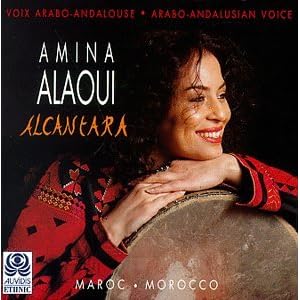
Amina Alaoui أمينة العلوي - Alcantara / Siwan صوان / Arco Iris


Amina Alaoui is a Moroccan interpreter of Andalusian classical music. She sings in Arabic, Classic Persian and Haketia.
Amina was born in 1964 in an aristocratic family in Fez, Morocco. At the age of six, she started to learn Andalusian classical music in her own family environment. She learned to play the piano and was initiated in European classical music by the conductor Mohamed Abou Drar. Amina also studied at the conservatory of Rabat from 1979 to 1981 with Ahmed Aydoun and Mohammed Ouassini and studied modern dancing with Marie-Odile Loakira and classic dancing with Vera Likatchova.
Amina went to school at Lycée Descartes and studied philology and Spanish and Arabic linguistics at the University of Madrid and the University of Granada.
While studying in Granada, Amina did personal research on Arab-Andalusian and oriental music and she specialized in Andalusian classical music, specifically in the gharnati (arabic for "Granada") style of music. She moved to Paris in 1986, where she studied gharnati music with Rachid Guerbas and Ahmed Piro. There she also studied European Medieval music with Henri Agnel and Persian classical music with Djalal Akhbari. In 2011 she released Arco Iris (ECM), which bridged musical traditions of Portuguese fado, Spanish flamenco, and Persian and Arab-Andalusian classical music.


(Source : Wikipedia)


Amina Alaoui -  Alcantara


Alcantara: Arabo-Andalusian Voice - Morocco


1. Ode d'Ibn Arab
2. Ya 'Ouchaq
3. Amours Our Trop Tard Me Suis Pris
4. Lamento de Tristan
5. Istikhbar Zidane
6. Ya Racha Fattan
7. Maravillosos
8. Baha Stibari
9. Ya Man Lahou
10. Batahouvat el Qama Bachahar
11. Hija Mia
12. Ya 'Adili Billah
13. Ya Mouqabil - Amchi Ya Rassoul
14. El Hourm Ya Rassoul Allah

HERE


Jon Balke & Amina Alaoui - Siwan صـــوان  


01 Tuchia توشية
02 O Andalusin¡ يا أهل أندلسٍٍ
03  Jadwa جدوى
04 Ya Safwati يا صفوتي
05 Ondas do mar de Vigo
06 Itimad إعتماد
07 A la dina dana ألآ دينآ دنآ
08 Zahori مبلل
09 Ashiyin Raïqin و عشيٍّ رائق
10 Thulâthiyat ثلاثيات
11 Toda Ciencia Trascendiendo تجاوز كل المعرفة


Amina Alaoui - Arco Iris  


1. Hado
2. Búscate en mí
3. Fado Al-Mu'tamid
4. Flor de nieve
5. Oh Andaluces
6. Ya laylo layl
7. Fado menor
8. Búscate en mí, var.
9. Moradía
10. Las Morillas de Jaén
11. Que faré
12. Arco Iris


HERE


WachM'n-Hit واشمن هيت - Hit Wachmn Hit هيت واشمن هيت / single Salamou Alikom


Le Roots au Maroc, c’est indéniablement Wachmnhit : sept musiciens sous la houlette de l’inspiration, allant de l’influence de leurs idoles, les Wailers, à celle, plus proches, des Gnawas. Ces jeunes Marocains ont constitué leur groupe en mai 2005. Un an après ils ont remporté le 1er prix du Boulevard des Jeunes Musiciens. Des bancs de l’université Ibn Tofail à Kenitra où ils se sont rencontrés, les Wachmnhit sont parti à la conquête du Maroc pour faire découvrir leur musique pleine de sonorité reggae roots made in Morocco .

Après leurs prestations scéniques souvent tranchantes et bien travaillées, Wachmnhit s’annonce comme l’un des leaders du reggae. Leur premier single « Taalim » un titre bien concis et précis ,critique acerbement l’enseignement supérieur.

Mais cette véhémence n’est qu’un simple trait de la vivacité du groupe, Car ce n’était en fait qu’un avant goût de leur prochain album éponyme « Hit WachM’n-Hit » dont la sortie officielle a été en avril 2009.
Plus qu’un simple groupe de musique, Wachmnhit est avant tout une véritable famille. C’est une équipe bien soudée de musiciens, une bonne entente entre eux. Ils sont sept, tous issus de l’atelier de musique de l’Université Ibn Tofaïl de Kénitra. Il s’agit de Ouahid Ahmed, un excellent chanteur et compositeur qui laissa sa place à Abdelhak El Achiri à la fin de l’année 2011, ce dernier s’inspire du Gospel et des différents chant tribaux nord africain .

Abdelkrim El Berrah, l’un des plus talentueux guitaristes solistes. Bien qu’il soit inspiré par la chaleur de la musique Bleus, il possède un amour démesuré pour l’improvisation.

Ali Ouguerd guitariste choriste confirme toutefois son goût prononcé pour le métissage culturel, bon vivant comme le qualifient ses amis, Ali consacre son temps et son énergie pour le développement de ses qualités artistiques.

Mouad Sahri pianist qui pioche dans les racines du Reggae et du Ska, entre autres pour embrasser les multiples facettes de la rythmique du genre.

Fayçal Boudli bassist qui ne fait pas les choses dans la moitié. Inspiré du reggae du roots et de l’Afrobeat , il ressort toutesfois des mélodies très originales concrétisant ainsi le fruit de ses recherches.

Yassin jbiri, percussionniste chevronné jongle avec les différents types de percussions, offrant ainsi des nuances marocaines aux rythmes reggae .

Salim Akki, un musicien qui a tout d’un grand batteur en plus de sa qualité de choriste talentueux.

En somme, le groupe fusionne, roots reggae , ska, ainsi que d’autres styles musicaux. Synthés en puissance, des percussions, des rythmes, la musique de Wachmnhit fait danser et s’annonce même comme le début d’une carrière prometteuse et d’un catalogue riche et diversifié. Ce sont des jeunes débordant de charme mais surtout dotés de voix douces et généreuses aux accents ensoleillés du Maroc. Ils s’éprennent passionnément de musique qu’ils fredonnent depuis leur tendre enfance. C’est leur devise : le métissage culturel. Les sons de la musique nord-africaine se fusionnent à ceux de la musique world. Résultat : Un mélange palpitant de sons et de cultures qui nous mène à ne jamais fixer de barrières entre les différentes expressions musicales.


(Source :  http://www.wachmnhit.com ) 


Hit Wachmn Hit    هيت واشمن هيت / Salamou Alikom


1. Late7zen
2. Hit Wachmn Hit
3. chem3a شمعة
4. Mazala ghira ما زال صغير
5. L3arbi
6. Latloumouna
7. baraka بركة
8. ta3lim تعليم
9 .lmjamer لمجامر
10.lguitouha syba لقيتها سيبة


Farid El Atrache فريد الأطرش‎ - 13 album


Farid Al-Atrash was born in Suwayda, Syria to the Druze Atrash family who fought the French Colonial armies.His father was Syrian and mother Lebanese.As a child, Al-Atrash emigrated with his mother and siblings to Egypt, escaping the French occupation. Later, they were naturalized by the Egyptian government as citizens. Al-Atrash's mother sang and played the oud, which spurred his musical interest at an early age.
As a child and young adult, Farid Al-Atrash sang in school events. He studied in a music conservatory and became an apprentice of the renowned composer Riyad as-Sunbaty. In the 1930s, Al-Atrash began his professional singing career by working for privately owned Egyptian radio stations. Eventually, he was hired as an oud player for the national radio station and later as a singer. His sister, Asmahan, was also a talented singer, and for a while they worked together. In 1941, they starred in their first successful movie Intisar a l-Shabab (انتصار الشباب - The Triumph of Youth, 1941), in which Farid himself composed all the music.He died in December 26, 1974 at age 64.
Al-Atrash had a long and colorful music career lasting four decades. He composed musically diverse songs, and was a highly regarded composer, singer and instrumentalist. Al-Atrash maintained that although some of his music had western musical influence, he always stayed true to Arab music principles. Although the majority of his compositions were romantic love songs, he also composed several patriotic and religious songs.
One of Farid Al-Atrash's most unusual and distinguishable traits was his voice. High and mellow at the start of his career, it evolved into a wider, deeper sound. A person not familiar with his work would find it hard to believe the singer in "Ya Reitni Tir" (1930s) and "Adnaytani Bil Hajr" (1960s) were the same singer. His singing style was deeply passionate.
In many of his songs, and nearly all of his concerts, Al-Atrash would sing a mawal, which is a slow voice improvisation of a few poetic lines. These improvisations sometimes lasted up to 15 minutes. The mawal was a favorite of his fans. Some of the most famous songs include "Rabeeh" (Spring), "Awal Hamsa" (first whisper), "Hekayat Gharami" (story of my love), "Albi Wa Moftaho" (my heart and its key), "Gamil Gamal", "Wayak", "Ya Zahratan Fi Khayali " (يا زهرة في خيالي - "Flower of my imagination), "Bisat Ir Rih" (flying carpet), "Ya Gamil Ya Gamil", "Ya Habaybi Ya Ghaybeen", "Eish Anta", and "sa3a bi 2orb el habib" (an hour in company of the beloved).
Farid Al-Atrash starred in 31 Egyptian musical films from 1941 to 1974. His last movie, Nagham Fi Hayati(نغم في حياتي, Songs in my life) was released after his death. All his films except the last two were black and white. They ranged from comedies to dramas, or a combination. He composed all the songs in his movies including the songs sung by other singers, and instrumentals (usually belly dance routines). His earlier films would include approximately ten songs, but overall the films would average about five songs each. Some of Al-Atrash's famous movies include Intisar al-Shabab (انتصار الشباب - The Triumph of Youth, 1941), Yom Bila Ghad, Ahd el-Hawa, and Lahn al-Kholoud (لحن الخلود - "Eternal Lyric", 1952).
Quick success brought the young man a lifestyle of nightclubs, love affairs, and gambling. Soon Farid was in debt and found himself abandoned by his disapproving mother. During this difficult period of his life, he also endured the death of his sister and fellow performer Asmahan. Farid found comfort in a relationship with the belly-dancer Samia Gamal, for whom he was motivated to risk all he owned. In 1947 he produced and co-starred in a movies with Samia directed by Henri Barakat; Habib al-'Oumr ("The love of my life," 1947), which became a huge success. After this came Afrita Hanem ("Madame la diablesse," 1949). Five films later, the unmarried couple broke up. Farid continued to work with other film stars in numerous successful movies in which he always had the romantic lead role of a sad singer. He even repeatedly chose his character's name to be "Wahid," meaning lonely.
Al-Atrash refused to get married, claiming that marriage kills art. In his films, the audience remembered his leading ladies and his beautiful songs more than the story lines.
Prior to the 1952 military coup d'état against King Farouk I, Al-Atrash became friends with Farouk's consort, Queen Nariman, a relationship that continued after the Queen's divorce and the coup that cost Farouk his throne. The former queen's family did not accept Al-Atrash, and the separation from Nariman sent the singer into a long depression, the start of health problems that worsened from that point on until his death.
As Al-Atrash became older, he reconsidered his opinion of marriage and proposed to Egyptian singer named Shadia, but at the last minute he backed out. By now his health was poor, and he feared that he would leave her a young widow. He often played out that scenario and sang about it in his romance movies.
Farid Al-Atrash was a very close friend to musician Abdel Halim Hafez.
Al-Atrash suffered from heart problems throughout his last 30 years. In the last few years of his life, he became physically thinner, and his singing voice became raspy as his sickness intensified. Although he was struggling with his health, he continued to make movies and perform in concerts until he died.
On Monday 24 December 1974 the doctors told Al-Atrash that after 2 days he could go home. This was because they noticed that Farid did not like the hospital, or the drugs and the food that the hospital provided for him. On December 26, 1974, Farid Al-Atrash died in Beirut, Lebanon at Al Hayek hospital, shortly after arriving from London. Al-Atrash is buried in Cairo, Egypt alongside his sister and brother.


(Source : Wikipedia)


Qalbi Wa Moftaha


01.Lakteb 3a Wraa' El Shagar
02.Mish Kefaya
03.Albi We Moftaho
04.3odt Ya Youm Mawledy
HERE 
 

Habib Al-omr 


01. Habib Alomr
02. Teoal Laa
03. Elhayah Hilwah
04. Zainah
05. Ya Bo Dhahkah Genan
06. Howa Bas Howa

 HERE


Halet Layali 


01.Halet Layali
02.Baa Ayez tinsany
03.Takaseem Oud
04.Sana We Sanateen


Sa'alni El Leil 


1.Sa'alni El Leil

 HERE


El Hob El Kebir / El Khourouj Men El Gana


01 Bitomor Al Rass Oul Eyn
02 Ya Weili Men Hobbo
03 Ala Bali Ala Bali
04 Adnaytani Bil Hajr
05 La Ouaeynayki
06 Ana Ouenta Ou Ba Bass

 HERE


25 Ans Dejà 


01- Hekayet Gharami
02- Takassim Oud
03- Baa Ayez Tensani
04- Adnaytani Bel Hagr
05- Ich Inta
06- La Wa Ayanki
07- Zaman Ya Hob
08- Ana Wenta We Bass
09- Ma Tcolch Lehad
10- Hebbina Hebbina
11- Albi We Moftahou
12- Ya Welli Men Hobboh
13- Alachane Maliche Gheirak
14- Mawal Lakteb Aawerak El Chagar
15- Mech Kefaya Ya Habibi
16- Manheremch El Omr Men Atfak
17- Odta Ya Yom Mawlidi

HERE


Al Rabia 


01 Al Rabia


LEGEND  The Best Of


1. Hebeena Hebeena
2. Alachan Malich Gheirak
3. Laktob Aawerak El Chagar
4. Ya HabaYbi Ya Ghaybeen
5. Fog Ghosnek Ya Lemona
6. Betomar Al Wass Wal Ain
7. Ya Bou Dahka Guenan
8. Ya Salam Ala Hobbi Wa Hobbak
9. Zina Zinea
10. Ana Ou Anta Ou Bass
11. Menheremch El Omr

HERE


Awel Hamsa


01 Awel Hamsa

 HERE


Ba'a 3ayez Tinsany


01.Ishta'telak
02.Ba'a 3ayez Tinsany
03.Bahebak Mahma Alo Anak


HERE


Rissala Men Emraa Majhoula


01 - Echtatelak
02 - Aazab Leih Ya Donia
03 - Albi Ou Meftahou
04 - Mech Kefaya Ya Habibi
05 - Yom_Mawlidi
06 - Esmaa Lama Aollak
07 - Albi We Eini Ekhtarou

 HERE


Zaman ya Hob & Hekayet El Omri Kollo


01. Ya Bou Dahka Jnan يا بو ضحكة جنان
02. Manheremchi El Omri مانحرمش العمر
03. Hekayet El Omri Kollo حكاية العمر كله
04. Ich Anta عش انت
05. Lakteb Awrak Echajer لكتب ع اوراق الشجر
06. Zaman ya Hob زمان يا حب
07. Fouk Ghonak Ya Lamouna فوق غصنك يالمونة

 HERE


En Habitny Ahebek Akter


01 En Habetny Ahobak
02 Leqaa Al Aheba


HERE
Related Posts Plugin for WordPress, Blogger...