sabato 15 settembre 2012

Soumaya Baalbaki سميه بعلبكي - Arab tango


Soumaya Baalbaki is a Lebanese singer born in Beirut. She holds a bachelors degree in Oriental Singing techniques from the Lebanese National Conservatory where she taught for years. She is one of the few authentic singers that have not gone commercial in the music circuit. Instead she focuses on genuine “Tarab” (the art of transcendence in Middle Eastern singing) whereby the listener reaches a state of euphoria and emotional climax.

She is undoubtedly the most elaborate female Tarab singer in the Arab world. She performed at the Opera of Cairo in 2000, participated in the Tyre International Music Festival in 2008 and 2005, Toured Japan in 2002 (as part of the Unesco cultural dialogue program), she was the main musical act at the opening of the Asian Games 2001 and winner of the Golden Microphone Award in Cairo 1994. Soumaya’s come back on the musical scene with “Arabtango” is a tour de force in which she showcases the wide range of her singing abilities and wide academic knowledge of the Arabic classical repertoire. This album is a remake of 9 compelling songs of the Arabic Classical repertoire of the 50s 60s and 70s, she succeeded the amazing feat of a golden period of Arabic music that composers and musicians in Cairo and Beirut began mixing Middle Eastern musical creations with Latin rhythm influences such as Bolero, Tango and Cha Cha Cha.


Soumaya Baalbaki - Arab tango


1. Otlob Enaiya
2. Shaghalouni
3. Dakhalti Marra Fi Gineyna
4. La' Moush Ana El Abki
5. Ahwak
6. Bahlam Ma'ak
7. Ahibak Wa Anta Fakirni
8. Ashanak Ya Amar
9. Ya Ashikata Al Wardi

giovedì 13 settembre 2012

Arab tunes Mixtape # 1

A selection of the best singers in the Arab music scene.


01 area meets umm khulthoum02 Ya racha fattan -  Amina Alaoui
03 Hal Asmar Allon -  Dozan
04 al bab -  Emel Mathlouthi
05 Dream - Gaida
06 Ya Laure Hobouki -  Natacha Atlas
07 Reem Al Ghozlan -  Reem Kilani
08 ilahy -  Sahar Taha
09 La Tetlai -  Sana Moussa


mercoledì 12 settembre 2012

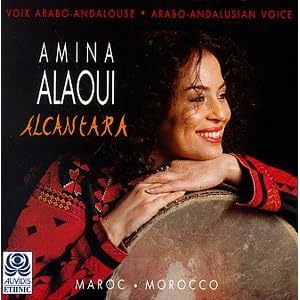
Amina Alaoui أمينة العلوي - Alcantara / Siwan صوان / Arco Iris


Amina Alaoui is a Moroccan interpreter of Andalusian classical music. She sings in Arabic, Classic Persian and Haketia.
Amina was born in 1964 in an aristocratic family in Fez, Morocco. At the age of six, she started to learn Andalusian classical music in her own family environment. She learned to play the piano and was initiated in European classical music by the conductor Mohamed Abou Drar. Amina also studied at the conservatory of Rabat from 1979 to 1981 with Ahmed Aydoun and Mohammed Ouassini and studied modern dancing with Marie-Odile Loakira and classic dancing with Vera Likatchova.
Amina went to school at Lycée Descartes and studied philology and Spanish and Arabic linguistics at the University of Madrid and the University of Granada.
While studying in Granada, Amina did personal research on Arab-Andalusian and oriental music and she specialized in Andalusian classical music, specifically in the gharnati (arabic for "Granada") style of music. She moved to Paris in 1986, where she studied gharnati music with Rachid Guerbas and Ahmed Piro. There she also studied European Medieval music with Henri Agnel and Persian classical music with Djalal Akhbari. In 2011 she released Arco Iris (ECM), which bridged musical traditions of Portuguese fado, Spanish flamenco, and Persian and Arab-Andalusian classical music.


(Source : Wikipedia)


Amina Alaoui -  Alcantara


Alcantara: Arabo-Andalusian Voice - Morocco


1. Ode d'Ibn Arab
2. Ya 'Ouchaq
3. Amours Our Trop Tard Me Suis Pris
4. Lamento de Tristan
5. Istikhbar Zidane
6. Ya Racha Fattan
7. Maravillosos
8. Baha Stibari
9. Ya Man Lahou
10. Batahouvat el Qama Bachahar
11. Hija Mia
12. Ya 'Adili Billah
13. Ya Mouqabil - Amchi Ya Rassoul
14. El Hourm Ya Rassoul Allah

HERE


Jon Balke & Amina Alaoui - Siwan صـــوان  


01 Tuchia توشية
02 O Andalusin¡ يا أهل أندلسٍٍ
03  Jadwa جدوى
04 Ya Safwati يا صفوتي
05 Ondas do mar de Vigo
06 Itimad إعتماد
07 A la dina dana ألآ دينآ دنآ
08 Zahori مبلل
09 Ashiyin Raïqin و عشيٍّ رائق
10 Thulâthiyat ثلاثيات
11 Toda Ciencia Trascendiendo تجاوز كل المعرفة


Amina Alaoui - Arco Iris  


1. Hado
2. Búscate en mí
3. Fado Al-Mu'tamid
4. Flor de nieve
5. Oh Andaluces
6. Ya laylo layl
7. Fado menor
8. Búscate en mí, var.
9. Moradía
10. Las Morillas de Jaén
11. Que faré
12. Arco Iris


HERE


WachM'n-Hit واشمن هيت - Hit Wachmn Hit هيت واشمن هيت / single Salamou Alikom


Le Roots au Maroc, c’est indéniablement Wachmnhit : sept musiciens sous la houlette de l’inspiration, allant de l’influence de leurs idoles, les Wailers, à celle, plus proches, des Gnawas. Ces jeunes Marocains ont constitué leur groupe en mai 2005. Un an après ils ont remporté le 1er prix du Boulevard des Jeunes Musiciens. Des bancs de l’université Ibn Tofail à Kenitra où ils se sont rencontrés, les Wachmnhit sont parti à la conquête du Maroc pour faire découvrir leur musique pleine de sonorité reggae roots made in Morocco .

Après leurs prestations scéniques souvent tranchantes et bien travaillées, Wachmnhit s’annonce comme l’un des leaders du reggae. Leur premier single « Taalim » un titre bien concis et précis ,critique acerbement l’enseignement supérieur.

Mais cette véhémence n’est qu’un simple trait de la vivacité du groupe, Car ce n’était en fait qu’un avant goût de leur prochain album éponyme « Hit WachM’n-Hit » dont la sortie officielle a été en avril 2009.
Plus qu’un simple groupe de musique, Wachmnhit est avant tout une véritable famille. C’est une équipe bien soudée de musiciens, une bonne entente entre eux. Ils sont sept, tous issus de l’atelier de musique de l’Université Ibn Tofaïl de Kénitra. Il s’agit de Ouahid Ahmed, un excellent chanteur et compositeur qui laissa sa place à Abdelhak El Achiri à la fin de l’année 2011, ce dernier s’inspire du Gospel et des différents chant tribaux nord africain .

Abdelkrim El Berrah, l’un des plus talentueux guitaristes solistes. Bien qu’il soit inspiré par la chaleur de la musique Bleus, il possède un amour démesuré pour l’improvisation.

Ali Ouguerd guitariste choriste confirme toutefois son goût prononcé pour le métissage culturel, bon vivant comme le qualifient ses amis, Ali consacre son temps et son énergie pour le développement de ses qualités artistiques.

Mouad Sahri pianist qui pioche dans les racines du Reggae et du Ska, entre autres pour embrasser les multiples facettes de la rythmique du genre.

Fayçal Boudli bassist qui ne fait pas les choses dans la moitié. Inspiré du reggae du roots et de l’Afrobeat , il ressort toutesfois des mélodies très originales concrétisant ainsi le fruit de ses recherches.

Yassin jbiri, percussionniste chevronné jongle avec les différents types de percussions, offrant ainsi des nuances marocaines aux rythmes reggae .

Salim Akki, un musicien qui a tout d’un grand batteur en plus de sa qualité de choriste talentueux.

En somme, le groupe fusionne, roots reggae , ska, ainsi que d’autres styles musicaux. Synthés en puissance, des percussions, des rythmes, la musique de Wachmnhit fait danser et s’annonce même comme le début d’une carrière prometteuse et d’un catalogue riche et diversifié. Ce sont des jeunes débordant de charme mais surtout dotés de voix douces et généreuses aux accents ensoleillés du Maroc. Ils s’éprennent passionnément de musique qu’ils fredonnent depuis leur tendre enfance. C’est leur devise : le métissage culturel. Les sons de la musique nord-africaine se fusionnent à ceux de la musique world. Résultat : Un mélange palpitant de sons et de cultures qui nous mène à ne jamais fixer de barrières entre les différentes expressions musicales.


(Source :  http://www.wachmnhit.com ) 


Hit Wachmn Hit    هيت واشمن هيت / Salamou Alikom


1. Late7zen
2. Hit Wachmn Hit
3. chem3a شمعة
4. Mazala ghira ما زال صغير
5. L3arbi
6. Latloumouna
7. baraka بركة
8. ta3lim تعليم
9 .lmjamer لمجامر
10.lguitouha syba لقيتها سيبة


Farid El Atrache فريد الأطرش‎ - 13 album


Farid Al-Atrash was born in Suwayda, Syria to the Druze Atrash family who fought the French Colonial armies.His father was Syrian and mother Lebanese.As a child, Al-Atrash emigrated with his mother and siblings to Egypt, escaping the French occupation. Later, they were naturalized by the Egyptian government as citizens. Al-Atrash's mother sang and played the oud, which spurred his musical interest at an early age.
As a child and young adult, Farid Al-Atrash sang in school events. He studied in a music conservatory and became an apprentice of the renowned composer Riyad as-Sunbaty. In the 1930s, Al-Atrash began his professional singing career by working for privately owned Egyptian radio stations. Eventually, he was hired as an oud player for the national radio station and later as a singer. His sister, Asmahan, was also a talented singer, and for a while they worked together. In 1941, they starred in their first successful movie Intisar a l-Shabab (انتصار الشباب - The Triumph of Youth, 1941), in which Farid himself composed all the music.He died in December 26, 1974 at age 64.
Al-Atrash had a long and colorful music career lasting four decades. He composed musically diverse songs, and was a highly regarded composer, singer and instrumentalist. Al-Atrash maintained that although some of his music had western musical influence, he always stayed true to Arab music principles. Although the majority of his compositions were romantic love songs, he also composed several patriotic and religious songs.
One of Farid Al-Atrash's most unusual and distinguishable traits was his voice. High and mellow at the start of his career, it evolved into a wider, deeper sound. A person not familiar with his work would find it hard to believe the singer in "Ya Reitni Tir" (1930s) and "Adnaytani Bil Hajr" (1960s) were the same singer. His singing style was deeply passionate.
In many of his songs, and nearly all of his concerts, Al-Atrash would sing a mawal, which is a slow voice improvisation of a few poetic lines. These improvisations sometimes lasted up to 15 minutes. The mawal was a favorite of his fans. Some of the most famous songs include "Rabeeh" (Spring), "Awal Hamsa" (first whisper), "Hekayat Gharami" (story of my love), "Albi Wa Moftaho" (my heart and its key), "Gamil Gamal", "Wayak", "Ya Zahratan Fi Khayali " (يا زهرة في خيالي - "Flower of my imagination), "Bisat Ir Rih" (flying carpet), "Ya Gamil Ya Gamil", "Ya Habaybi Ya Ghaybeen", "Eish Anta", and "sa3a bi 2orb el habib" (an hour in company of the beloved).
Farid Al-Atrash starred in 31 Egyptian musical films from 1941 to 1974. His last movie, Nagham Fi Hayati(نغم في حياتي, Songs in my life) was released after his death. All his films except the last two were black and white. They ranged from comedies to dramas, or a combination. He composed all the songs in his movies including the songs sung by other singers, and instrumentals (usually belly dance routines). His earlier films would include approximately ten songs, but overall the films would average about five songs each. Some of Al-Atrash's famous movies include Intisar al-Shabab (انتصار الشباب - The Triumph of Youth, 1941), Yom Bila Ghad, Ahd el-Hawa, and Lahn al-Kholoud (لحن الخلود - "Eternal Lyric", 1952).
Quick success brought the young man a lifestyle of nightclubs, love affairs, and gambling. Soon Farid was in debt and found himself abandoned by his disapproving mother. During this difficult period of his life, he also endured the death of his sister and fellow performer Asmahan. Farid found comfort in a relationship with the belly-dancer Samia Gamal, for whom he was motivated to risk all he owned. In 1947 he produced and co-starred in a movies with Samia directed by Henri Barakat; Habib al-'Oumr ("The love of my life," 1947), which became a huge success. After this came Afrita Hanem ("Madame la diablesse," 1949). Five films later, the unmarried couple broke up. Farid continued to work with other film stars in numerous successful movies in which he always had the romantic lead role of a sad singer. He even repeatedly chose his character's name to be "Wahid," meaning lonely.
Al-Atrash refused to get married, claiming that marriage kills art. In his films, the audience remembered his leading ladies and his beautiful songs more than the story lines.
Prior to the 1952 military coup d'état against King Farouk I, Al-Atrash became friends with Farouk's consort, Queen Nariman, a relationship that continued after the Queen's divorce and the coup that cost Farouk his throne. The former queen's family did not accept Al-Atrash, and the separation from Nariman sent the singer into a long depression, the start of health problems that worsened from that point on until his death.
As Al-Atrash became older, he reconsidered his opinion of marriage and proposed to Egyptian singer named Shadia, but at the last minute he backed out. By now his health was poor, and he feared that he would leave her a young widow. He often played out that scenario and sang about it in his romance movies.
Farid Al-Atrash was a very close friend to musician Abdel Halim Hafez.
Al-Atrash suffered from heart problems throughout his last 30 years. In the last few years of his life, he became physically thinner, and his singing voice became raspy as his sickness intensified. Although he was struggling with his health, he continued to make movies and perform in concerts until he died.
On Monday 24 December 1974 the doctors told Al-Atrash that after 2 days he could go home. This was because they noticed that Farid did not like the hospital, or the drugs and the food that the hospital provided for him. On December 26, 1974, Farid Al-Atrash died in Beirut, Lebanon at Al Hayek hospital, shortly after arriving from London. Al-Atrash is buried in Cairo, Egypt alongside his sister and brother.


(Source : Wikipedia)


Qalbi Wa Moftaha


01.Lakteb 3a Wraa' El Shagar
02.Mish Kefaya
03.Albi We Moftaho
04.3odt Ya Youm Mawledy
HERE 
 

Habib Al-omr 


01. Habib Alomr
02. Teoal Laa
03. Elhayah Hilwah
04. Zainah
05. Ya Bo Dhahkah Genan
06. Howa Bas Howa

 HERE


Halet Layali 


01.Halet Layali
02.Baa Ayez tinsany
03.Takaseem Oud
04.Sana We Sanateen


Sa'alni El Leil 


1.Sa'alni El Leil

 HERE


El Hob El Kebir / El Khourouj Men El Gana


01 Bitomor Al Rass Oul Eyn
02 Ya Weili Men Hobbo
03 Ala Bali Ala Bali
04 Adnaytani Bil Hajr
05 La Ouaeynayki
06 Ana Ouenta Ou Ba Bass

 HERE


25 Ans Dejà 


01- Hekayet Gharami
02- Takassim Oud
03- Baa Ayez Tensani
04- Adnaytani Bel Hagr
05- Ich Inta
06- La Wa Ayanki
07- Zaman Ya Hob
08- Ana Wenta We Bass
09- Ma Tcolch Lehad
10- Hebbina Hebbina
11- Albi We Moftahou
12- Ya Welli Men Hobboh
13- Alachane Maliche Gheirak
14- Mawal Lakteb Aawerak El Chagar
15- Mech Kefaya Ya Habibi
16- Manheremch El Omr Men Atfak
17- Odta Ya Yom Mawlidi

HERE


Al Rabia 


01 Al Rabia


LEGEND  The Best Of


1. Hebeena Hebeena
2. Alachan Malich Gheirak
3. Laktob Aawerak El Chagar
4. Ya HabaYbi Ya Ghaybeen
5. Fog Ghosnek Ya Lemona
6. Betomar Al Wass Wal Ain
7. Ya Bou Dahka Guenan
8. Ya Salam Ala Hobbi Wa Hobbak
9. Zina Zinea
10. Ana Ou Anta Ou Bass
11. Menheremch El Omr

HERE


Awel Hamsa


01 Awel Hamsa

 HERE


Ba'a 3ayez Tinsany


01.Ishta'telak
02.Ba'a 3ayez Tinsany
03.Bahebak Mahma Alo Anak


HERE


Rissala Men Emraa Majhoula


01 - Echtatelak
02 - Aazab Leih Ya Donia
03 - Albi Ou Meftahou
04 - Mech Kefaya Ya Habibi
05 - Yom_Mawlidi
06 - Esmaa Lama Aollak
07 - Albi We Eini Ekhtarou

 HERE


Zaman ya Hob & Hekayet El Omri Kollo


01. Ya Bou Dahka Jnan يا بو ضحكة جنان
02. Manheremchi El Omri مانحرمش العمر
03. Hekayet El Omri Kollo حكاية العمر كله
04. Ich Anta عش انت
05. Lakteb Awrak Echajer لكتب ع اوراق الشجر
06. Zaman ya Hob زمان يا حب
07. Fouk Ghonak Ya Lamouna فوق غصنك يالمونة

 HERE


En Habitny Ahebek Akter


01 En Habetny Ahobak
02 Leqaa Al Aheba


HERE

Umm Kulthùm أم كلثوم - ‎ Enta Omry أنت عمري


Umm Kulthum ( born فاطمة إبراهيم السيد البلتاجي Fātimah ʾIbrāhīm as-Sayyid al-Biltāǧī, December 30, 1898 –February 3, 1975) was born in Tamay ez-Zahayra village in El Senbellawein, Dakahlia Governorate, Ottoman Empire, in Dakahlia, in the Nile Delta, near the Mediterranean Sea. Her birth date is unconfirmed, as birth registration was not enforced throughout the Arab world. The Egyptian Ministry of Information seems to have given either December 31, 1898, or December 31, 1904. She was likely born some time between these two dates.

At a young age, she showed exceptional singing talent. Her father, an Imam, taught her to recite the Qur'an, and she is said to have memorized the entire book. When she was 12 years old, her father disguised her as a young boy and entered her in a small performing troupe that he directed. At the age of 16, she was noticed by Mohamed Aboul Ela, a modestly famous singer, who taught her the old classical repertoire. A few years later, she met the famous composer and oudist Zakariyya Ahmad, who invited her to come to Cairo. Although she made several visits to Cairo in the early 1920s, she waited until 1923 before permanently moving there. She was invited on several occasions to the house of Amin Beh Al Mahdy, who taught her how to play the oud, a type of lute. She developed a very close relationship to Rawheya Al Mahdi, daughter of Amin, and became her closest friend. Kulthum even attended Rawheya's daughter's wedding, although she always tried to avoid public appearances.

Amin Al Mahdi introduced her to the cultural circles in Cairo. In Cairo, she carefully avoided succumbing to the attractions of the bohemian lifestyle, and indeed, throughout her life, stressed her pride in her humble origins and espousal of conservative values. She also maintained a tightly managed public image, which undoubtedly added to her allure.

At this point in her career, she was introduced to the famous poet Ahmad Rami, who wrote 137 songs for her. Rami also introduced her to French literature, which he greatly admired from his studies at the Sorbonne, Paris, and eventually became her head mentor in Arabic literature and literary analysis. Furthermore, she was introduced to the renowned oud virtuoso and composer Mohamed El Qasabgi. El Qasabgi introduced Umm Kulthum to the Arabic Theatre Palace, where she would experience her first real public success. In 1932, her fame increased to the point where she embarked upon a large tour of the Middle East, touring such cities as Damascus, Syria; Baghdad, Iraq; Beirut and Tripoli, Lebanon.
Umm Kulthum's establishment as one of the most famous and popular Arab singers was driven by several factors. During her early career years, she faced staunch competition from two prominent singers: Mounira El Mahdeya and Fathiyya Ahmad, who had equally beautiful and powerful voices. However, Mounira had poor control over her voice, and Fathiyya lacked the emotive vocal impact that Umm Kulthum's voice had. The presence of all these enabling vocal characteristics attracted the most famous composers, musicians, and lyricists to work with Umm Kulthum.
In the mid-1920s, Mohammad el Qasabgi, who was the most virtuosic oud player and one of the most accomplished yet understated Arab composers of the 20th century, formed her small orchestra (takht), composed of the most virtuosic instrumentalists. Furthermore, unlike most of her contemporary artists who held private concerts, Umm Kulthum's performances were open to the general public, which contributed to the transition from classical, and often elitist, to popular Arabic music.
By 1934, Umm Kulthum was one of the most famous singers in Egypt to be chosen as the artist to inaugurate Radio Cairo with her voice on May 31. Over the second half of the 1930s, two initiatives sealed the fate of Umm Kulthum as the most popular and famous Arab singer: her appearances in musical movies and the live broadcasting of her concerts performed on the first Thursday of each month of her musical season from October to June. Her influence kept growing and expanding beyond the artistic scene: the reigning royal family would request private concerts and even attend her public performances.
In 1944, King Farouk I of Egypt decorated her with the highest level of orders (nishan el kamal), a decoration reserved exclusively to members of the royal family and politicians. Despite this recognition, the royal family rigidly opposed her potential marriage to the King's uncle, a rejection that deeply wounded her pride and led her to distance herself from the royal family and embrace grassroots causes, such as her answering the request of the Egyptian legion trapped in Falujah during the 1948 Arab-Israeli conflict to sing a particular song. Among the army men trapped were the figures who were going to lead the bloodless revolution of July 23, 1952, prominently Gamal Abdel Nasser, who arguably was a fan of Umm Kulthum and who would later become the president of Egypt.
Early after the revolution, the Egyptian musicians guild of which she became a member (and eventually president) rejected her because she had sung for the then-deposed King Farouk of Egypt. When Nasser discovered that her songs were forbidden from being aired on the radio, he reportedly said something to the effect of "What are they, crazy? Do you want Egypt to turn against us?" It was his favor that made the musicians' guild accept her back into the fold; but it is uncertain if that happened. In addition, Umm Kulthum was a dedicated Egyptian patriot since the time of King Farouk. Some claim that Umm Kulthum's popularity helped Nasser's political agenda. For example, Nasser's speeches and other government messages were frequently broadcast immediately after Umm Kulthum's monthly radio concerts. Umm Kulthum was also known for her continuous contributions to charity works for the Egyptian military efforts. Umm Kulthum's monthly concerts took place on the first Thursday of every month and were renowned for their ability to clear the streets of some of the world's most populous cities as people rushed home to tune in.
Her songs deal mostly with the universal themes of love, longing and loss. They are nothing short of epic in scale, with durations measured in hours rather than minutes. A typical Umm Kulthum concert consisted of the performance of two or three songs over a period of three to four hours. In the late 1960s, due to her age and weakened vocal abilities, she began to shorten her performances to two songs over a period of two-and-a-half to three hours. These performances are in some ways reminiscent of the structure of Western opera, consisting of long vocal passages linked by shorter orchestral interludes. However, Umm Kulthum was not stylistically influenced by opera, and she sang solo most of her career.
During the 1930s, her repertoire took the first of several specific stylistic directions. Her songs were virtuosic, as befit her newly trained and very capable voice, and romantic and modern in musical style, feeding the prevailing currents in Egyptian popular culture of the time. She worked extensively with texts by romantic poet Ahmad Rami and composer Mohammad El-Qasabgi, whose songs incorporated European instruments such as the violoncello and double bass, as well as harmony.
Umm Kulthum's musical directions in the 1940s and early 1950s and her mature performing style led this period to becoming popularly known as "the golden age" of Umm Kulthum. In keeping with changing popular taste as well as her own artistic inclinations, in the early 1940s, she requested songs from composer Zakariya Ahmad and colloquial poet Mahmud Bayram el-Tunsi cast in styles considered to be indigenously Egyptian. This represented a dramatic departure from the modernist romantic songs of the 1930s, mainly led by Mohammad El-Qasabgi. Umm Kulthum had abstained from singing Qasabgi's music since the early 1940s. Their last stage song collaboration in 1941 was "Raq el Habib" ("The Lover's Heart Softens"), one of her most popular, intricate, and high-caliber songs.
The reason for the separation is not clear. It is speculated that this was due in part to the popular failure of the movie Aida, in which Umm Kulthum sings mostly Qasabgi's compositions, including the first part of the opera. Qasabgi was experimenting with Arabic music, under the influence of classical European music, and was composing a lot for Asmahan, a singer who immigrated to Egypt from Lebanon and was the only serious competitor for Umm Kulthum before Asmahan's tragic death in a car accident in 1944.
Simultaneously, Umm Kulthum started to rely heavily on a younger composer who joined her artistic team a few years earlier: Riad El-Sombati. While Sombati was evidently influenced by Qasabgi in those early years, the melodic lines he composed were more lyrical and more acceptable to Umm Kulthum's audience. The result of collaborations with Rami/Sombati and al-Tunisi/Ahmad was a populist and popular repertoire that had lasting appeal for the Egyptian audience.
In 1946, Umm Kulthum defied all odds by presenting a religious poem in classical Arabic during one of her monthly concerts, "Salou Qalbi" ("Ask My Heart"), written by Ahmad Shawqi and composed by Sombati. The success was immediate. It reconnected Umm Kulthum with her early singing years, defined Sombati's unique style in composing and established him as the best composer of music for poems in classical Arabic, toppling Mohammed Abdel Wahab. Similar poems written by Shawqi were subsequently composed by Sombati and sung by Umm Kulthum, including "Woulida el Houda" ("The Prophet is Born"; 1949), in which she raised eyebrows of royalists by singing a verse that describes the Prophet Mohammad as "the Imam of Socialists".
At the peak of her career, in 1950, Umm Kulthum sang Sombati's composition of excerpts of what Ahmad Rami considered the accomplishment of his career: the translation into classical Arabic of Omar Khayyám's quartets (Rubayyiat el Khayyam). The song included quartets that dealt with both epicurism and redemption. Ibrahim Nagi's poem "Al-Atlal" ("The Ruins"), composed by Sonbati and premiered in 1966, is considered by many as Umm Kulthum's best song. While this is debatable, as Umm Kulthum's vocal abilities had regressed considerably by then, the song can be viewed as the last example of genuine Arabic music at a time when even Umm Kulthum had started to compromise by singing Western-influenced pieces composed by her old rival Mohammed Abdel Wahab.
The duration of Umm Kulthum's songs in performance was not fixed, but varied based on the level of emotive interaction between the singer and her audience and Umm Kulthum's own mood for creativity. An improvisatory technique, which was typical of old classical Arabic singing, and which she wonderfully executed for as long as she could have (both her regressing vocal abilities with age and the increased Westernization of Arabic music became an impediment to this art), was to repeat a single line or stance over and over, subtly altering the emotive emphasis and intensity and exploring one or various musical modal scales (maqām) each time to bring her audiences into a euphoric and ecstatic state known in Arabic as "tarab" طرب. For example, the available live performances (about 30) of Ya Zalemni, one of her most popular songs, varied in length from 45 to 90 minutes, depending on both her creative mood for improvisations and the audience request for more repetitions, illustrating the dynamic relationship between the singer and the audience as they fed off each other's emotional energy.
The spontaneous creativity of Umm Kulthum as a singer is most impressive when, upon listening to these many different renditions of the same song over a time span of five years (1954–1959), the listener is offered a totally unique and different experience. This intense, highly personalized relationship was undoubtedly one of the reasons for Umm Kulthum's tremendous success as an artist. Worth noting though that the length of a performance did not necessarily reflect either its quality or the improvisatory creativity of Umm Kulthum. Some of her best performances were 25-45 minutes in duration, such as the three available renditions, including the commercial version of El Awwila Fi'l Gharam ("First in Love"), and Ana Fi Intizarak ("I am waiting for you"), (commercial and 3-3-1955 performance). On the other hand, her songs as of the mid-1960s would extend sometimes over a duration of two hours (premiere of Enta Omri, Enta el Hobb, etc.); however, the repetitions, mostly executed upon the request of the audience, were often devoid of creative musical improvisations and limited to vocal colorful variations on a syllable, letter or word.
Around 1965, Umm Kulthum started cooperating with composer Mohammed Abdel Wahab. Her first song composed by Abdel Wahab, "Enta Omri" (You are my Life"), was considered the "summit meeting". Several beautiful songs composed by Abdel Wahab followed, such as "Amal Hayati" ("The Hope of my Life"), "Fakkarouni" ("They reminded Me"), and others.
Umm Kulthum also sang for composers Mohammad El Mougi and Sayyed Mikkawi.


Umm Kulthūm - il cui vero nome era Fāṭima Ibrāhīm al-Biltāgī (arabo: فاطمة إبراهيم البلتاجي‎) - nacque nel villaggio di Ṭamāy al-Zahāyra, presso la città di al-Sanballāwayn, nel governatorato di al-Daqahliyya in Egitto; la sua data di nascita precisa è sconosciuta, ma da pagine dell'anagrafe ritrovate nella provincia natale si presume sia il 4 maggio 1904, malgrado si dica in altre fonti che fosse nata il 31 dicembre del1898, o il 31 dicembre del 1904. Già da bambina, mostrava eccezionale talento per il canto, al punto che, all'età di 12 anni, il padre la travestì da maschio per farla entrare in un piccolo gruppo teatrale che egli stesso dirigeva. Quattro anni dopo, venne notata da un famoso cantante, Abu El Ala Mohamed, e da un famoso liutista, Zakaria Ahmed, che le chiesero d'accompagnarli al Cairo. Attese di rispondere al loro invito fino all'età di 23 anni, nel frattempo continuando a cantare abbigliata da ragazzo in numerosi piccoli teatri.
In quel periodo, fece due incontri molto interessanti. Il primo fu con Ahmed Rami, un poeta che scrisse per lei 137 canzoni, e la introdusse alla letteratura francese che aveva appreso alla Sorbona. L'altro incontro fu con Mohamed El Kasabji, un virtuoso del liuto che la presentò all'Arabian Theatre Palace, dove avrebbe avuto il suo primo grande successo. Nel 1932, divenne abbastanza famosa da cominciare una grande tournée (in città come Damasco, Baghdad, Beirut, e Tripoli). Questa fama inoltre le permise, nel 1948, di incontrare Gamal Abdel Nasser, il Presidente dell'Egitto, che non nascose la sua ammirazione per lei, e che successivamente portò tutto l'Egitto ad amarla; un "amore" reciproco, visto il vivo patriottismo di Umm Kulthum.In parallelo con la sua carriera di cantante, perseguiva anche una carriera d'attrice, che abbandonò presto, a causa della mancanza del contatto personale ed emozionale con il pubblico. Nel 1953 sposò un uomo che rispettava ed ammirava, il medico Hassen El Hafnaoui, preoccupandosi di includere una clausola che le avrebbe permesso di divorziare. Continuò la sua carriera di cantante, ricevendo, nel 1967, anche un telegramma da Charles de Gaulle. Le venne ben presto diagnosticato un grave caso di nefrite.Umm Kulthum tenne il suo ultimo concerto al Palazzo del Nilo. Gli esami avevano rilevato che la sua malattia era inoperabile quindi traslocò negli Stati Uniti, dove trasse beneficio per qualche tempo della tecnologia medica più avanzata, ma, nel 1975, rientrando in patria, si rese necessaria la sua ospedalizzazione a causa della sua salute oramai in declino. Le preghiere dei suoi concittadini furono enormi e plateali.
Morì all'ospedale del Cairo il 3 febbraio 1975.
Il suo funerale fu, letteralmente, epocale. Una folla immensa, seguiva il feretro, dalla sua casa al cimitero. Il corteo si estese per circa 10 chilometri.
La sua vita e il rapporto artistico ed affettivo ultra-cinquantennale con Ahmad Rami hanno ispirato a Sélim Nassib il romanzo Ti ho amata per la tua voce, racconto immaginario di una relazione platonica tra la cantante e il grande poeta.
Il parlamento egiziano interrompeva le proprie sedute, per permettere ai deputati di ascoltare i concerti della cantante trasmessi in diretta radiofonica.


(Source Wikipedia)


Enta Omry أنت عمري

Remixed version without interruption from the public.


martedì 11 settembre 2012

Maryam Saleh مريم صالح - Mesh Baghanny مش بغني


Maryam .. an independent Egyptian artist. Singing and acting since the age of seven, Maryam worked with and cofounded a number of independent bands, sang semsemeya songs and was one of the most important singers of Sheikh Imam songs, after which she founded BarakA band, which is a unique blend between the oriental voice of Maryam, and Rock music. Maryam grew artistically at the hands of her father, director and playwright Saleh Saad and Sheikh Imam singer of the Egyptian resistance, and began her career at the age of seven. Maryam is now working on several new musical projects with different musicians from Egypt as well as from the Middle East.‬ 


‫مريم .. فنانة مصرية مستقلة أسست وشاركت في العديد من الفرق الموسيقية فغنت أغاني السمسمية وكانت من أهم من غنوا أغاني الشيخ إمام حتى أسست فرقة بركة بمزيجها المميز بين صوت مريم الشرقي وموسيقى الروك. تربت مريم فنياً علي يد والدها المخرج والمؤلف المسرحي صالح سعد والشيخ امام مغني المقاومة المصرية، فبدأت الغناء والتمثيل منذ سن السابعة وعملت في العديد من المسرحيات والأفلام مثل عين شمس وبالألوان الطبيعية ح

دوته من صاج و آخر أيام المدينة، تعمل مريم الآن علي العديد من المشاريع الموسيقية الجديدة مع موسيقين متميزين من مصر وخارجها. 


Maryam Saleh مريم صالح -  Mesh Baghanny  مش بغني


01 Roba3iyat Shagar El Tout: El Donia
02 Hasr Masr 

03 Kashf Asary
04 Watan El Akk 
05El Ghareeba
06 Toul El Tareeq
07 Roba3iyat Shagar El Tout: El Kedb
08 Wahdi
09 Sor3et El Ayyam
10 W Leh Tenrebet?
11 Ana Mesh Baghanny
12 Roba3iyat Shagar El Tout: El Omr

lunedì 10 settembre 2012

Mahmoud Fadl محمود فضل


Born in 1955, Mahmoud Fadl is an Egyptian percussionist descendant of a Nubian family rooted in the griot culture of the Battikol tribe. His family was uprooted from the land of origin following the construction of the dam and Mahmoud spent his youth between the city of Aswan and Cairo. A frequent visitor to the city cinema, he was fascinated by that world of songs and dances that he soon began to love. His musical career does not begin however as a musician but as a dancer, he often performs at both Arab and Nubian wedding parties and becomes a much sought after artist. His natural talent for percussion will soon appear and will lead him to accompany both important orchestras and famous singers such as Ahmed Adaweya  and Ali Hassan Kuban. Over the years he became one of the leading exponents of Nubian music, after several international tours Mahmoud Fadl settled in Europe to develop his solo career. Resident in Berlin, he made four albums with the Salamat group (an all-star ensemble composed of various Nubian and Egyptian artists) and five in his name and collaborated with various artists including The Klezmatics group and the Algerian musician Maurice el Medioni .


Nato nel 1955, Mahmoud Fadl è un percussionista egiziano discendente da una famiglia nubiana radicata nella cultura griot della tribù Battikol. La sua famiglia è stata sradicata dalla terra di origine in seguito alla costruzione della diga e Mamoud ha trascorso la sua giovinezza tra la città di Assuan ed il Cairo. Assiduo frequentatore del cinema cittadino, era affascinato da quel mondo fatto di canzoni e danze che ben presto cominciò ad amare. La sua carriera musicale non comincia comunque come musicista bensì come ballerino, si esibisce spesso presso le feste di matrimonio sia arabe che nubiane e diventa un artista molto richiesto. Il suo talento naturale verso le percussioni non tarderà a manifestarsi e lo porterà ad accompagnare sia orchestre importanti che cantanti famosi quali
Ahmed Adaweya  e Ali Hassan Kuban. Divenuto con gli anni uno degli esponenti di primo piano della musica nubiana, dopo diversi tour internazionali Mahmoud Fadl si è stabilito in Europa per sviluppare la sua carriera da solista. Residente a Berlino ha realizzato quattro album con il gruppo Salamat ( un ensemble all-star composto da vari artisti nubiani ed egiziani ) e cinque a nome suo ed ha collaborato con vari artisti tra i quali il gruppo The Klezmatics e il musicista algerino Maurice el Medioni.


Mahmoud Fadl feat. Khamis Henkish ‎– The Drummers Of The Nile


01 Maqsoum
02 Darig Masri
03 Hagala
04 Falahi
05 Halawa 
06 Mardoum
07 Saira
08 Shaygiya
09 Dishka
10 Karachi
11 Wahda 
12 Aament Bellah
13 Koumbakash
14 Kiechade 
15 Kaff (Ollin Aragid)
16 Saidi Queen


Mahmoud Fadl - Love Letter from Tut-Ank-Amen


01 Khai (Brother)
02 Ala Balad el Mahboub (Bring Me Home to My Lover)
03 Rohi (Breath of Soul)
04 Ishlonak (How Do You Do)
05 El Samba
06 Sabaht Wagdan (I Woke up Full of Yearning)
07 Ana Wehabibi (My Lover and I
08 Ana Bamasi Al Haba Doll (I Say to You Good Evening)
09 Llsabr Hodoud (Patience Has Its Limits)
10 El Helwa (The Beauty) 


HERE


Mahmoud Fadl - Umm Kulthum 7000


01 We Daret el Ayam - And The Days Have Gone By
02 Hayart Albi Maak - You Bewildered My Heart
03 Siret El Hobb - The Narrative Of Love
04 Arouh Lemine Waoul Ya Min - Whom Should I Go To
05 Enta Omri - You Are My Life
06 Aghadan Alkak, Pt. 1 - Will I See You Tomorrow
07 Aghadan Alkak, Pt. 2 - Will I See You Tomorrow
08 Beeid Annak - Away From You


HERE


Mahmoud Fadl ‎– The Drummers Of The Nile Go South


01 Ambesto
02 Nubian Walk
03 El Semsemya
04 Jibal Al Nubia
05 Jirk
06 Ah Ya Lalli
07 Ana Ayan
08 Kandaka
09 Shofna Gamar
10 Alara
11 Meroé
12 Al Adil Welzein
13 Ya Markeb Al Hind
14 Piye
15 Satis
16 Shachtak Bachtak
17 Makaoum Suez
18 United Nubians
19 Ambesto 


HERE


Mahmoud Fadl ‎– The Drummers Of The Nile In Town


01 Rehla (Travel)
02 Hanin (Warm-Hearted)
03 Elbamba (Rose)
04 Hagala Cairo
05 Maqsoum Sombati
06 Eldariq
07 Elfalahi
08 Ya Bo Eleyoun Elsoud (You With The Black Eye)
09 Maqsoum Hasab
10 Halo Aleina (Welcome)
11 Bahraweya
12 Dok Ya Hasab (Drum For Me Hasab)
13 Ibag Aba
14 The 2nd Night In Mohamed 'Ali Street
15 Mouled
16 Medawar Sombati Magdi
17 Makloub Elsamba Kallo
18 Taksim Duff (Duff Improvisation)
19 Zaffa Hindi
20 Elnakrazan
21 Ya Beer Zamzam
22 Berbish
23 Bellah Aament (Kush Remix)

HERE


Mahmoud Fadl - For Oriental Dancers From Cairo With Love


01 We Daret El Ayam-Remake
02 Darig Masri
03 Ana Bamasi Al Haba Doll-Edi
04 Ibag Aba
05 Kenzi
06 Aghadan Alkak Pt 1-Remake
07 Aghadan Alkak Pt 2-Remake
08 Maqsoum
09 Ishlonak-Edit
10 Hanin
11 Masri Africa
12 Wendish Queen
13 Kann Orbak

domenica 9 settembre 2012

Mohsen Subhi محسن صبحي - Mawasem مــواســم


Mohsen Subhi (Arabic: محسن صبحي‎, also, Mohsen Subhi Khalil AbdelHamid Ataya) (October 4, 1963–August 2, 2009) was a Palestinian composer of classical Arabic music and arranger of modern Palestinian music and folk song.

A master oud player and percussionist, Subhi was born in Ramallah, Palestine on October 4, 1963, where he established himself as a young musician, composer, performer and teacher. He moved to Boston, Massachusetts in 1997 and continued living and working in Palestine, the United States (Boston and San Francisco) and Jordan.

Mohsen composed, arranged, (re)interpreted and performed music for television, plays, films and live audiences. After receiving a grant to record his second classical Arabic music (instrumental) CD, Mohsen Subhi (also known as Abu Kinaan) died as a result of an unfortunate accident on August 2, 2009 in Ramallah. He was buried in Al-Bireh.
In 2006, the Lebanon based independent record label Incognito. released Mohsen Subhi’s instrumental, Mawasem [Seasons], the first compilation of his renowned composition of oud pieces, accompanied by bass, cello and piano (featuring Antoine Lammam – percussions).

In Mawasem, Subhi starts in maqam, in a circle widening with revelation, proceeding to a point where, necessarily, commentary falls short. And then there is the passage… He proceeds with working the maqam, confounding it, subtly morphing its identity into hybrid, genuine forms, loading every sound with the pangs of yet unborn maqams… Breaks are not expected in the moments and the spaces they span. Breaks are expected in their reflections. The ‘oud trembles, groans, lurches, longs… The ‘oud listens to its echo. The echo of the ‘oud infuses the horizon of the rhythm as homogenous column. And in the end, the maqam settles on the inevitability of its absence.

Mohsen Subhi has a very personal way of playing the oud, due to his previous experience as a percussionist and his subtle assimilation of Indian, African and Mediterranean influences. The album has received popular and critical acclaim in Lebanon: It is difficult not to fall helplessly in love with Mohsen Subhi’s bewitching album Mawasem. Subhi’s masterful oud playing is akin to a mystical art, making this CD breathtaking listening. (Rabih Z, Time Out Beirut, June 2006)


Mohsen Subhi – Mawasem محسن صبحي – مواسم


1 – ‘Al Bal (عالبال (05:43
2 – Nafetha (To A Friend) (نافدة (05:28
3 – ‘Oubour (عبور (02:17
4 – Ta’ammol (تأمل (05:34
5 – Hewar (حوار (09:42
6 – Irtijal (ارتجال (02:45
7 – Takassim (تقاسيم (05:24
8 – Bila Enwan (بلا عنوان (06:32
9 – Zikrayat (ذكريات (02:53


Related Posts Plugin for WordPress, Blogger...